Le patron d'EasyJet ne peut pas exclure de nouvelles suppressions d'emplois après l'effondrement des bénéfices de 96%
Kenton Jarvis affirme que les compagnies aériennes rivales pourraient faire faillite après que la guerre en Iran ait entraîné une forte hausse des prix du carburant et affecté la demande de voyages. Le bénéfice avant…
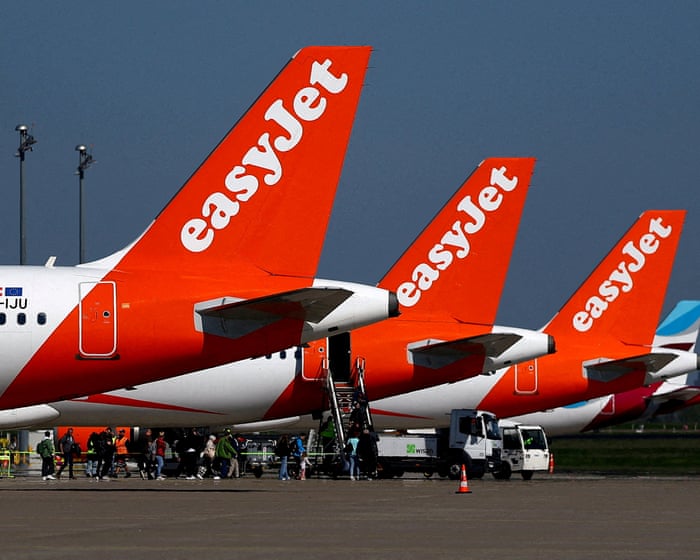
EasyJet boss unable to rule out further jobs losses after profits collapse by 96% Kenton Jarvis says rival airlines could go bust after Iran war drives sharp rises in fuel prices and hits travel demand
The boss of easyJet has said he cannot rule out further job cuts and predicted some rival airlines could go bust, after soaring fuel prices this year triggered a collapse in profits.
EastJet’s pre-tax profit dropped 96% to £24m in its financial year ending in September, compared with £658m in the previous 12 months.
The airline, which has agreed to a £5.7bn takeover by the US private equity firm Apollo , said in July it had lost more money than expected during the spring, as Ian war pushed up fuel prices and hit travel demand.
Kenton Jarvis, the chief executive of easyJet, said on Wednesday that the year was “challenging for airlines due to the Middle East conflict and its effect on demand and fuel prices, which materially impacted our financial performance”.
This month, it emerged that the airline was consulting on cutting up to 50 roles at its head office in Luton. EasyJet employs about 16,000 people around the world.
Jarvis said: “Will I rule out future [job cuts]? Of course not. This is a commercial business, so we will always look to optimise our cost base.
He said the group continued to “look for ways to be more efficient” in its head office, he said, adding that he had no plans for cuts to frontline staff such as cabin crew and pilots.
Jarvis said weaker airlines in Europe could face an existential threat from elevated fuel prices. EasyJet’s fuel bill rose by 11% – or £244m – to £2.5bn this year alone.
Surging fuel bills have pushed several airlines to collapse, such as Spirit in the US.
“There could be airline failures, it would not surprise me,” Jarvis said. “This will put a lot of pressure on airlines because the fuel increase is still stubbornly high and not all airlines are hedged.
“We could see some consolidation both from the flag carriers continuing on their acquisition trail, but also potentially with some market failures.”
While the company said it had hedged 70% of its fuel costs at just over $800 a metric tonne for the winter, and 54% hedged for the summer period at about $890, prolonged higher costs could feed into higher ticket prices.
“Clearly these fuel costs will put a lot of pressure on fares,” Jarvis said, although he added that it was unlikely they would rise by as much as 20% next year, as predicted by Ryanair’s chief executive, Michael O’Leary.
“It will always be dependent on demand,” Jarvis said. “EasyJet will always look to have greater value fares.”
Many airlines have already reduced their flight schedules this winter to offset the impact of higher fuel prices. This month, the chief executive of Virgin Atlantic, Corneel Koster, said the airline would fly less than planned by “probably about 8% because of the cost of fuel” and “because of the drop in demand in the winter schedule”.
Traduit automatiquement de l'anglais
Pas encore recoupée
Seule la rédaction The Guardian rapporte cette information pour l’instant. Elle reste « source unique » tant qu’une autre rédaction ne l’a pas confirmée.
- The Guardian25 nov., 12:53
| Éditeur The Guardian (niveau référence) | +82 |
| Résumé détaillé | +2 |
| Total | 84 |
Méthode : les dépêches sont regroupées d’après les mots de leur titre et de leur résumé ; chaque rédaction compte une fois ; les chiffres sont lus tels que publiés. Rien ici n’est rédigé par une IA.