Build housing while limiting urban sprawl
Pierre Laroussinie “Valuing means adding m². Adding m² means increasing property tax. The advantage is that it allows for better resale: this is the logical sequence explained by Pierre Laroussinie who gives his tips…
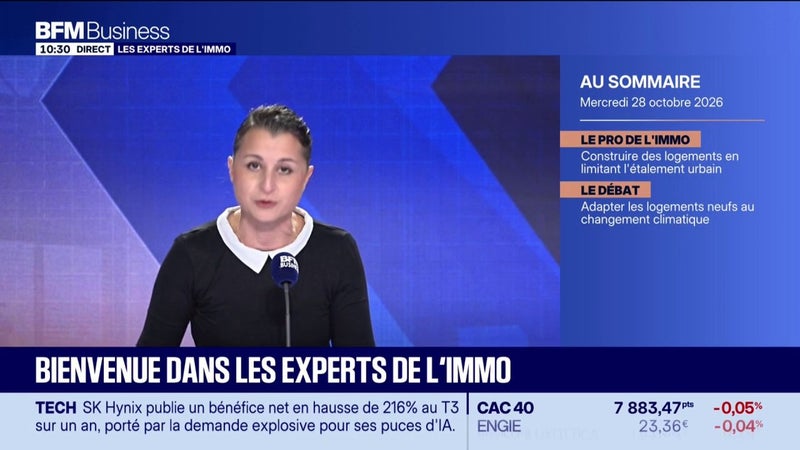
In France’s long‑standing battle against unchecked urban expansion, the latest focus lies on a seemingly simple principle: add square metres. Pierre Laroussinie, a municipal planner with years of experience in the Greater Paris area, emphasizes how a modest increase in a property’s footprint can have a multiplier effect, both on property taxes and resale prospects. His argument is straightforward – when you grow the living area of a dwelling, you not only increase its intrinsic value but also broaden the tax base that the municipality can rely on, creating a virtuous cycle of wealth generation for the local community.
Underlying the discussion is the tension between meeting the country’s urgent demand for housing and preserving the character of rural and peri‑urban landscapes. In many French regions, developers have been accused of simply building extensive sprawl to cover as many units as possible, which often meets resistance from residents concerned about traffic, loss of agricultural land and environmental impact. Laroussinie’s point about the interplay between added square metres and property tax provides a tangible tool for policymakers and developers: focus on densification within existing footprints rather than horizontal expansion beyond municipal borders.
From a fiscal perspective, the additional de‑mut (value‑added tax) that a handful of extra square metres generate can be significant. Municipalities systematically recoup a portion of the increased property value through higher property taxes, enabling them to fund infrastructure upgrades, schools and public transport that, in turn, enhance the desirability of the area. This dynamic underscores why larger buildings within established zones can have a positive feedback loop, amplifying the socio‑economic resilience of the locality, while keeping the ecological footprint minimal.
Laroussinie’s guidelines are hinting at a broader trend in urban planning that prioritises sustainable densification. By concentrating development in already urbanised or peri‑urban areas, local councils can reduce the need for new roadways, preserve natural habitats and maintain the rural character of surrounding communes. The trick lies in meaningful, well‑designed expansion: a strategy that promotes holistic living environments, with mixed‑use facilities, green corridors and adequate public services, which ultimately raises the resale value in a way that benefits homeowners and investors alike.
The market implications are twofold. First, the increased property tax provides a regular revenue stream for municipalities, which can translate into higher quality public services, attracting new tenants and ensuring longer‑term returns for investors. Second, a well‑planned densification policy can tame the real‑estate bubble in major metropolitan areas by preventing the surging prices associated with development in undeveloped surroundings – a scenario that often triggers gentrification and social displacement. Consequently, a focus on the ‘adding m²’ principle can serve as a stabilising lever for housing markets.
Machine-translated from French
Not cross-checked yet
Only BFM Business reports this story so far. We show it as a single source until another newsroom confirms it.
- BFM Business28 Oct, 12:28
| Publisher BFM Business (established tier) | +76 |
| Detailed summary | +2 |
| Total | 78 |
Method: reports are grouped by the words of their headline and summary; each newsroom counts once; figures are read from the reports as published. Nothing here is written by an AI.