Petrovietnam ran out of Middle East crude during the Iran war - now it’s betting on LNG, wind, and nuclear
CEO Le Manh Cuong says Petrovietnam went without Middle East crude during the Iran war and is now diversifying into LNG, wind, and nuclear.
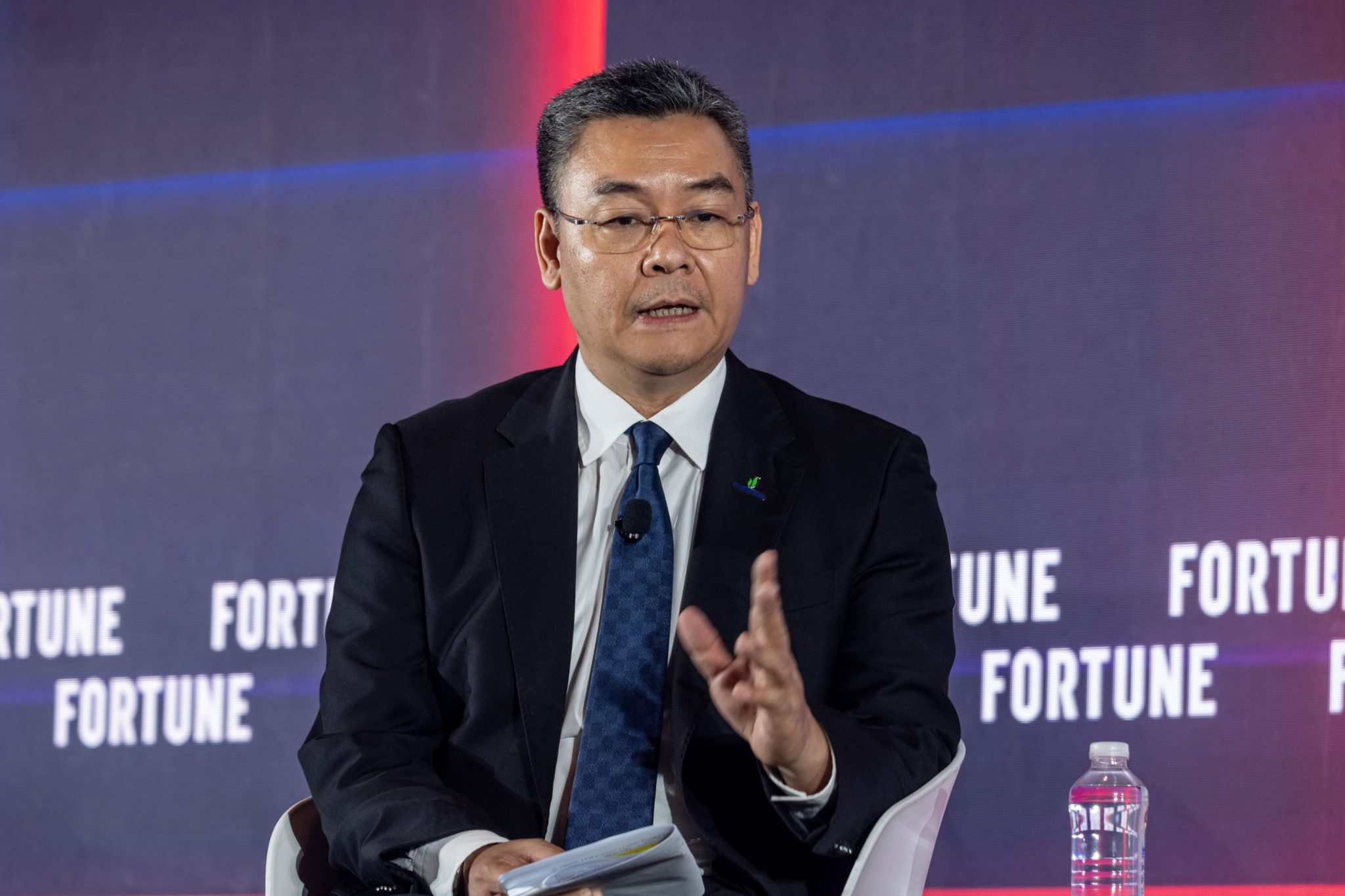
When Iran shuttered the Strait of Hormuz in March, curtailing global exports of Middle Eastern crude, energy-scarce Southeast Asia was one of the world’s hardest-hit regions. Vietnam, the region’s fastest-growing economy, was no exception.
“One of our two refineries rely 100% on Middle Eastern crude…and for some time—not too long—we had no single drop of crude from the Middle East,” Le Manh Cuong, the president and CEO of Vietnamese state-owned oil and gas company Petrovietnam, said during the Fortune Southeast Asia 500 Summit in Vietnam’s Ho Chi Minh City on Nov. 3. “We had to try to navigate and find alternative crude supply through partners and other countries.”
Le’s comments come as ASEAN increasingly grapples with the energy trilemma —ensuring energy security, affordability and sustainability—amid geopolitical turmoil and member countries’ efforts to move up the value chain.
“Three things are happening together: Energy demand keeps growing , suppliers face greater geopolitical risks and countries still need to cut emissions,” he explained. “So we have to work on building reliable power supplies, affordable energy, and the energy transition at the same time.”
The CEO acknowledges, however, that this takes time. “[Energy] resilience is not something you can build overnight,” Le said. “You’ll need to be well-prepared during normal years, and when disaster strikes, we have to adapt to that.”
Petrovietnam was founded in 1975 as a wholly-owned entity of the Vietnamese central government to manage the country’s oil and gas resources. Today, it also carries out geological exploration activities in countries such as Malaysia, Indonesia and Mongolia.
With annual revenue of $24 billion in 2025, Petrovietnam is No. 11 on Fortune ’s Southeast Asia 500 list, which ranks the largest companies in the region by total revenue. The firm is the highest-placed Vietnamese company on the list.
Vietnam’s economy is experiencing a strong expansion, driven by high-tech manufacturing, exports and public infrastructure investment. In 2025, GDP growth jumped 8.02%, with total GDP estimated at $514 billion. According to the International Monetary Fund, the country’s GDP per capita is projected to reach $5,259 this year, overtaking Indonesia’s $5,153 .
This infrastructure build-out and economic growth comes with a hefty energy cost. “Buildings, factories and data centers need power around the clock,” Le said. “Energy supply must be ready ahead of the demand… energy growth means economic growth for Vietnam.”
Not cross-checked yet
Only Fortune reports this story so far. We show it as a single source until another newsroom confirms it.
- Fortune5 Nov, 12:32
| Publisher Fortune (established tier) | +76 |
| Detailed summary | +2 |
| Total | 78 |
Method: reports are grouped by the words of their headline and summary; each newsroom counts once; figures are read from the reports as published. Nothing here is written by an AI.