Less than one civil servant in 10: despite anger over salaries and the freezing of the index point, the November 5 strike mobilizes much less than the two previous ones
According to the first figures communicated this Thursday, November 5 by the Ministry of Action and Public Accounts, 9.89% of state civil service agents were on strike at midday. A rate almost identical to that of the…
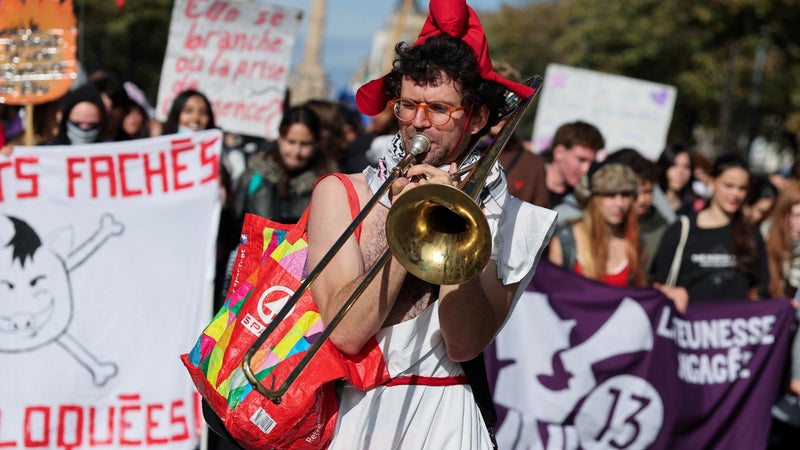
Nearly one in 10 agents on strike in the state civil service. The Ministry of Action and Public Accounts unveiled this Thursday, November 5, the first participation rates in the social movement which affects the three sides of the public service. According to figures collected at midday, 9.89% of state agents have stopped work.
Much less sustained mobilization in local authorities, where the rate of strikers reached 4.60%, and in hospitals, where it stood at 3.93%. These figures above all show that mobilization is not progressing compared to the previous day of strike on September 29, except slightly in the state civil service since they had been 9.64% at midday. On the other hand, mobilization was greater in the territorial civil service (5.68% against 4.60% today) as well as in the hospital sector (4.50% against 3.93%).
The state civil service thus remains the area where mobilization is greatest, with a proportion of strikers more than twice that observed in local authorities and approximately two and a half times higher than that recorded in hospitals. However, the participation rates for this Thursday remain provisional. They correspond to a snapshot of the situation at midday and may be revised in the ministry's final report.
A previous mobilization already poorly attended by public officials On September 29, the unions had already called on civil servants to mobilize to denounce the deterioration of their purchasing power and the budgetary outlook for 2027. The final figures for that day showed a rate of strikers of 9.96% in the state civil service, 7.25% in the territorial civil service and 4.10% in the hospital civil service. This mobilization was itself much lower than that of December 5, 2024, the last major day of comparable unified strike in the public service.
At the time, 19.06% of public employees had stopped working for the entire day, according to figures recalled by the ministry. The return of inflation and purchasing power difficulties can paradoxically help to explain this relatively weak mobilization. For many public employees, going on strike represents a loss of salary that is difficult to bear in a context where constrained spending already weighs heavily on household budgets.
The freezing of the index point continues to crystallize the demands At the center of the demands is in particular the question of remuneration. Trade union organizations denounce the prolonged freezing of the index point, which is used to calculate the basic salary of civil servants. Its last general revaluation dates back to July 2023, with an increase of 1.5%, after a previous increase of 3.5% in July 2022.
Machine-translated from French
Not cross-checked yet
Only BFM Business reports this story so far. We show it as a single source until another newsroom confirms it.
- BFM Business5 Nov, 15:00
| Publisher BFM Business (established tier) | +76 |
| Checkable figures cited | +3 |
| Detailed summary | +2 |
| Total | 81 |
Method: reports are grouped by the words of their headline and summary; each newsroom counts once; figures are read from the reports as published. Nothing here is written by an AI.