At least 17,000 are in the wild, worth $1.3 billion: US unable to track F-35 fighter jet parts
An auditing body of the American Congress deplores in a report the difficulties of the Pentagon to follow in real time the spare parts of its F-35 fighter plane, an arms program as expensive as it is sensitive due to…
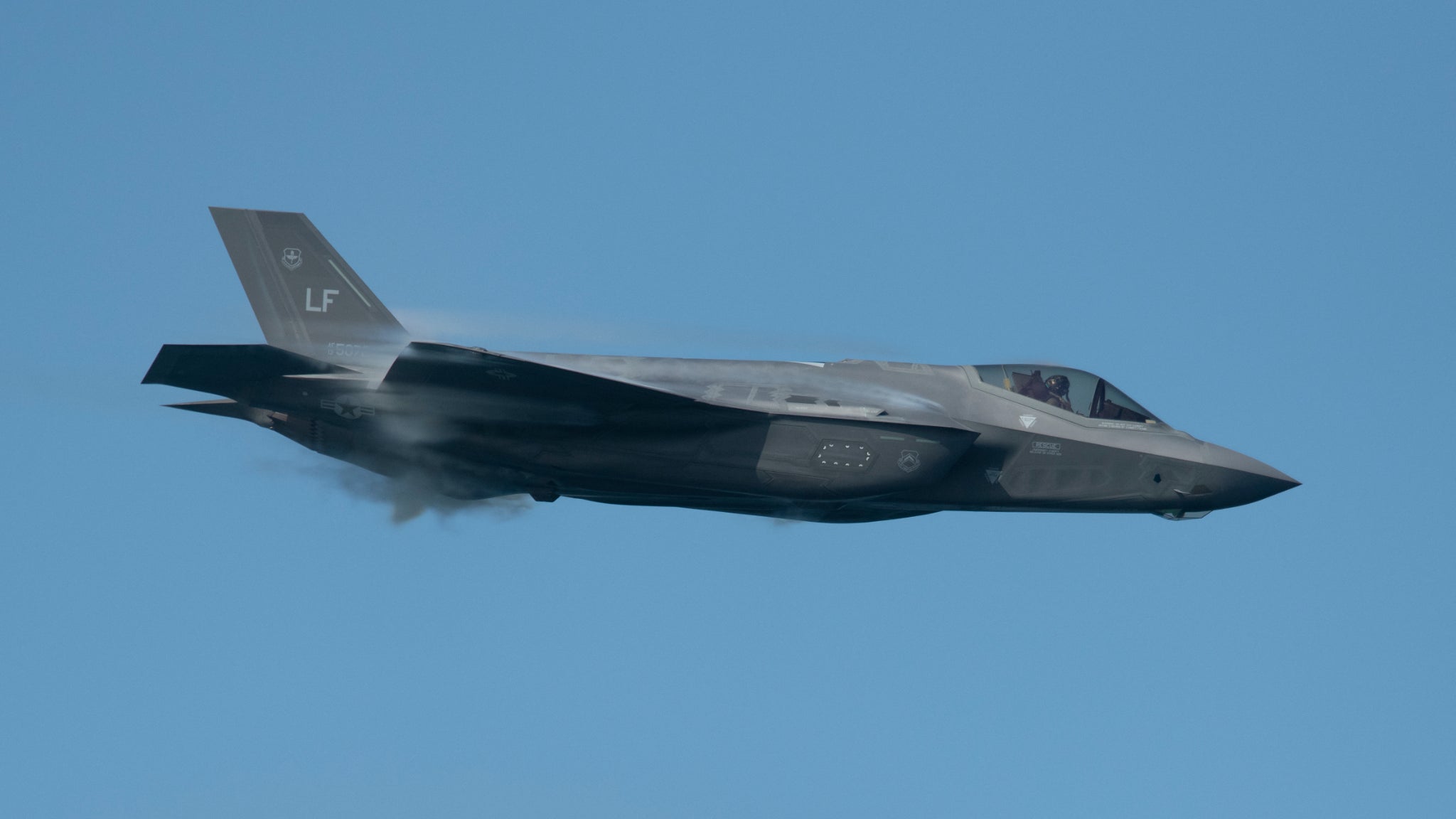
It's a barely believable story that is far from an isolated case, according to a US public report. A few months ago, a shipment containing a cockpit canopy from the American F-35 fighter jet and a weapons bay hatch landed in Hong Kong from Australia, before being picked up by China, interested in the aircraft technology. An investigation was opened by the Pentagon.
According to the American press, a UPS employee missed an e-mail asking him not to send the shipment through Hong Kong due to the sensitivity of the material and the risk of espionage by China. To make up for a delivery delay, the cargo finally transited there, even though it complies with the American ITAR (International Traffic in Arms Regulations) regulations which regulate the export of arms originating from the United States. “The location of certain parts is unknown” This case is only the tip of the iceberg.
According to a report from the GAO (Government Accountability Office, an audit body of the American Congress), published this Monday, November 9, the American Department of Defense "is having difficulty ensuring the accounting monitoring of the components" of the F-35. It must be said that this stealth combat aircraft program, the most expensive in history, has ramifications throughout the world. There are 26 million pieces, valued at nearly $31 billion, which are stored on more than 700 sites.
These are managed by private companies or by states around the world. But Washington is struggling to keep up with them all. “F-35 parts records are outdated, inaccurate and incomplete.
Furthermore, the F-35 program does not identify all of these components during physical inventories nor does it track possible losses," details the GAO report. As a result, "the location of certain F-35 parts is unknown." To manage the inventory of F-35 parts, the ELMS (Enterprise Logistics Management System) software is supposed to track the aircraft's parts in real time around the world.
But last March, "around 17,000 parts subject to maintenance or repair operations, for a total value of around 1.3 billion dollars, were not recorded there." Significant operating costs Already more than three years ago, a report criticized the management of spare parts for the American combat aircraft.
At the time, the F-35 Joint Program Office (JPO) lost track of $85 million in spare parts between 2018 and 2022. Even today, "their fate is unknown", according to the report. These difficulties for the Ministry of Defense mainly concern subcontractors whose location of "certain sites" is known neither to major manufacturers nor to the American authorities.
“This is explained by the fact that project managers do not have visibility on the parts held beyond the level of direct subcontractors,” details the document. To address these issues, the report succinctly recommends that the Pentagon “implement procedures specific to the F-35 program to track losses of parts.” Despite these difficulties, the American stealth fighter plane manages to be exported.
The United States has sold more than 623 F-35 aircraft to 13 NATO allies (Belgium, Denmark, Italy, Netherlands, Norway, Poland, United Kingdom, Finland, Canada, Germany, Czech Republic, Greece, Romania) as well as Switzerland, Japan, Australia, South Korea, Israel and Singapore. But some politicians regret the purchase of the F-35s, fearing that the United States could limit their use. Its detractors denounce its low availability rate and its operating costs, the flight hour being estimated at more than 36.
000 dollars. Some question its suitability for a conflict in the Pacific against China, where long distances and the vulnerability of bases could limit its use. In June 2026, the Danish Court of Auditors estimated that the cost of purchasing and operating the country's 27 F-35 jets over 30 years had been undervalued by around €1.9 billion.
In Switzerland, federal auditors have also denounced delays and budget overruns linked to infrastructure intended to accommodate future F-35s, with costs now estimated at more than 200 million Swiss francs compared to 120 million initially planned. In Canada, the plane is at the heart of debate. In March 2025, faced with trade tensions with Washington and threats from Donald Trump towards Canada, the government of Mark Carney launched a review of its order for 88 F-35 aircraft to determine whether this model remained the best choice.
Machine-translated from French
Not cross-checked yet
Only BFM Business reports this story so far. We show it as a single source until another newsroom confirms it.
- BFM Business14 Nov, 11:21
| Publisher BFM Business (established tier) | +76 |
| Detailed summary | +2 |
| Total | 78 |
Method: reports are grouped by the words of their headline and summary; each newsroom counts once; figures are read from the reports as published. Nothing here is written by an AI.