It has been ready to operate for 42 years, cost $6 billion but has never produced a single kilowatt hour of electricity: the astonishing story of the nuclear power plant that could finally start
Completed in 1984 for the equivalent of $6 billion today, the Bataan nuclear power plant in the Philippines has never produced a single kilowatt hour of electricity. However, its reactor, turbines and control room are…
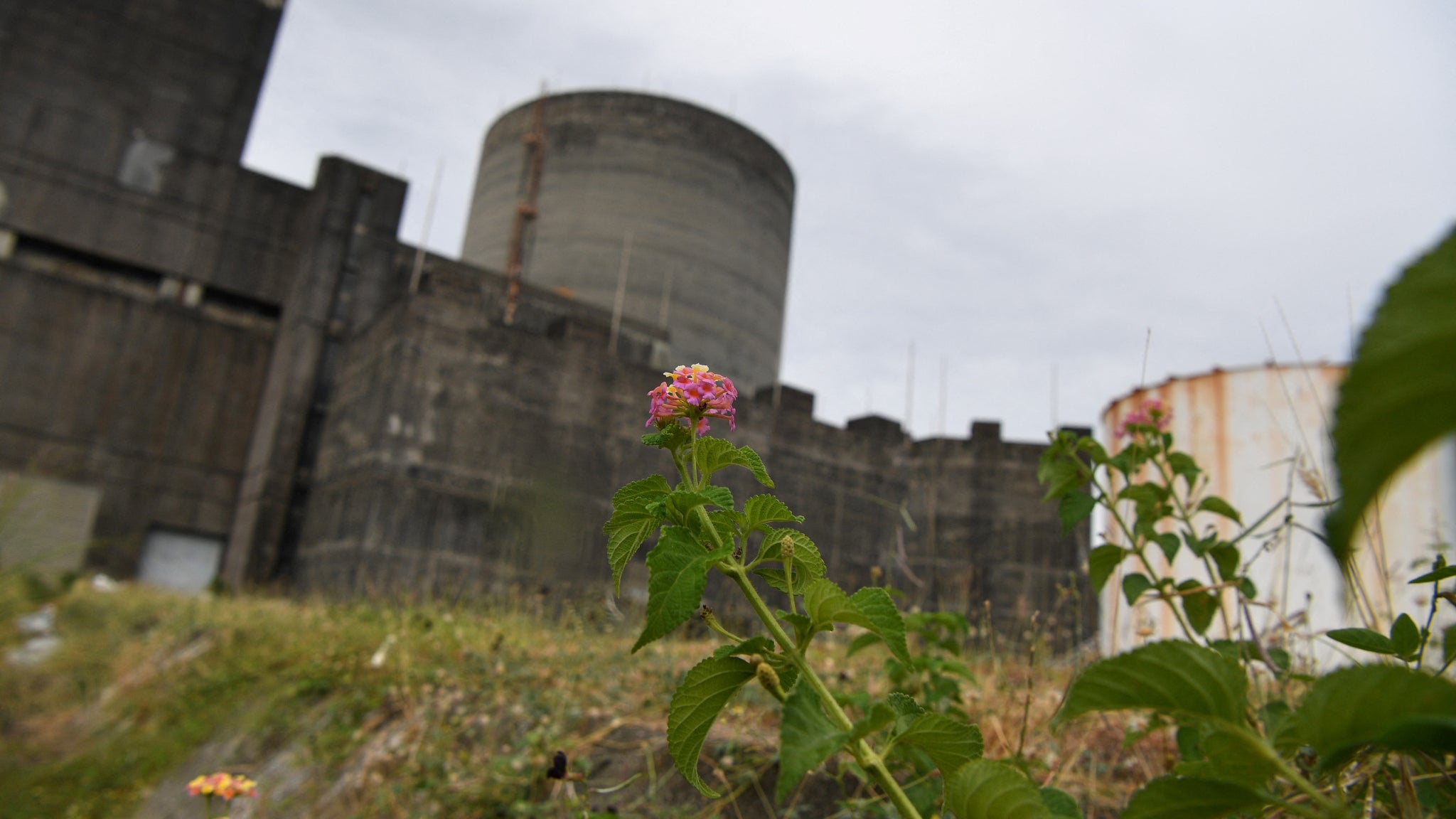
“Maybe it’s time to rethink nuclear power.” Last summer, Philippine President Ferdinand Marcos Jr warned his people on television. With 30% of the country's crude oil imports passing through the Strait of Hormuz and the rest coming from Asian refineries that also rely on Middle Eastern crude, Manila is considering a return to nuclear power.
Or rather to come there. Because the country has never produced a single kilowatt hour of nuclear electricity. So far nothing exceptional.
Nearly 90% of countries in the world do not have nuclear power plants. But in fact, the Philippines has a central one. And it's probably one of the most amazing in the world.
For a simple reason: it was never put into service. It was completed in 1984, declared functional, cost $1.9 billion at the time, the equivalent of about $6 billion today... for nothing.
Some estimates even put the initial bill at $2.3 billion, not including all the financial costs incurred over the decades. The Philippines only completed reimbursing this plant in 2007. It is located on the Bataan peninsula, about a hundred kilometers west of the capital Manila.
It has everything you'd expect from a power generation facility: a 621 megawatt nuclear reactor (30% less than a reactor at a French power station), huge turbines, steam generators, cooling equipment and a control room full of buttons and dials. But what happened that such a costly and strategic investment was never put into service? The story begins in 1973.
The first oil shock hit the Philippines hard, already very dependent on hydrocarbon imports. Ferdinand Marcos (the father of the current president), who then ruled the country under an authoritarian regime, decided to launch a nuclear program. Its initial ambition is to build two reactors of 600 megawatts each.
But when the contract was signed with the American Westinghouse in February 1976, the project was reduced to a single 621 megawatt reactor. Work began a few months later. Costs are exploding.
A study published in 2021 by the Institute for Energy Economics and Financial Analysis recalls that Westinghouse's initial offer was valued at $500 million in 1974, before doubling the following year. Then to reach 1.9 billion dollars, or even more according to several historical evaluations which ultimately place the bill for the project at around 2.3 billion dollars. A colossal sum.
Adjusting for inflation, the cost would be $7.4 billion today. Across the country, it alone represented more than 6% of the national wealth produced in a year. A bit as if France were spending 190 billion euros today...
for nothing. Construction was first shaken by the Three Mile Island nuclear accident, which occurred in 1979 in the United States, when a succession of technical failures and human errors caused the partial meltdown of the core of a reactor, in what remains the most serious accident in the history of American civilian nuclear power. Work is suspended to carry out further safety checks.
A technical investigation reveals thousands of potential anomalies and defects. Above all, the choice of site raises serious concerns: the power plant is located in a region exposed to earthquakes, near volcanic zones. But despite these difficulties, work resumed and was completed five years later in 1984.
The plant must then enter service the following year. New nuclear fuel was even delivered to the site, awaiting loading into the reactor. The Philippines is ready to produce its nuclear electricity...
Except that the startup will never take place. A reactor ready to start, then Chernobyl changes everything In February 1986, Ferdinand Marcos was overthrown after massive popular mobilization. Two months later, new disaster.
On April 26, Chernobyl reactor number 4 exploded in the Soviet Union. The disaster considerably strengthens the opponents of the Philippine power plant. On April 30, 1986, the new president decided to abandon her commissioning.
The Bataan plant is mothballed. It will never produce electricity. The story does not end there, however.
The Philippines must continue to repay the loans taken out to finance the project. The last payment will not be made until April 2007, 23 years after the completion of the plant. For years, Filipino taxpayers will have financed an installation that will never have provided them with electricity.
Nuclear fuel, unused, will also remain a curiosity of this story. Delivered in 1984, it was only finally resold in 1997 to the Siemens group, for around $25 million. The most astonishing thing about this fiasco is that unlike other abandoned industrial facilities, Bataan has been carefully preserved.
At the beginning of November, a journalist from World Nuclear News was able to visit the facilities, which have been preserved for more than four decades. Although some equipment bears the marks of time, the site is far from abandoned. The huge machines are still there, the technical rooms are maintained and the reactor is still waiting for its first nuclear chain reaction.
In another report published in 2022, journalists notably met a 65-year-old maintenance employee, who was a fisherman when the construction work began. His job always consisted of cleaning the installations, handling the controls and lubricating the mechanisms to prevent their degradation. The plant has also become an attraction for visitors and students, who can view a virtually intact nuclear facility.
They pass through narrow metal passages, discover the control room and can observe the equipment which should have produced the country's electricity. “This facility is our most important nuclear asset, a complete industrial nuclear power plant preserved for almost forty years,” explained Noel Hermano, the plant’s director, as quoted by World Nuclear News. The story today takes on an unexpected political dimension.
Since coming to power in 2022, Ferdinand Marcos Jr has defended the development of nuclear energy to diversify the archipelago's electricity production and reduce its dependence on imported fossil fuels. And rather than starting entirely from scratch, authorities plan to rehabilitate Bataan. In 2024, the South Korean company Korea Hydro & Nuclear Power was commissioned to carry out a new feasibility study.
2.3 billion dollars to put it into service A few weeks ago, the Philippine Minister of Energy, Sharon Garin, announced that this study had produced positive results. Several scenarios are now being considered: renovating the existing power plant, building a new conventional reactor or favoring small modular reactors. However, the detailed technical results have not been made public.
But even if Bataan is in good shape, rehabilitation would be far from free. In 2022, the Philippine Department of Energy estimated its cost at $2.3 billion. This would include replacing aging equipment, modernizing security systems and obtaining all necessary authorizations.
The Philippine nuclear development timetable could also be pushed back until 2038. But can we really guarantee the safety of a power plant designed half a century ago, even if it has never operated? Seismic risks, the condition of the equipment and the cost of upgrading remain subjects to be examined.
The fact remains that those in power seem to have public opinion on their side. According to a 2019 survey by the Social Weather Stations institute, 79% of respondents approved the reactivation of the Bataan plant and in 2027 more than 70% of Filipinos considered nuclear power as a potentially reliable source of electricity. Fifty-two years after the project began, it may be the son of the man who built it who will press the “start” button.
Machine-translated from French
Not cross-checked yet
Only BFM Business reports this story so far. We show it as a single source until another newsroom confirms it.
- BFM Business14 Nov, 13:21
| Publisher BFM Business (established tier) | +76 |
| Checkable figures cited | +3 |
| Detailed summary | +2 |
| Total | 81 |
Method: reports are grouped by the words of their headline and summary; each newsroom counts once; figures are read from the reports as published. Nothing here is written by an AI.