New stage in the race for space data centers: Blue Origin, Jeff Bezos' start-up, will place Google's AI satellites in orbit around the Earth
As part of the Suncatcher project, Google announced that it had signed a partnership with Blue Origin, Jeff Bezos' company, in order to start the deployment of space data centers in orbit.
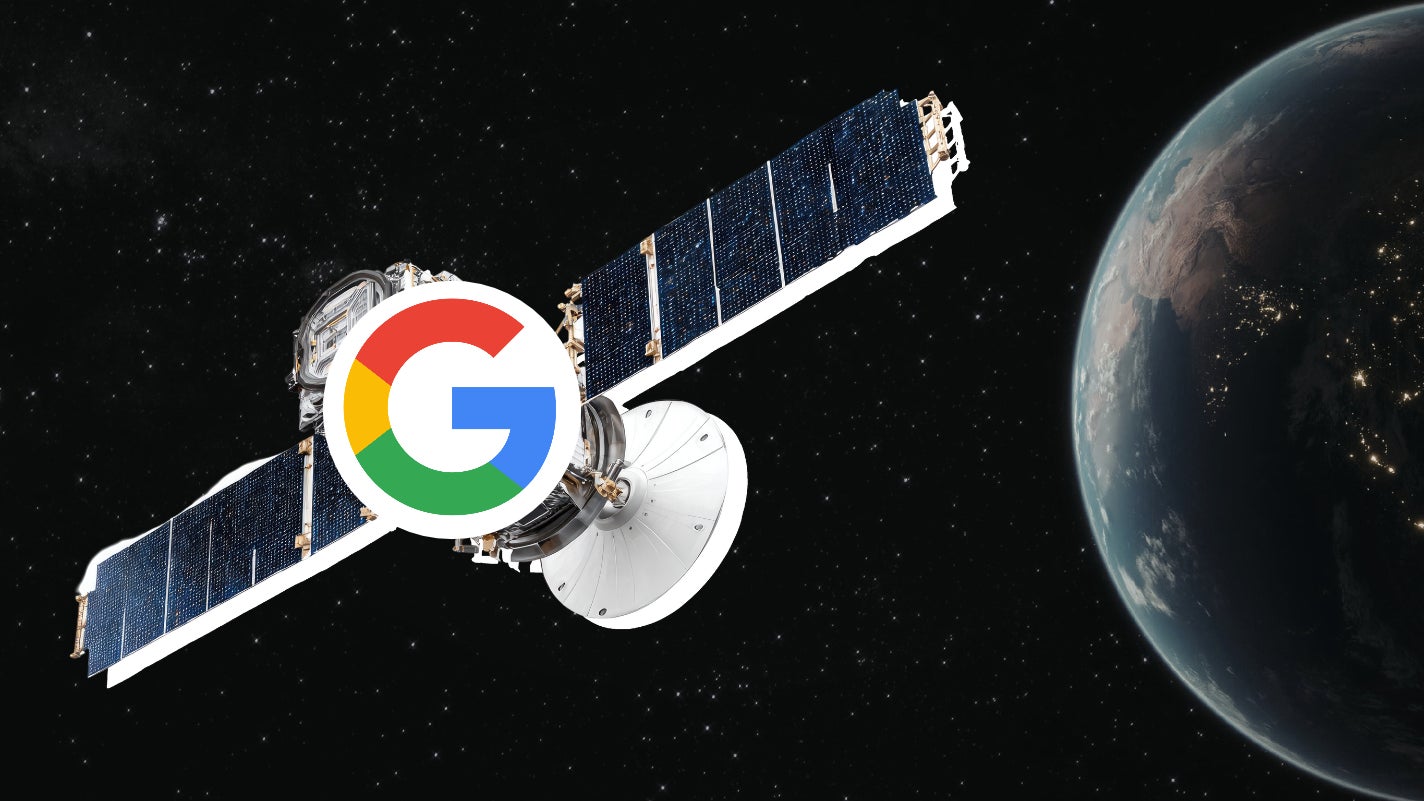
With the victory of the Democrats in the last US elections and the growing opposition against data centers around the world, Google launched its Suncatcher project, aiming to send these same centers into space. To do this, he signed with Blue Origin. The company specializing in space and founded by Jeff Bezos will have the mission, thanks to its New Glenn rockets, to deploy small satellites in space which will be permanently powered by solar panels since they will be placed in sun-synchronous orbit.
Each satellite will have “computing capacity approximately equivalent to that of a data center server bay,” explain Google and Blue Origin in their joint press release. Google will embed Tensor computing units, the artificial intelligence chips it designed, in its servers. However, you will have to be patient.
The very first test satellite of the Suncatcher project was recently placed into orbit. The following are not expected before the start of 2029. And space data centers will still have to demonstrate their economic, ecological and operational relevance.
Multiple issues before functional devices This is the whole subject of the Suncatcher project, which relies on solar energy to operate these new generation data centers. Thanks to them, Google hopes to no longer have to rely on terrestrial limitations, while improving its brand image. Because on the ground, data centers are very contested.
First, they consume a lot of energy, influencing the price of electricity in the areas where they are installed, and they also make a lot of noise, while maintaining a major risk of pollution - particularly of the surrounding waters. But it still has to work. This is the whole question of the numerous projects in this area.
SpaceX is also experimenting with this idea with Starcloud. And several uncertainties remain. The first satellite with an AI server was deployed by Google in October, but in low Earth orbit and it can only operate for around fifteen minutes each time.
The most difficult challenge remains cooling. Since standard heat dissipation cannot work in space, heat must be able to be released by other means. Furthermore, the various components of space AI servers must be able to withstand radiation, in particular to ensure continuous, bug-free service.
The question of cost is also central. Sending something into space requires a lot of money: $74 million just for a Falcon 9 launch. And it's going to take a lot to set up a full data center.
Finally, and perhaps the most important question: does Earth's orbit still have room for more space objects? Scientists fear that we are approaching the conditions for Kessler syndrome to occur. Theorized in 1978 by NASA astrophysicist Donald J.
Kessler, this scenario implies that the density of space debris in orbit has reached a critical threshold that causes collisions in self-sustaining chains.
Machine-translated from French
Not cross-checked yet
Only BFM Business reports this story so far. We show it as a single source until another newsroom confirms it.
- BFM Business20 Nov, 16:46
| Publisher BFM Business (established tier) | +76 |
| Detailed summary | +2 |
| Total | 78 |
Method: reports are grouped by the words of their headline and summary; each newsroom counts once; figures are read from the reports as published. Nothing here is written by an AI.