The safe haven no longer protects: why gold has lost 37% of its value in less than 10 months and continues to sink
After breaking all records at the start of the year, gold is experiencing a spectacular fall. The precious metal has lost nearly 37% of its value since its January peak. The rise in American rates, the strength of the…
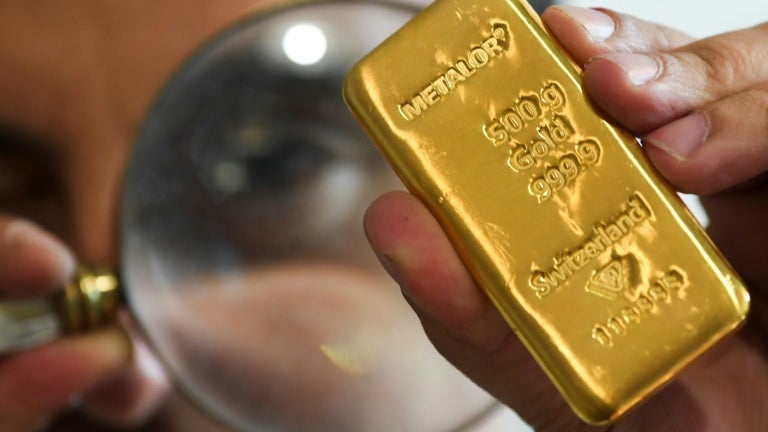
This is a spectacular fall for the ultimate safe haven. After an exceptional year 2025, marked by more than 50 historic records, gold reached a peak of nearly $5,600 per ounce on January 28, 2026.
Less than 10 months later, the precious metal fell to $3,525 this Friday, November 20, its lowest level since September 2025. Gold has thus lost nearly 37% of its value since its record.
And the fall is accelerating: the yellow metal has dropped more than 9% since the start of the week, its worst weekly performance in eight months, recalls Reuters. For a saver who would have bought 10,000 euros worth of gold in January at the January peak, this represents a theoretical loss of almost 3.
700 euros. How could an investment that is renowned for protecting investors against crises lose more than a third of its value in a few months? To understand this fall, we must first return to the reasons for the surge in gold.
In 2025, investors massively turned to the precious metal, worried about geopolitical tensions, state debt and the weakness of the dollar. According to the World Gold Council, gold-backed investment funds (ETFs), which allow you to buy the precious metal without physically holding bullion, had recorded $89 billion in net inflows in 2025. A historic record.
But the main driver of this increase has reversed: American interest rates, which investors expected to fall, have started to rise again. Which is bad news for gold because unlike a bond or a bank investment, a bar does not earn any interest. To make money, its owner must hope to sell it for more.
When rates are low, this disadvantage is limited. But when they rise, investors can earn attractive returns on other investments. “Gold is insurance, not an engine of growth,” summarizes Evan Mills, financial advisor at Scholar Financial Advising, on CNBC.
The American Federal Reserve (Fed) has rightly changed course in the face of persistent inflation. The markets now almost unanimously anticipate a further increase in rates in December. “Interest rate expectations and the strength of the dollar are the two factors weighing on the price of gold today,” explains Chris Gaffney, head of global markets at EverBank, interviewed by Reuters.
Because the rise in rates also favors the dollar, which is at its highest level in 19 months. However, since gold is quoted in the American currency, a stronger dollar raises its price for foreign buyers and tends to reduce demand. Concretely, when the dollar rises, buyers who use euros, yen or other currencies must spend more to buy the same quantity of gold.
This can discourage purchases and lower prices. Why investors sell their gold to cover their losses on the stock market The fall in gold can also be explained by the turbulence on the stock markets, particularly in the technology sector. Faced with significant losses, some investors may have been forced to sell their gold investments to quickly recover cash.
“We are seeing selling pressure in the equity market which may have caused margin calls and selling in the metals markets,” said Jim Wyckoff, an analyst at American Gold Exchange, interviewed by Reuters. The mechanism is simple: when an investor buys shares on credit and their value collapses, his broker can demand additional guarantees. To find the necessary money, he may have to sell other assets, notably gold.
And statistics show that American investors have actually started to withdraw from the gold market. North American ETFs backed by the precious metal saw $512 million in net outflows in October, according to the World Gold Council. The organization itself establishes a possible link with stock market turbulence.
Central banks are still buying a lot of them “There seems to be forced liquidations across the market,” also observes Kyle Rodda, financial analyst at Capital. com, interviewed by Reuters this Friday, November 20. In the midst of a financial crisis, gold is not automatically a safe haven as we tend to believe; it can also fall precisely because it is easy to sell.
The war in the Middle East also contributed to the market downturn. By causing a surge in energy prices, it fueled inflation and reinforced expectations of interest rate hikes. And now, will gold continue its fall?
Experts are not so pessimistic. UBS, for example, has certainly lowered its price target for the end of 2026 to 4,500 dollars, but continues to anticipate a rise to 5.
000 dollars at the end of 2027. The Swiss bank believes that current sales do not call into question the long-term attractiveness of gold. It is banking in particular on the continuation of purchases by central banks, concerns linked to government debt and a possible relaxation of American interest rates, which would make the precious metal more attractive again.
Since 2022, in fact, central banks have purchased approximately twice as much gold each year as during the previous decade, according to the World Gold Council. And they do not seem to have given up on this strategy. In the third quarter of 2026, they purchased another 321 tonnes of gold.
Machine-translated from French
Not cross-checked yet
Only BFM Business reports this story so far. We show it as a single source until another newsroom confirms it.
- BFM Business20 Nov, 09:01
| Publisher BFM Business (established tier) | +76 |
| Checkable figures cited | +3 |
| Detailed summary | +2 |
| Total | 81 |
Method: reports are grouped by the words of their headline and summary; each newsroom counts once; figures are read from the reports as published. Nothing here is written by an AI.