New disaster narrowly averted, understaffing, allegations of malfeasance, trains still on Windows XP... Spain's rail disaster exposes numerous management flaws
The Spanish press mainly criticises the workload of Adif operators - the country's railway network manager - who are often overwhelmed amid traffic that has exploded since the opening to competition.
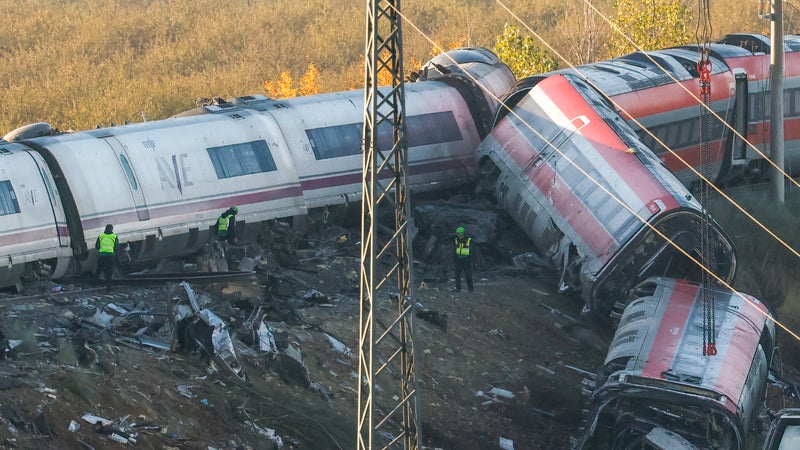
Tongues are being loosened in Spain and the revelations about the weaknesses and biases within Adif, the Spanish manager of the rail network, are chilling. The picture that emerges is one of undersized teams, obsolete tools, anxiety among train drivers and serial incidents. We first learn that the disaster of Wednesday October 28 which left at least 68 dead could have been much more serious.
El Confidencial reports that after the breakdown of the LBZ control system, another Iryo high-speed train present on the Seville-Madrid line, 50 kilometers behind the two victims, was also authorized to resume normal speed by an Adif operator. However, we know that this order, given to the Renfe train, was the final cause of the accident. Normally, when a breakdown of this type occurs, trains are authorized to run "on sight", that is to say at very low speed (30 to 40 km/h) in order to be able to anticipate any danger ahead.
According to the newspaper, it was the driver of the Iryo train who decided on his own not to follow this order. The driver indicated that the procedure involved restarting the train at reduced speed and would therefore have contacted the operational center to correct the instruction. If he had not done so, he would certainly have crashed into the two crashed high-speed trains.
Drivers contest orders deemed dangerous This decision by a driver, extremely rare, is the perfect illustration of the loss of confidence of driving agents in regulation. Because it must be said that within Adif, nothing is going well, especially since the opening to competition. While traffic exploded with the arrival of Ouigo Spain and Iryo, the workforce did not keep up enough and the difficulties increased following numerous retirements.
Above all, young recruits "are more comfortable with computers, but have difficulty making decisions", confides a railway worker to the ABC newspaper who points to the lack of senior staff to better train them. This situation has amplified the workload for each operator and therefore an increase in stressful situations. And it is in these situations that bad decisions are made.
Operators must manage “nearly three times more trains to control per team than before”. While they previously supervised 15 trains, that number has now reached 40, according to internal sources cited by the newspaper. For Transport Minister Oscar Puente, their entire training needs to be reviewed.
According to El Pais, new operating procedures are being finalized "applicable in the event of loss of data transmission" of the LZB tool. The obsolescence of the LZB, the safety and signaling tool, is in fact highlighted even if its failure is one of the bricks of the disaster, not the only one. This German continuous monitoring system was born in the 1960s.
Machine-translated from French
Not cross-checked yet
Only BFM Business reports this story so far. We show it as a single source until another newsroom confirms it.
- BFM Business2 Nov, 16:21
| Publisher BFM Business (established tier) | +76 |
| Detailed summary | +2 |
| Total | 78 |
Method: reports are grouped by the words of their headline and summary; each newsroom counts once; figures are read from the reports as published. Nothing here is written by an AI.