80% of aid granted to farmers without any requirements: faced with shocks, public support for agriculture has increased by 15% in two years according to the OECD
Public support for agriculture increased by nearly 15% between 2023 and 2025 under the pressure of more frequent geopolitical, economic and climatic crises, indicates this Monday, November 2, an OECD report covering 56…
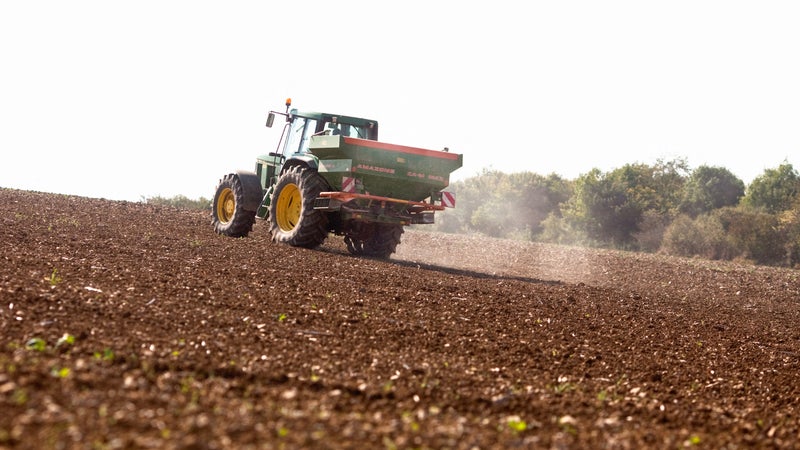
The OECD calls for long-term solutions to save agriculture. In a report published this Monday, November 2, covering 56 countries, the institution underlines that public support given to this sector increased by almost 15% between 2023 and 2025, under the pressure of more frequent geopolitical, economic and climatic crises. This support, of more than $950 billion in 2025 (or 19.1% of the value of agricultural production in these 56 countries), "consisted largely of short-term measures to deal with crises, rather than strengthening the resilience of the sector to future risks", estimates the Organization for Economic Cooperation and Development.
The report covers the policies of the 38 OECD member countries, but also of 13 emerging countries such as China, Brazil and India, all representing a large share of world production. 80% of aid granted to operators without conditions In emerging economies, these are often measures to support product prices on the domestic market (especially upwards, but sometimes downwards). OECD countries tend to resort to direct spending (emergency aid, support for the purchase of fertilizers, etc.).
). However, almost four fifths of aid to operators is granted without any requirements (only 5.7% is linked to the adoption of voluntary environmental measures and 15% to the monitoring of a standard), notes the report. On the other hand, expenditure allocated to services of general interest (infrastructure, research and development, innovation, etc.)
) represented just 2.4% of the value of agricultural production (compared to 4.6% between 2000 and 2002), or $118 billion. The report therefore calls for "rebalancing incentives", noting that "border measures and subsidies linked to the production and use of variable inputs can cause market distortions and are generally inappropriate for the objectives currently pursued". The systems must be “more targeted” (search for precise results, risk management, etc.).
), estimates the OECD, which calls for amplifying investments in favor of innovation, advice and “robust support systems”.
Machine-translated from French
Not cross-checked yet
Only BFM Business reports this story so far. We show it as a single source until another newsroom confirms it.
- BFM Business2 Nov, 17:18
| Publisher BFM Business (established tier) | +76 |
| Checkable figures cited | +3 |
| Detailed summary | +2 |
| Total | 81 |
Method: reports are grouped by the words of their headline and summary; each newsroom counts once; figures are read from the reports as published. Nothing here is written by an AI.