Does your company need a chief quantum officer?
The AI boom made the chief AI officer an essential hire. As quantum computing moves closer to commercial use, a new executive hire could be on the horizon.
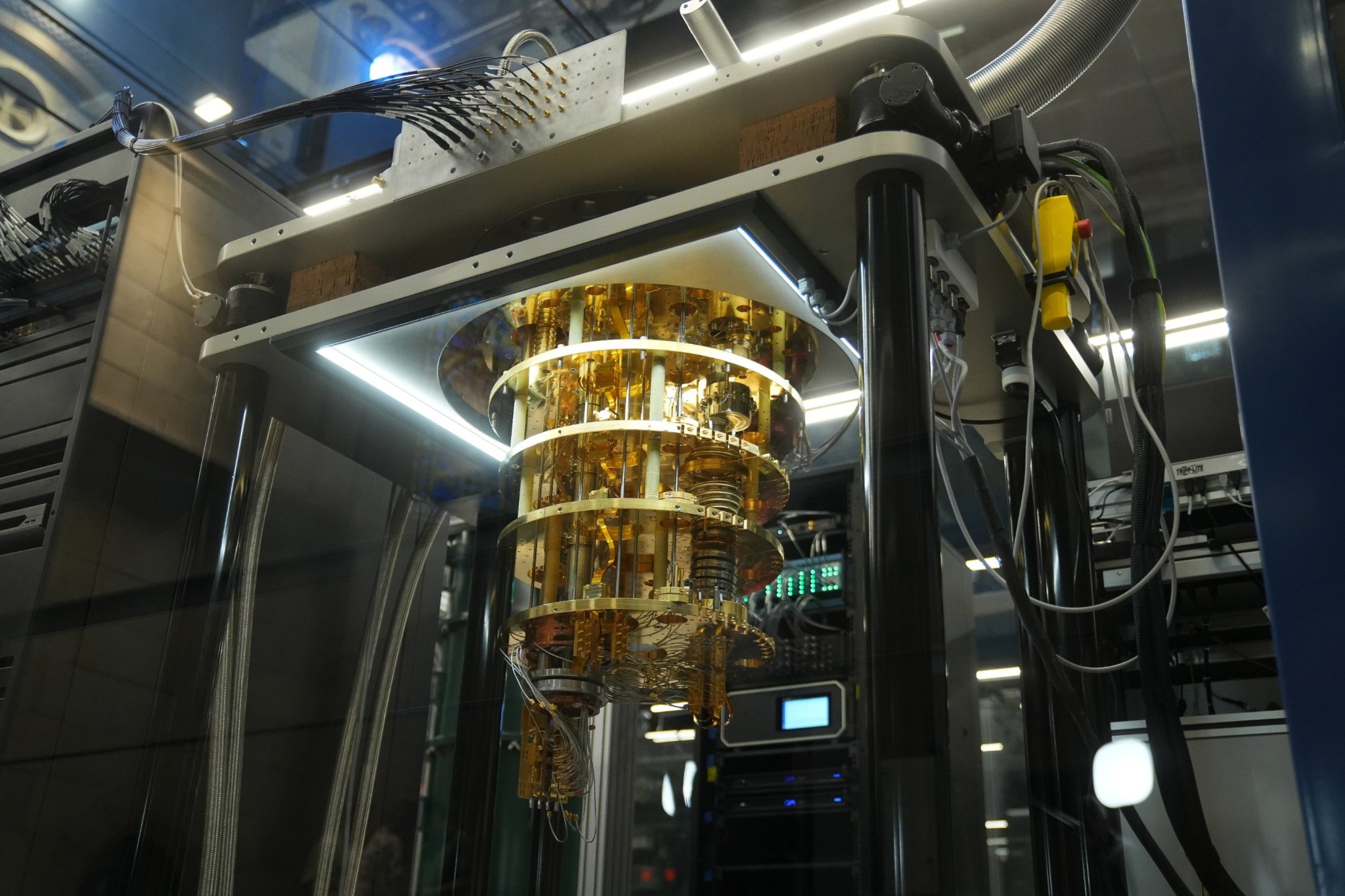
New technologies have a history of reshaping C-suite responsibilities. Three years ago, few companies had a chief AI officer on the C-suite but, as the technology became embedded in the workplace, having a dedicated leader to set AI strategy and governance became a necessity for many organizations.
In 2023, just 11% of organizations had someone with a chief AI officer title, according to IBM’s Institute for Business Value. Now, 76% of organizations surveyed by IBM have a CAIO.
The complexity, opportunities, and risks posed by quantum computing means that it could be the next technology that requires its own dedicated role.
Quantum computers harness quantum mechanics to solve computational problems significantly faster than even the largest supercomputers. The technology has the potential to help design and test drugs, optimize airline and logistics routes, or sharpen financial risk modeling for banks.
In 2025, HSBC and IBM found that using a quantum computer made the bank up to 34% better at predicting whether its price would win a client’s bond trade. Meanwhile, AstraZeneca , AWS, and Nvidia worked with U.S. quantum company IonQ to cut the simulation time for a key drug-synthesis reaction roughly twentyfold.
Despite its potential business applications, the chief quantum officer title remains rare and is held mostly inside quantum companies. Swiss chipmaker SEALSQ appointed a chief quantum officer in August, while the innovation hub QuantumBasel’s chief quantum officer has been in place since April. Quantum Computing Inc.’s chief quantum officer was promoted to CEO last year.
At many of Europe’s largest companies, however, the job typically sits further down the organizational chart. HSBC created a group head of quantum technologies in 2021, BMW has a dedicated quantum computing team inside its IT organization, and Airbus has a central coordinator for quantum technologies.
Only 46% of CEOs have a team in place for identifying specific quantum use cases and the associated business value, according to a survey by IBM.
Lionel Martellini, founding director of the EDHEC Quantum Institute in France, argues quantum deserves its own title and a direct line to the board. “Quantum should be a board-level discussion. It’s not an IT discussion,” he says.
His reasoning is that quantum carries both tremendous risk and opportunity. A powerful enough quantum computer could one day crack the encryption that keeps banking and business communications secure, exposing confidential deals, customer data, or payments.
Not cross-checked yet
Only Fortune reports this story so far. We show it as a single source until another newsroom confirms it.
- Fortune29 Oct, 12:03
| Publisher Fortune (established tier) | +76 |
| Detailed summary | +2 |
| Total | 78 |
Method: reports are grouped by the words of their headline and summary; each newsroom counts once; figures are read from the reports as published. Nothing here is written by an AI.