Healey’s £4.4bn cost living support package ‘badly targeted,’ says Resolution Foundation – business live
Even families receiving help face higher energy bills than during the last energy price shock, analysis finds Good morning, and welcome to our rolling coverage of business, the financial markets and the world economy.…
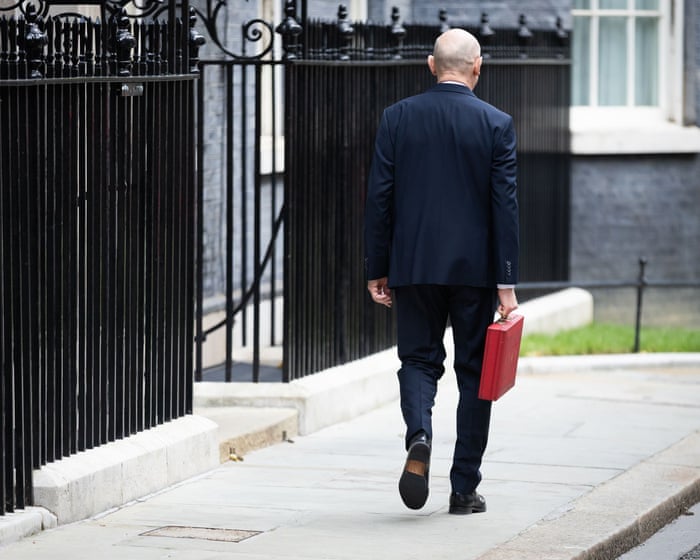
Good morning, and welcome to our rolling coverage of business, the financial markets and the world economy.
The £4.4bn cost of living support package delivered by John Healey ’s budget on Wednesday is “badly targeted,” which means that even families receiving help face higher energy bills than during the last energy price shock, according to the Resolution Foundation .
The poorest half of households will gain £158, on average, from support measures this year and next – just £14 more than the £144 received by the richest half – highlighting a “complete failure to target help at those who need it most,” the think tank said .
Typical energy bills net of support are forecast to be £1,750 this year (2026-27) – higher in real terms than during the last energy price shock (2022-23) when net bills were £1,685.
The chancellor raised taxes on banks and landlords to fund a £100 winter handout for 20 million families as official forecasts made clear there is no end in sight for the cost of living crisis.
The Resolution Foundation’s analysis also found that UK tax rises stand out globally . The UK’s internationally remarkable consolidation in its public finances, touted by the chancellor in his budget speech, is entirely due to a rising tax take during the current parliament. The £76bn improvement in the UK’s primary balance – the gap between receipts and non-interest spending – between 2023-24 and 2028-29 is more than fully accounted for by £107bn of higher tax revenues.
Whitehall gets a bigger boost than households. The budget included a £9bn top up to departmental budgets over the current spending review period – twice as much as the £4.4bn cost of living support package.
Past gain, future pain for living standards. Median real annual disposable incomes for working age households are set to grow by a paltry £600 over the course of the Parliament. Worse still, those gains are already behind us. Between now (2026-27) and the end of the parliament (2028-29), typical incomes are forecast to fall by £1,050 (3%).
Ruth Curtice , chief executive of the Resolution Foundation, said:
Faced with a tough backdrop amid global economic turmoil, the chancellor delivered a scattergun budget that did little to address the sharp challenges facing Britain. Cost of living support is being spread far too thinly and will leave even those families receiving help facing higher energy bills than they did during the last energy price shock.
Not cross-checked yet
Only The Guardian reports this story so far. We show it as a single source until another newsroom confirms it.
- The Guardian29 Oct, 08:51
| Publisher The Guardian (reference tier) | +82 |
| Detailed summary | +2 |
| Total | 84 |
Method: reports are grouped by the words of their headline and summary; each newsroom counts once; figures are read from the reports as published. Nothing here is written by an AI.