"The ultra-rich must pay a fair share": despite the rejection of the Zucman tax in California, Democrats are not finished with taxing billionaires
After their victory in the midterm elections, the Democrats will use their congressional majority to influence Donald Trump's domestic policy, particularly on purchasing power and the taxation of the wealthiest.
Donald Trump's mandate will inevitably enter a new phase, after the crushing defeat of the Republican Party in the mid-term elections, which saw the presidential camp lose its majority in the Senate and the House of Representatives. If Donald Trump will retain control, particularly on foreign and trade policy, the Democrats will have a more important voice in the debates, particularly on the domestic economy. Although Congress does not have full and direct authority over issues such as tariffs, immigration and the environment, it does have control of the country's finances and borrowing, which constitute powerful levers that the Democratic Party could use to force the Republican tenant of the White House to negotiate.
At the end of an electoral campaign marked by Americans' concerns about the high cost of living, the problem of purchasing power could become the cornerstone of the Democrats' parliamentary efforts. “With comfortable majorities in the House of Representatives and the Senate, the Democrats can actually threaten a 'shutdown' of the federal government and not raise the debt ceiling unless they obtain concessions,” commented Christopher Hodge, chief economist in the United States for Natixis. Billionaires in the sights Democratic Senator Ron Wyden, who will head the upper house's Finance Committee in January, gave an overview of the discussions to come, promising Wednesday to work to ensure that "the ultra-rich and multinationals pay a fair share" of taxes and that Congress "regains its authority over trade policy" of the United States.
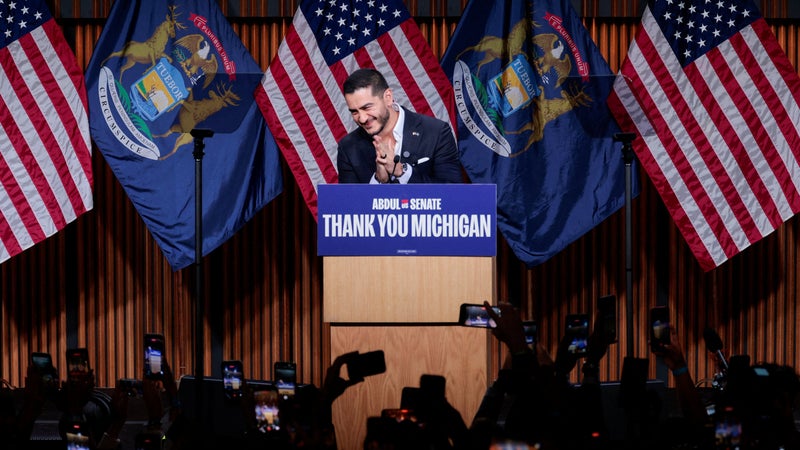
In this matter, the Democrats should not disarm, even if a bill aimed at imposing a one-off tax of 5% on the wealth of billionaires in California should be largely rejected by voters (55% at the last count Wednesday evening). This tax was inspired by the proposals of the French economist Gabriel Zucman. “Politicians must take on the big corporations and the billionaires, the special interest groups who have rigged the system against us for far too long,” said Abdul El-Sayed, for example, one of the rising figures of the progressive camp, elected in Michigan.
Some billionaires had committed considerable sums during the campaign. In Texas, Elon Musk, for example, spent more than $150 million to support the Republican candidate, ultimately defeated by Democrat James Talarico. The latter estimated that his victory had “sent a message to all the billionaire mega-donors and all the trillionaire mega-donors”, according to the Financial Times.
"Mr. Veto" Donald Trump, however, has a right of veto, and the Democrats should not have a sufficient majority in Congress to overturn certain decisions of the Republican president. This could lead to blockages.
Machine-translated from French
Not cross-checked yet
Only BFM Business reports this story so far. We show it as a single source until another newsroom confirms it.
- BFM Business5 Nov, 12:59
| Publisher BFM Business (established tier) | +76 |
| Detailed summary | +2 |
| Total | 78 |
Method: reports are grouped by the words of their headline and summary; each newsroom counts once; figures are read from the reports as published. Nothing here is written by an AI.