The mobilization of textile workers continues in Bangladesh: authorities and employers are under pressure (orders are already transferred to other countries)
While the mobilization of textile workers continues in Bangladesh, despite clashes with the police, employers and the government are under pressure. These strikes have already cost "at least 428 million dollars"…
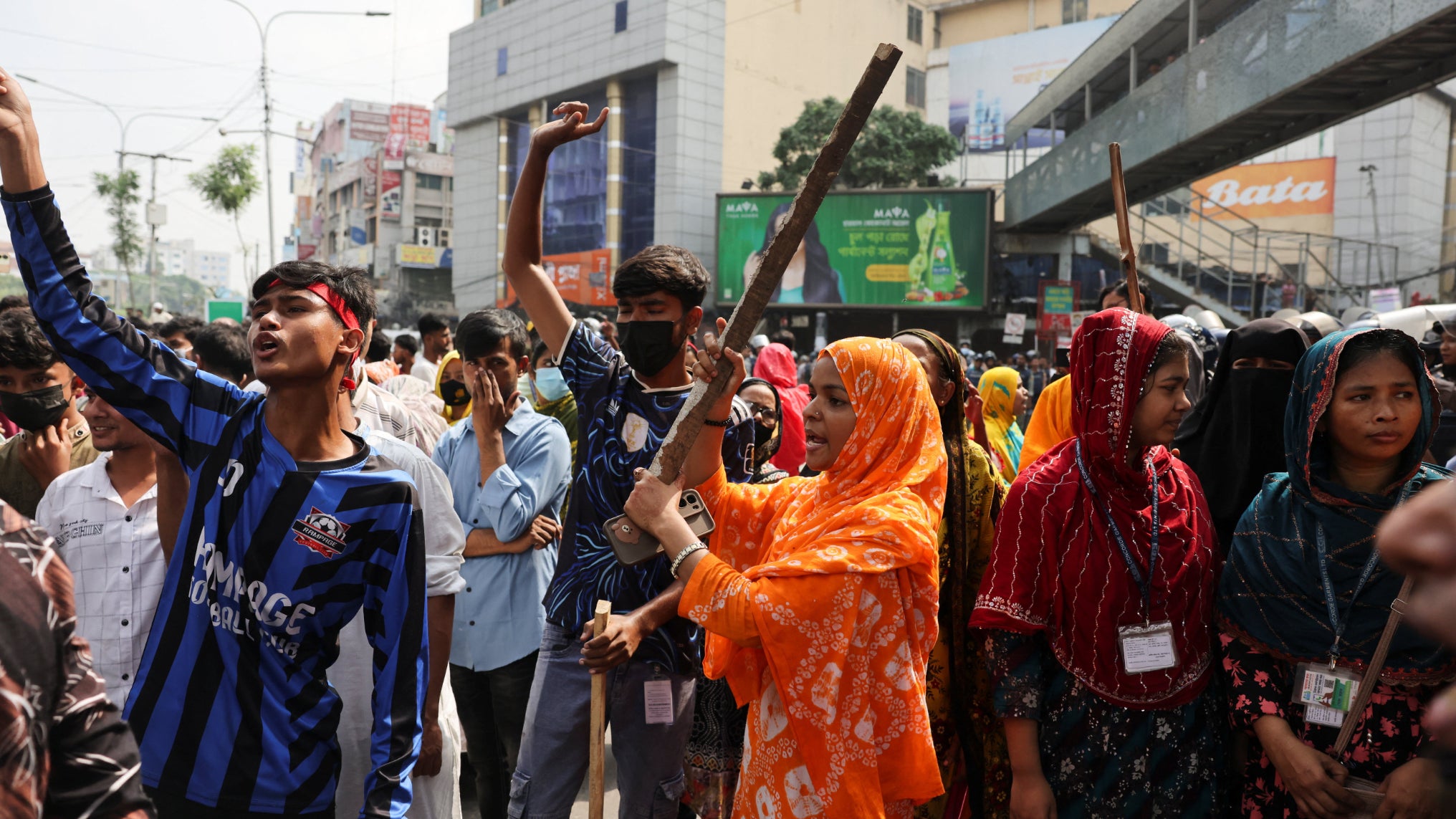
The protest has been going on for more than three weeks: thousands of textile workers have been striking and demonstrating regularly in the streets of major cities in Bangladesh to denounce their low wages since the beginning of November. This Tuesday, November 17, violent clashes broke out between workers and the police in Dhaka, the Bangladeshi capital. While the mobilization continues, the latter has already cost "at least 428 million dollars" (around 390 million euros) to 317 factories in the sector, according to an initial investigation by the main employers' federation in the sector, the Bangladesh Clothing Manufacturers and Exporters Association (BGMEA).
This estimate concerns half of the factories affected, numbering 600 to 700 companies. In addition, “orders worth $254 million were transferred to other countries,” BGMEA said in a statement. 90 euros monthly salary, barely enough to live on Since the end of October, Bangladeshi textile workers, who produce clothes for international brands like Levi's, Zara, Uniqlo, Primark and H&M, have been mobilizing to demand a doubling of the minimum monthly wage, to 30.
000 taka (around 220 euros) against 12,500 taka currently (90 euros), against a backdrop of high inflation in the country. Strikes and demonstrations, which have sometimes given rise to clashes with the police, are affecting a key sector of the country's economy.
Bangladesh is in fact the second largest clothing exporter in the world behind China. The textile industry, which employs nearly four million workers out of some 170 million inhabitants, brings in around $38 million per year and accounts for most of Bangladesh's export earnings. According to the BGMEA, the social movement has penalized production, delayed deliveries and undermined the confidence of international customers.
“These unrest have also lastingly affected the image, reliability and prospects of Bangladesh's textile industry in the global market,” added Shahedul Islam, its secretary general. This social movement comes as the end-of-year holidays approach, the busiest period for Bangladesh's clothing exports. A committee bringing together representatives of workers and employers was appointed by the government at the beginning of November.
He should announce the amount of the new minimum wage by December, with implementation promised in January.
Machine-translated from French
Not cross-checked yet
Only BFM Business reports this story so far. We show it as a single source until another newsroom confirms it.
- BFM Business22 Nov, 15:53
| Publisher BFM Business (established tier) | +76 |
| Detailed summary | +2 |
| Total | 78 |
Method: reports are grouped by the words of their headline and summary; each newsroom counts once; figures are read from the reports as published. Nothing here is written by an AI.