To counter the Citroën ë-C3, Dacia is preparing a brand new electric SUV for less than €20,000
Dacia is actively seeking to develop its electric range. To limit costs, the Romanian brand could import the Renault Bridger planned for next year in India. It will then be able to compete with the Citroën ë-C3.
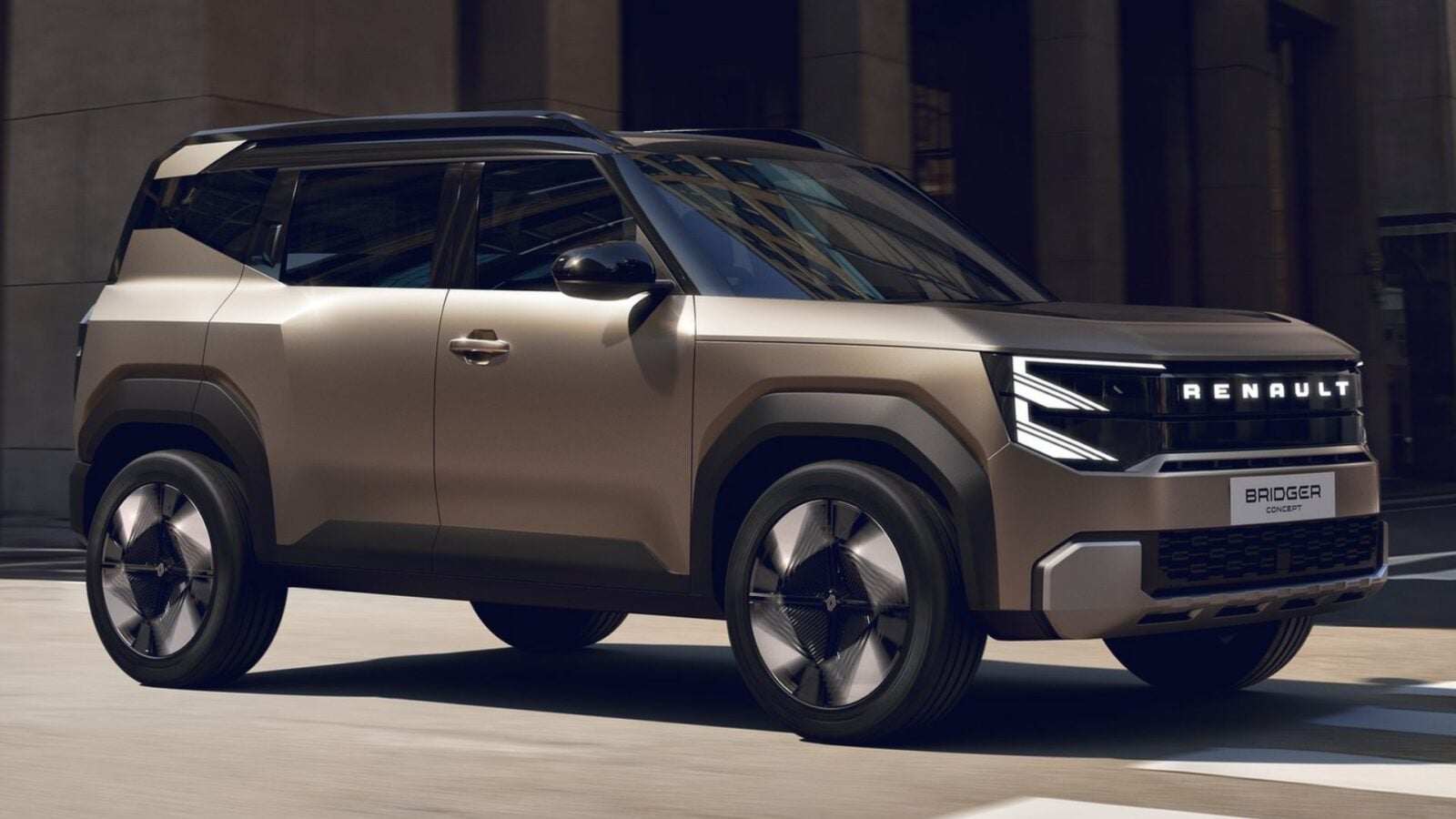
Dacia is actively seeking to develop its electric range. To limit costs, the Romanian brand could import the Renault Bridger planned for next year in India. It will then be able to compete with the Citroën ë-C3.
Dacia has just renewed the aging Spring. A good start, even if the Romanian brand remains stuck for the moment with a single electric vehicle in its range. To reduce CO₂ emissions in the future, this will clearly not be enough. If a battery-powered Sandero is indeed in the pipeline, another surprise guest could join the party. This is a crossover that was not initially planned for Europe…
Presented last March, the Renault Bridger is a complete unknown since it is currently only a concept. But this lovely style study will have a bright future when it arrives in emerging markets in 2027. It will then take the form of a small crossover just over 4 meters long, and which will be available in petrol, hybrid and electric versions. This new vehicle will thus be placed under the Renault Duster.
If it was not supposed to arrive here, the Bridger could see its roadmap completely disrupted due to the current context. Given that Dacia must quickly electrify its range at lower cost, adapting the Bridger to the European market is a perfect opportunity to achieve the CO₂ objectives imposed by the European Union. It is therefore possible that the vehicle has a much longer career than expected, driven by pushed horizons.
Parachuting the Bridger into Europe would then allow Dacia to compete head-on with Stellantis' accessible electric city cars, the Citroën ë-C3 and Fiat Grande Panda. These two vehicles have also opted for a similar strategy, namely development initially designed for emerging countries before arriving on the European market. The Bridger would thus be positioned between the Spring and the future electric Sandero.
Dacia had also confirmed that it would launch four electric models by 2030, the Spring being the first on the list. The Sandero and Sandero Stepway are also almost certain. The last member of the wave, however, remains purely hypothetical. A replacement for the Jogger seems unlikely, just like an electric version of the Striker. All eyes are therefore on the Bridger, even if the Hipster is also a good candidate.
François Provost, CEO of the Renault group, also dropped a big clue at the Paris Motor Show by stating that the Bridger was “created for India, but that it could one day arrive on our markets as well”. If confirmed, the SUV could start under €20,000 and offer between 200 and 300 km of autonomy. Its cubic style should be faithful to that of the concept and Dacia should not make too big modifications.
868 km of real range: Mercedes breaks a record with its new sedan and eliminates the fear of running out of fuel
€11,500 and 600,000 km guarantee: why Volkswagen's new electric sedan hides a double trap
Mercedes launches on-board AI that works even without a network: what changes for drivers
Mercedes sells its fast charging network to a French giant for nearly 100 million euros
Best electric charging card (2026): which one to choose?
Machine-translated from French
Not cross-checked yet
Only 01net reports this story so far. We show it as a single source until another newsroom confirms it.
- 01net12 Nov, 07:00
| Publisher 01net (general tier) | +72 |
| Detailed summary | +2 |
| Total | 74 |
Method: reports are grouped by the words of their headline and summary; each newsroom counts once; figures are read from the reports as published. Nothing here is written by an AI.