Leaving at 62, not contributing more and saving 140 billion euros: how does Jordan Bardella plan to finance his promises which would cost nearly 15 billion euros more per year?
The president of the National Rally reaffirmed this Tuesday on BFMTV that he intended to reduce the legal retirement age to 62 with 42 years of contributions and introduce a dose of capitalization through a sovereign…
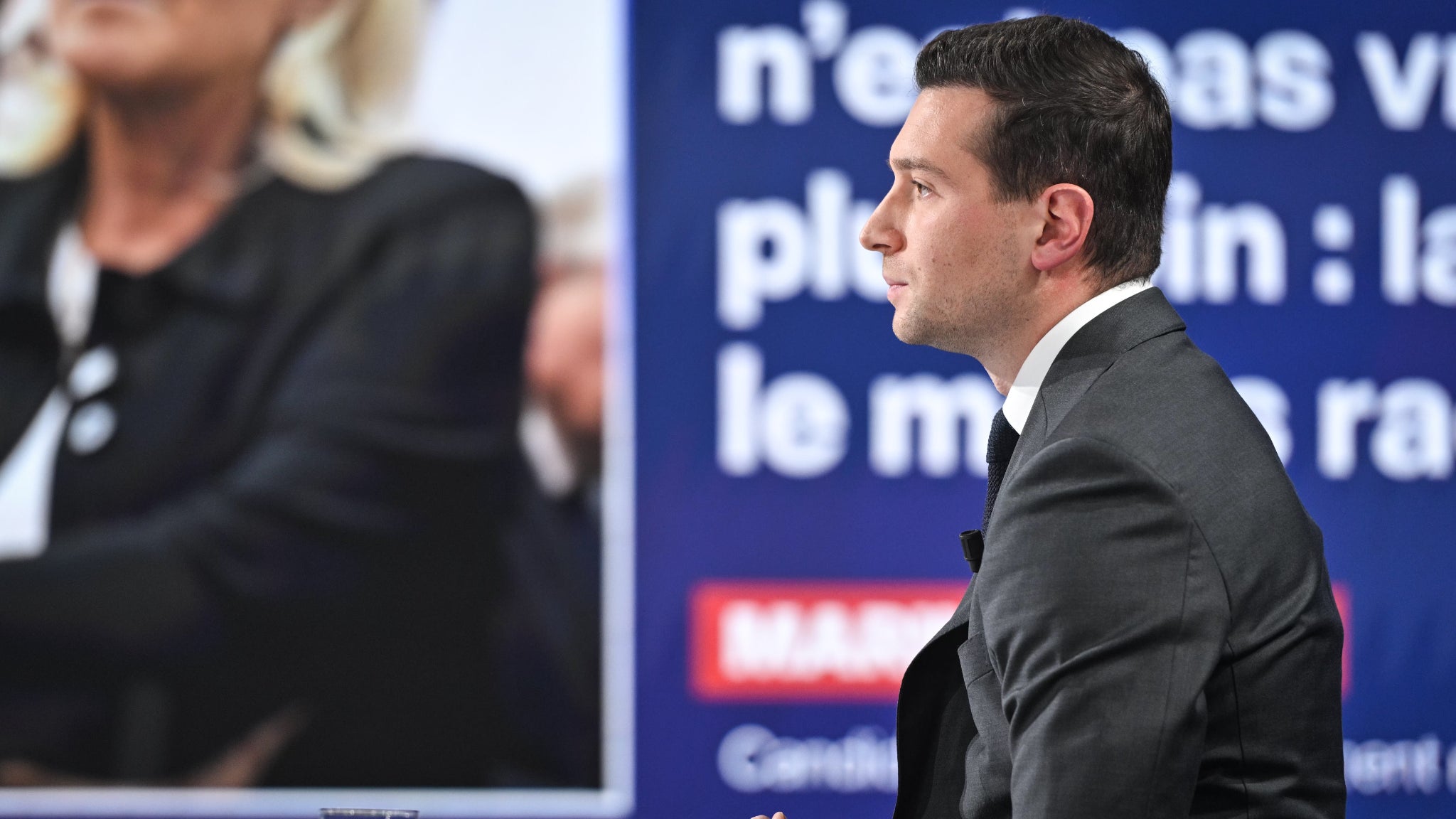
Jordan Bardella wants to “repair the French retirement system”, which he considers “unsustainable”. The president of the National Rally announced this Tuesday on BFMTV that his party would present a reform proposal next Tuesday including in particular the introduction of a "dose of capitalization in the system". But the RN insists: it also defends the return to a legal retirement age of 62 years, with 42 years of contributions, compared to 64 years and 43 annuities provided for by the 2023 reform.
To develop capitalization, Jordan Bardella wishes to “offer the French, on a voluntary basis, a new tool which will be much more attractive, much more remunerative”. It would be a sovereign fund which would aim to allow the French to “become shareholders of the house of France, to become investors”. The president of the RN assures that he does not want to ask the French to contribute more.
The principle would therefore be to allow them to voluntarily invest part of their savings in this fund, in order to build up a retirement supplement thanks to the returns on the investments made. But several questions remain unanswered. How can we make this fund more attractive and more profitable than existing savings products?
Does the RN provide tax advantages to encourage the French to invest their money there? And would the State guarantee the sums invested or the promised returns? Above all, this system would not, on its own, finance the return to retirement at age 62.
The sums placed in the fund would be intended to constitute individual savings for the future, and not to pay current pay-as-you-go pensions. A considerable cost according to the Court of Auditors Because returning to 62 years old with 42 years of contributions would have a considerable cost. In its February 2025 report, the Court of Auditors estimated that the simple return from 64 to 63 years would lead to a deterioration of 5.8 billion euros per year in the balance of the retirement system by 2035.
But during a hearing before the Senate Social Affairs Committee on March 6, 2025, Pierre Moscovici, then first president of the Court of Auditors, also revealed the figures for a return to 62 years, carried out in particular at the request of the CGT: an additional 10.4 billion euros per year in 2035. To this would be added the effect of a reduction in the contribution period from 43 to 42 annuities, valued separately at 3.9 billion euros per year. That is, by adding these two estimates, a theoretical bill of 14.3 billion euros annually for the retirement system.
And the bill would be even heavier for public finances as a whole. Because allowing the French to leave earlier means not only more pensions to be paid, but also fewer social security contributions and tax , notably due to a reduction in the active population. For comparison, the Court of Auditors had estimated the overall effect on public finances of a simple return from 64 to 63 years at around 13 billion euros per year in 2035, compared to 5.8 billion for the retirement system alone.
Machine-translated from French
Not cross-checked yet
Only BFM Business reports this story so far. We show it as a single source until another newsroom confirms it.
- BFM Business10 Nov, 23:03Leaving at 62, not contributing more and saving 140 billion euros: how does Jordan Bardella plan to finance his promises which would cost nearly 15 billion euros more per year? ↗Figures: 140 milliards · 15 milliards · 42 ans
| Publisher BFM Business (established tier) | +76 |
| Detailed summary | +2 |
| Total | 78 |
Method: reports are grouped by the words of their headline and summary; each newsroom counts once; figures are read from the reports as published. Nothing here is written by an AI.