Shipowners, including CMA CGM, are asking Brussels to authorize them to dismantle their ships registered under the European flag in India
A few weeks before the publication by Brussels of the update of the list of authorized demolition sites, currently located in Europe and Turkey, maritime transport companies are justifying its extension to India due to…
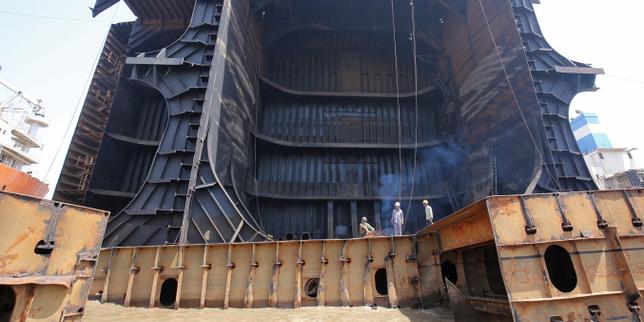
Shipowners under the European Union’s registration system, including the French carrier CMA CGM, have formally requested the European Commission to grant approval for the dismantling of their vessels in India. The plea comes a few weeks before Brussels is slated to publish an updated list of authorized ship‑breaking sites, which currently includes facilities in mainland Europe and Turkey. The petition is being made at a time when the EU is tightening its scrutiny of ship recycling, following the signing of the Ship Recycling Regulation, which imposes stringent safety and environmental standards for all dismantling operations.
The core of the shipowners’ argument hinges on three interconnected issues. First, the number of authorised sites that fall within EU territory is limited, leading to packing bottlenecks when a fleet’s decommission schedule overcomes the capacity of existing yards. Second, the cost differential for dismantling in Europe can be significant, especially when compared with Indian shipyards that have historically offered lower expenses and faster turnaround times. Third, many carriers point out that Indian yards have made significant strides in meeting the EU’s environmental criteria, including the hazardous‑materials handling regulations stipulated under MARPOL Annex II and the new recycling instruction. All together, these factors create a strong business case for expanding the approved network to include vetted Indian facilities.
The EU’s list of sanctioned yards is more restrictive than in the past because of a growing emphasis on worker safety and pollution prevention. The Commission’s steering group has identified a set of technical and audit standards that a yard must prove competence against, including the use of proper protective equipment, the segregation of waste streams, and the presence of qualified staff. Thus far, only a handful of Indian shipyards have pledged to comply with the full regulatory package, and the review will likely take several months. Until that time, carriers are forced to send their vessels to conventional European or Turkish yards, where the annual throughput is already at capacity from the wave of retirements linked to the transition to large‑scale LNG carriers and environmentally‑newer designs.
A wider implication of this move is the potential ripple effect across the global ship recycling supply chain. If India is successfully added to the authorised list, European carriers could preserve a pool of options that reduces waiting times and mitigates sudden cost spikes. Conversely, it may put further competitive pressure on Indian yards to maintain the high safeguard standards required by the EU, potentially escalating their operating costs. From a macro‑economic perspective, a pivot to India could also affect the local labour markets and drive investment in cleaner technologies, aligning with the broader European goal of decarbonising shipping as part of the Green Deal. Meanwhile, shipowners will monitor the Commission for any decision regarding the expansion, as it could either bring relief or reinforce the status quo.
Machine-translated from French
Not cross-checked yet
Only Le Monde reports this story so far. We show it as a single source until another newsroom confirms it.
- Le Monde28 Oct, 07:00
| Publisher Le Monde (reference tier) | +82 |
| Detailed summary | +2 |
| Total | 84 |
Method: reports are grouped by the words of their headline and summary; each newsroom counts once; figures are read from the reports as published. Nothing here is written by an AI.