Italy wanted to attract the rich, now it wants to tax them: discreetly and without talking about it, Giorgia Meloni is preparing a tax that would bring in almost nothing but could scare away millionaires
While Italy has implemented a policy of attracting large fortunes since 2017, the government of Giorgia Meloni wants to pass an "exit tax" which would impose a 26% tax on the unrealized capital gains of wealthy…
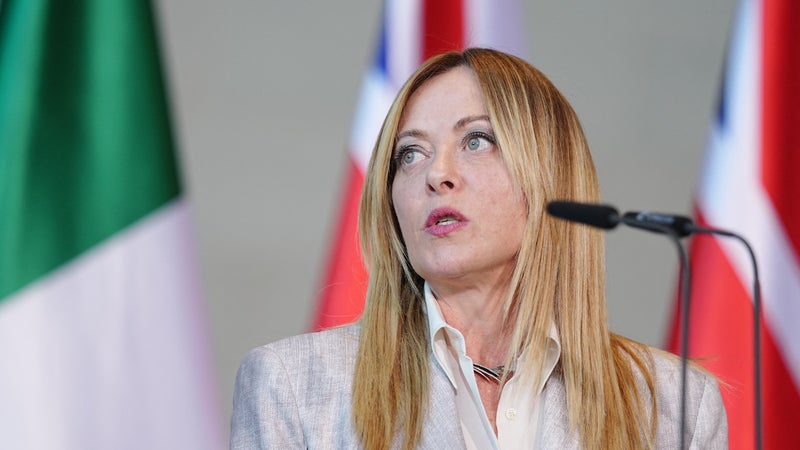
For several years, Italy has been a bit of an El Dorado for the rich. The country was in fact devoid of wealth tax or exit tax and Milan was a destination of choice for the great fortunes of the Old Continent. This is evidenced by the surge in property prices in recent years in the Lombard capital.
“People are settling in Milan. It’s a dynamic, international city, the business environment is very similar [to that of London] in terms of people and energy,” a tax lawyer based in Lombardy recognized last year. But that may soon no longer be the case.
In its draft budget for 2027, the government of Giorgia Meloni proposes to introduce an "exit tax", an exit tax which would hit wealthy taxpayers deciding to leave the country, as explained by Corriere della Serra. The system provides for a taxation of 26% of unrealized capital gains for people with assets of at least 800,000 euros.
In other words, a taxpayer may have to pay tax on the increase in value of certain of his financial assets, even if he has not sold them. This tax would concern people who have been tax residents in Italy for at least six of the 10 years preceding their departure. A reimbursement mechanism would, however, be provided under certain conditions if the assets were not sold in the following years.
A similar tax under Sarkozy A measure reminiscent of a similar system in France put in place in 2011 under Nicolas Sarkozy. This "taxation of unrealized capital gains upon transfer of tax domicile outside France" targets taxpayers who leave the territory after having resided there for at least six of the last 10 years and who hold in particular shares or participations with a value greater than 800,000 euros, or representing at least 50% of a company's profits.
But this tax was considerably relaxed under Emmanuel Macron in 2019. Its yield was also very modest since it brought in on average around 25 million euros per year between 2011 and 2016, according to a figure recently recalled by the general rapporteur of the budget to the National Assembly. However, no more recent annual amount allows us to establish precisely what it brings in today.
It is also the low anticipated yield which is surprising in the project of the head of the Italian government. According to Meloni government forecasts, the tax would only bring in 3.7 million euros in 2027, then just over 6.7 million euros per year for the following four years. Revenues would then decrease with the first reimbursements.
Enough to question the economic interest of this reform, when it could discourage wealthy taxpayers from settling permanently in the country. “This will make Italy much less popular with people wanting to settle there permanently,” warns Tim Stovold, tax manager at Moore Kingston Smith. Some might even be tempted to leave the country before having spent six years there, in order to avoid the tax.
Machine-translated from French
Not cross-checked yet
Only BFM Business reports this story so far. We show it as a single source until another newsroom confirms it.
- BFM Business4 Nov, 13:00
| Publisher BFM Business (established tier) | +76 |
| Checkable figures cited | +3 |
| Detailed summary | +2 |
| Total | 81 |
Method: reports are grouped by the words of their headline and summary; each newsroom counts once; figures are read from the reports as published. Nothing here is written by an AI.