He tours airplane graveyards to reverse engineer Boeings: how Elon Musk uses old (very polluting) airplane engines to power his data centers
In the United States, as the price of electricity rises, several companies are fighting to recover motors from old devices and transform them into electric generators. But not everyone likes it.
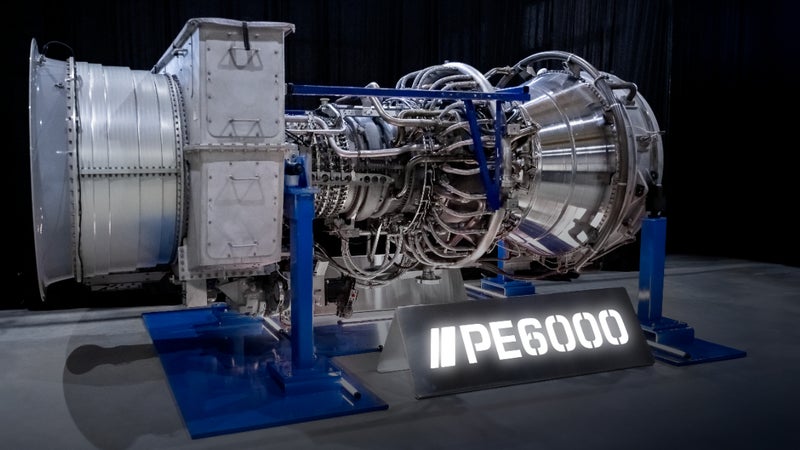
Between skyrocketing electricity prices and ever more energy-hungry data centers, American tech giants are looking for alternative solutions. A quest initiated by President Trump himself: "it's my idea, I required data centers to produce their own electricity, so that they do not draw it from the public network", launched the tenant of the White House. The message was received five out of five and one of the solutions found is rather original: using reformed aircraft engines and transforming them into electric generators, as the New York Times recounts.
For some time now, aircraft graveyards in the United States have become a favorite place for tech giants who are fighting to recover these engines even if they haven't run for years. It must be said that the stock is colossal. In January, the US Energy Information Administration (EIA) reported that the engines of the 4.
000 old military planes stored on a single desert base near Tucson could generate 40,000 megawatts. This represents a production capacity greater than that of an entire state.
xAI installed eight modified Boeing 747 and 767 turbines. Specialized companies are then responsible for transforming these engines into generators like ProEnergy, which was one of the first to enter this niche, by adapting General Electric turbines commonly found on Boeing planes. Each turbine can produce 50 megawatts of electricity, enough to power 15,000 homes.
According to her, demand from data centers now exceeds that of traditional energy suppliers. For companies sometimes forced to wait years before being able to connect to the electricity grid or obtain conventional turbines, these units offer a quick solution to power their data centers. Among the users is xAI, Elon Musk's artificial intelligence company, according to the NYT.
The firm installed eight Boeing 747 and 767 turbines converted by ProEnergy in Mississippi to power Colossus 2, one of its huge data centers. For Elon Musk, this approach is vital, the billionaire expressed his frustration with the difficulties encountered in obtaining enough energy to realize his ambitions in the field of AI. “The chips will accumulate without being able to be put into service,” he said.
Authorizations to pollute more On paper, the idea is attractive for preserving public resources. However, it is polluting. xAI thus received authorization to emit carbon monoxide at a rate twice as high as the other turbines on the site.
The authorizations also allow a 25% higher threshold for pollutants such as volatile organic compounds. Both carbon monoxide and volatile organic compounds pose significant health risks. The environmental advocacy organization Southern Environmental Law Center challenged these authorizations, arguing that xAI underestimated projected releases and failed to demonstrate compliance with certain limits.
Machine-translated from French
Not cross-checked yet
Only BFM Business reports this story so far. We show it as a single source until another newsroom confirms it.
- BFM Business4 Nov, 12:00
| Publisher BFM Business (established tier) | +76 |
| Detailed summary | +2 |
| Total | 78 |
Method: reports are grouped by the words of their headline and summary; each newsroom counts once; figures are read from the reports as published. Nothing here is written by an AI.