The "Zucman tax" is debated in France but it crosses the Pyrenees: the Spanish Prime Minister wants to tax fortunes worth more than 100 million euros to recover 2 billion
The current socialist Prime Minister is proposing a new tax on fortunes above 100 million euros to finance childcare, housing and public services, in a context of strong asset inequalities.
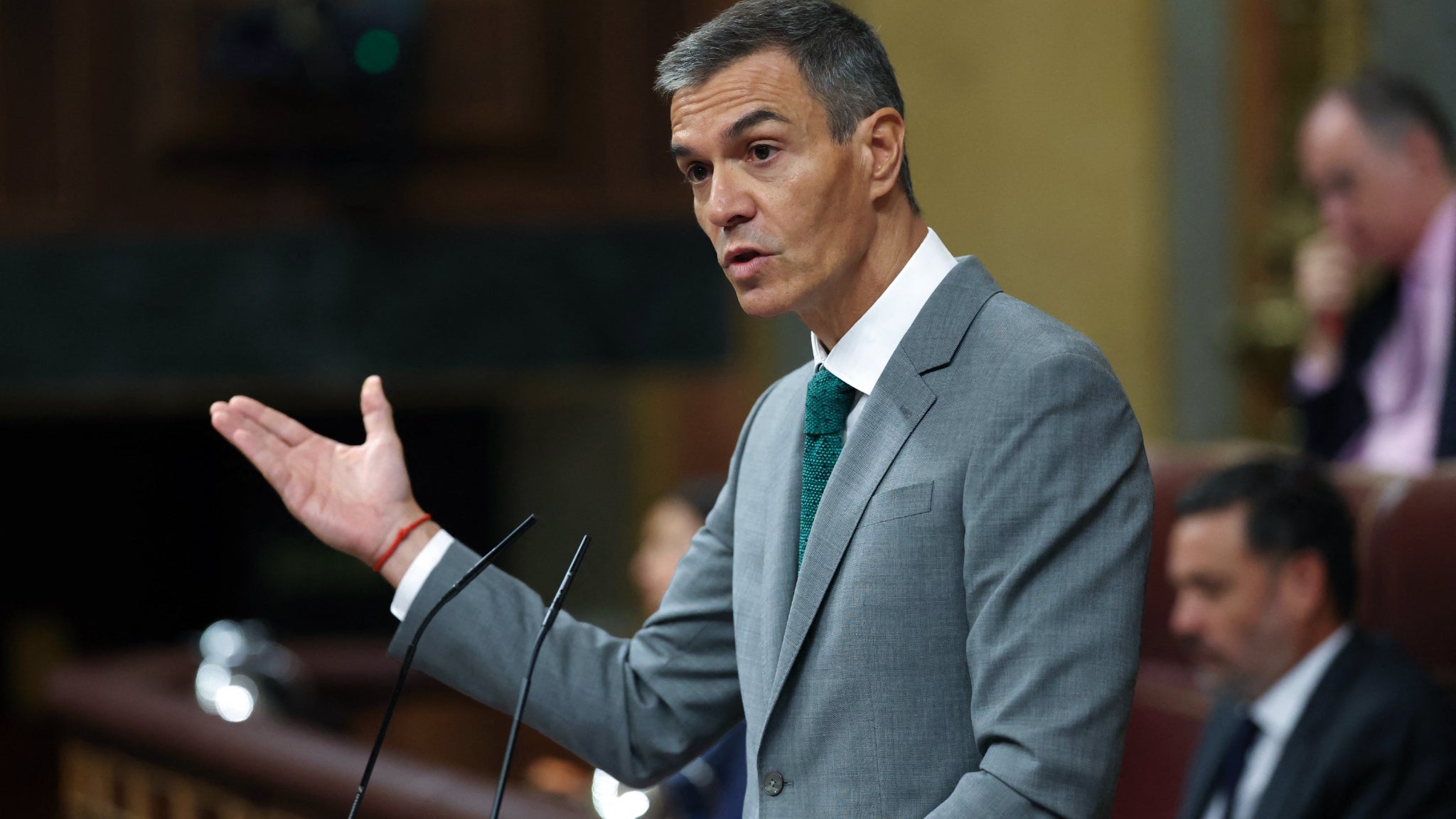
Spanish Socialist Prime Minister Pedro Sánchez proposed a new wealth tax of more than 100 million euros on Monday, a few days before Sunday's legislative elections, a measure intended to finance childcare, housing and public services. “Even though we have reduced income inequality to historic lows, the richest 0.1% hold more than 10% of wealth. And their share has continued to increase since 2010,” Pedro Sánchez wrote on X.
“We are proposing a tax on fortunes above 100 million euros in order to finance, for example, an allowance for children's education, housing and the improvement of public services. Let the millions also translate into rights,” he added. Pedro Sánchez's proposal is strongly reminiscent of the Zucman tax, defended in France by part of the left.
Both schemes target assets greater than 100 million euros. In France, however, the Zucman tax provides for a floor tax of 2% of net assets, after deduction of certain taxes already paid. The Spanish Prime Minister has not yet specified the rate of his new tax, but his party estimates that it could bring in 2 billion euros per year.
This proposal comes as Sánchez's socialists seek to distance themselves from the conservative Popular Party (PP), which the head of government accuses of wanting to reduce taxes for the richest. The PP is favored to come out on top in Sunday's vote, but without obtaining an absolute majority in Parliament. In this scenario, the far-right Vox party could play a decisive role in forming a government.
PP promises tax cuts Several forms of taxing the wealth of the richest have recently been defended by left-wing politicians in the United Kingdom, France, the Netherlands and elsewhere, in an attempt to respond to discontent over inequality and mobilize their electorate. Employers' organizations generally strongly oppose this type of tax, believing that it could push entrepreneurs who create jobs and growth into exile. Spain already has a solidarity tax on large fortunes, introduced in 2022, which applies to net assets greater than 3 million euros.
This tax was designed to complement regional wealth taxes and ensure that the wealthiest taxpayers participate in the tax effort regardless of their place of residence. For its part, the PP promises tax cuts for low- and middle-income households as well as young workers. The party also offers tax incentives for companies that invest in technology and digital.
Machine-translated from French
Not cross-checked yet
Only BFM Business reports this story so far. We show it as a single source until another newsroom confirms it.
- BFM Business23 Nov, 11:34
| Publisher BFM Business (established tier) | +76 |
| Checkable figures cited | +3 |
| Detailed summary | +2 |
| Total | 81 |
Method: reports are grouped by the words of their headline and summary; each newsroom counts once; figures are read from the reports as published. Nothing here is written by an AI.