World leaders must wise up to threat of cyber-attacks or rogue fridges will be least of their worries | Heather Stewart
Global cooperation seems unlikely despite AI increasing the risk of digital fraud and the need to protect the financial system Rogue French fridges were an unlikely talking point for the world’s leading economists,…
World leaders must wise up to threat of cyber-attacks or rogue fridges will be least of their worries Heather Stewart Global cooperation seems unlikely despite AI increasing the risk of digital fraud and the need to protect the financial system
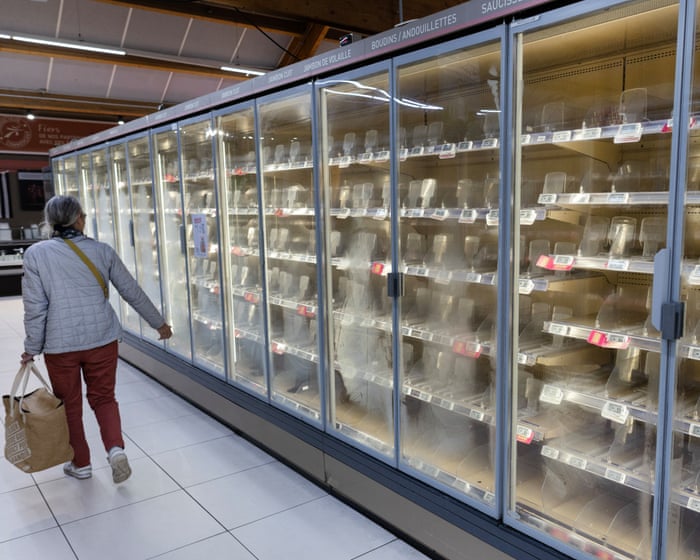
R ogue French fridges were an unlikely talking point for the world’s leading economists, central bankers and finance chiefs meeting in a sultry Bangkok last week – helping to underline the spiralling cost of cyber-attacks.
Kristalina Georgieva, the managing director of the International Monetary Fund, seized on news that supermarket chains across France had to chuck out piles of spoiled food after hackers accessed their fridge controls and turned up the temperature to 50C.
Speaking at the fund’s annual meetings in the Thai capital, she was keen to hammer home the importance of guarding against “bad actors” in a rapidly changing, interconnected world – especially now that AI was “putting the potential of digital fraud on steroids”.
Policymakers have been warning for some time that the AI boom could at some point threaten financial stability via a share price crash – a “correction”, as it is euphemistically called.
But a different, related threat came into sharp focus in Bangkok. Georgieva said she was concerned that cybercrime, turbocharged by AI, could undermine trust in the financial system altogether.
Social media feeds are rife with adverts using celebrity fakes to punt cryptocurrencies or gold, and even the old-school email-style scams can be generated far more prolifically.
Just as a sea of AI slop has the potential to undermine trust in fact-based reporting and send people down political rabbit holes, Georgieva fretted that cyber-fraud could knock consumer confidence in mainstream banks.
Recalling her own childhood behind the iron curtain in Bulgaria, she said many people did not trust the system, and kept their cash in a shoebox under the bed. “I worry, today, that unless we figure out how to get ahead of this curve … we may end up with lots of people with shoeboxes under their beds,” she said.
It might not even take a cybercrime wave. This week the JP Morgan chief executive, Jamie Dimon, warned that the bank would not allow digital agents to operate on its customers’ behalf. “You don’t want rogue agents, and there could be thousands of them,” he said.
AI agents, including Meta’s Muse, are starting to offer their users the opportunity to hand over their financial details. The agents will then scout for the highest savings rates and shift the user’s money accordingly.
Financial regulators fret about this for a number of reasons. One is that if such services become widely used, they could have destabilising herding effects. With deposits able to be moved around the financial system at a moment’s notice, it could accelerate a bank run in times of uncertainty.
Not cross-checked yet
Only The Guardian reports this story so far. We show it as a single source until another newsroom confirms it.
- The Guardian18 Oct, 13:46
| Publisher The Guardian (reference tier) | +82 |
| Detailed summary | +2 |
| Total | 84 |
Method: reports are grouped by the words of their headline and summary; each newsroom counts once; figures are read from the reports as published. Nothing here is written by an AI.