It represented 75% of the country's exports and 5% of its GDP: Panama wants to reopen its gigantic copper mine because keeping it closed is costing it too much
Panama plans to relaunch its largest copper mine, closed since 2023. A project that opposes economic imperatives, environmental concerns and the risks of new social tensions.
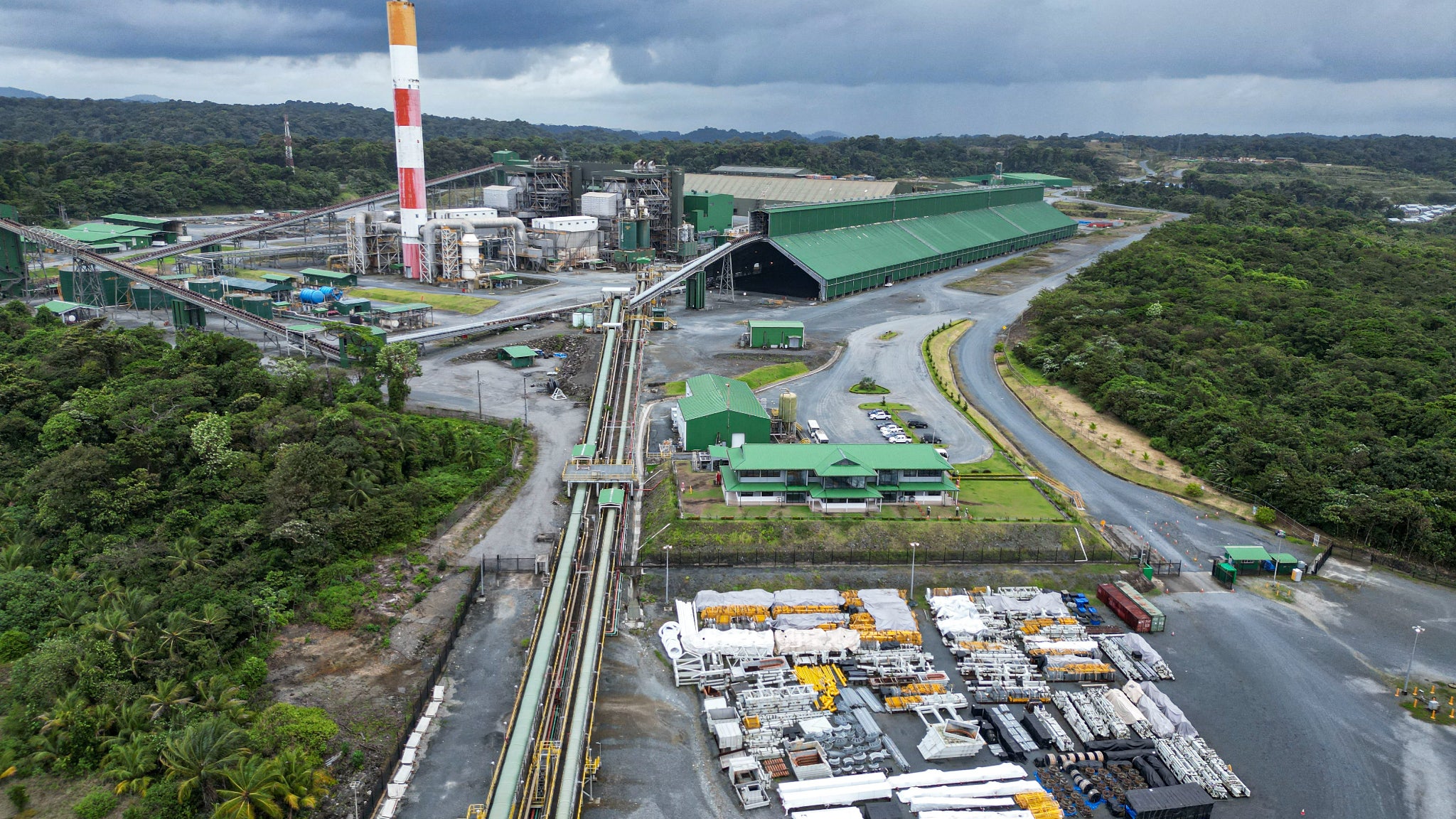
Panama's government has begun talks with a Canadian mining company to resume production at Central America's largest open-pit copper mine, despite opposition from environmental advocates. Copper mining at First Quantum Minerals' Cobre Panama site was suspended in November 2023 after the Supreme Court declared the company's mining concession unconstitutional, on the grounds that it violated environmental and public tender regulations. The decision came after weeks of anti-mining protests that paralyzed the country.
First Quantum and its partners are seeking some $27 billion in damages for the suspension of their activities, or approximately 30% of Panama's GDP. Panamanian President José Raul Mulino has pleaded in favor of resuming production in order to help finance a closure that promises to be long and costly. On Monday, ministers met with representatives of Minera Panama, the Canadian group's subsidiary, to discuss the conditions for resuming mining operations.
Since the mine closed in November 2023, copper prices have jumped 46%. At the time, a ton of the red metal traded on average at 8,174 dollars on the London Metal Exchange, compared to almost 12.
000 dollars currently. And this despite a sharp decline in prices in recent weeks: last October, the average price of a tonne of copper still exceeded $14,500, an increase of almost 78% in three years.
Enough to reinforce the economic interest of putting the Panamanian mine back into service. Economy versus environment The mine represented 75% of Panama's exports, around 5% of its GDP, as well as some 7,000 direct jobs and 30.
000 indirect jobs. While Panama derives much of its revenue from its interoceanic canal, President Mulino argued that the country had an interest in taking advantage of the growing global demand for copper. Environmental defenders have a completely different reading of the situation.
“They take away the (mineral) wealth and leave us with the damage to water and soil, as well as the disappearance of forests and species,” Raisa Banfield told AFP. They believe the use of chemicals and heavy metals, such as mercury, arsenic and lead, in copper processing threatens biodiversity and water sources. Donoso, a coastal district in the Caribbean province of Colon where the mine is located, is part of the Mesoamerican Biological Corridor.
This strip of protected natural areas, which stretches from southern Mexico to Panama, connects wildlife habitats in the Americas, Ricardo Wong of the International Union for Conservation of Nature told AFP. Environment Minister Juan Carlos Navarro told Minera Panama executives that ecological concerns were “fundamental.” The Minister of Commerce and Industry, Julio Molto, for his part underlined "the importance" of citizen participation in the decision-making process.
Legal obstacles and risk of social tensions The project must overcome several legal obstacles. The government cannot reinstate First Quantum's mining license, invalidated by the Supreme Court. It cannot issue a new one either, because the State imposed an indefinite moratorium in 2023 on new concessions for the exploration and extraction of metals.
President Mulino indicated that a new "legal framework" would be evaluated, without providing details. The president of the Mining Chamber of Panama, Severo Sousa, and lawyer Harley Mitchell, specialist in environmental issues, presented to AFP three possible legal avenues: the direct resumption of operations by the State, the use of Minera Panama as a service provider or the creation of a public-private partnership. Minera Panama affirmed its commitment to “transparency” and “full respect” for Panamanian sovereignty and citizen participation.
The government estimates that the final closure of the mine could take up to two decades and cost some $3.4 billion, or almost 10% of the 2026 budget. This is little compared to the damages claimed by First Quantum in international arbitration procedures, which the company has suspended pending the outcome of discussions with the state. Thousands of jobs are at stake, even if the local population is divided on whether to restart production.
For Ilka Camargo, a former employee of the mine, this would be an “encouraging” sign for the thousands of families affected by the cessation of production in 2023. But a resumption of copper extraction could trigger new social movements. In 2023, the anti-mine mobilization caused five deaths, with more than 500 arrests.
Leysi Rodriguez, of the Donoso peasant movement, does not believe the government's promises that any future projects would be subject to strict environmental controls. Like environmental defenders, she believes that the mine must be permanently closed.
Machine-translated from French
Not cross-checked yet
Only BFM Business reports this story so far. We show it as a single source until another newsroom confirms it.
- BFM Business28 Nov, 16:18
| Publisher BFM Business (established tier) | +76 |
| Detailed summary | +2 |
| Total | 78 |
Method: reports are grouped by the words of their headline and summary; each newsroom counts once; figures are read from the reports as published. Nothing here is written by an AI.