“You have to learn two foreign languages at school: English and coding”: despite the rise of artificial intelligence, the boss of Thales calls for “doubling the number of engineers” in France
For the CEO of Thales, France would need twice as many engineers, in particular to support the development of artificial intelligence.
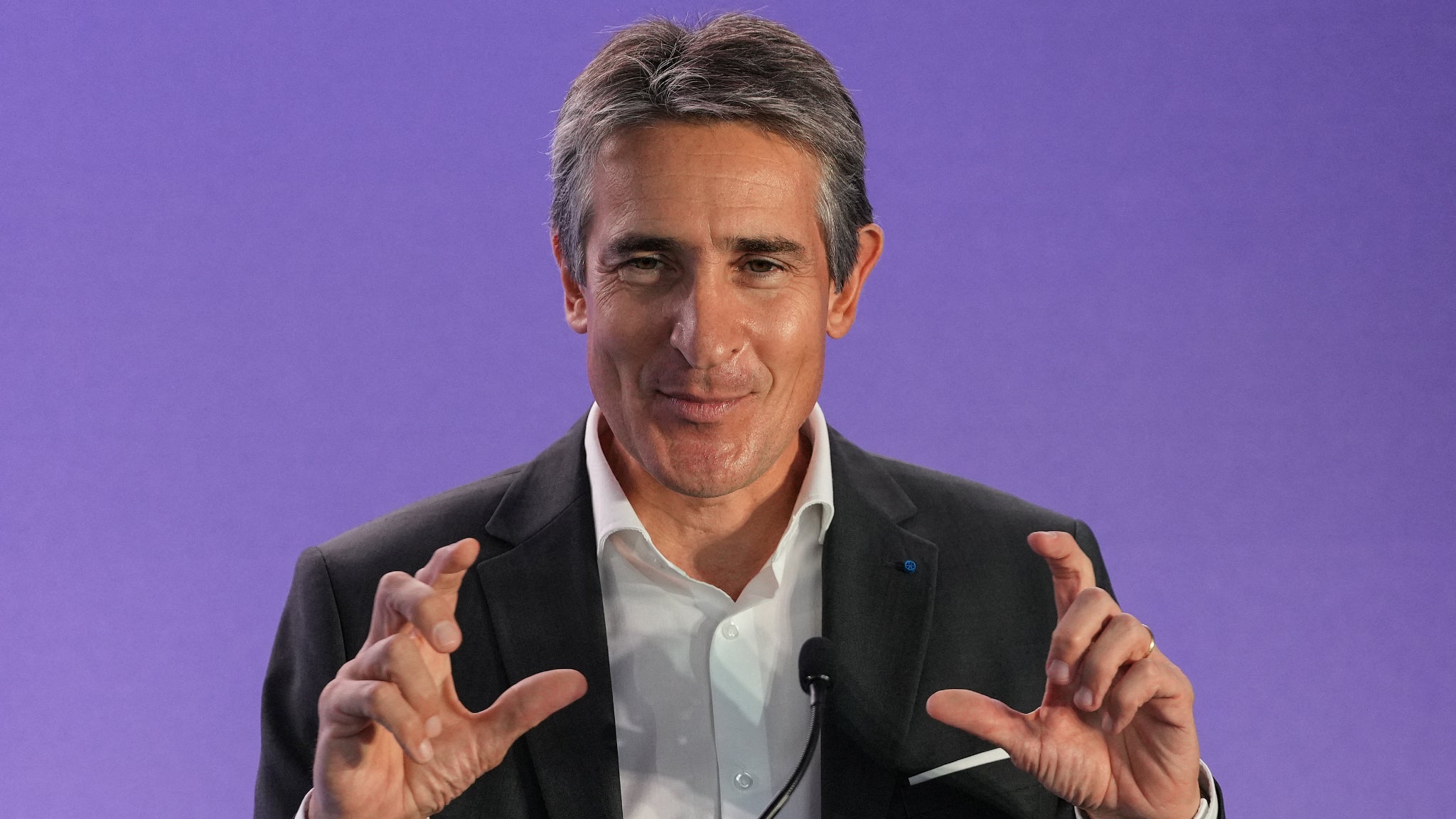
France will need twice as many engineers, if only to formulate requests addressed to artificial intelligence (AI), estimates the CEO of Thales, who is calling for making "code" the second "foreign language" at school, after English. “In France, we need to double the number of engineers” to reach 100,000, declared Thursday Patrice Caine, also president of the National Association of Research and Technology (ANRT) during a breakfast with the press.
Asked by AFP whether so many engineers will be needed when AI is already transforming the job market, he replied: "I want to spontaneously say yes, but I cannot demonstrate it." “It’s true that AI is becoming more effective in a certain number of tasks that were previously considered reserved for people trained as engineers,” he continued. Within the high-tech giant Thales, present in aeronautics, defense and cybersecurity, software engineers "are extremely senior" and will have to be replaced in ten years by today's "juniors" faced with competition from AI, noted Patrice Caine.
“I need juniors. I still need people who know how to code, to one day know how to ask a machine to code for them,” he explained. “You have to learn two foreign languages at school: English and coding,” he said.
Avoiding the "downgrading" of the country The ANRT meets the candidates for the presidential election to present to them its manifesto in favor of a research-innovation policy for the next five-year term. The association advocates a share of research and development (R&D) in France's gross domestic product of 3% by 2032 and 4% around 2037, compared to 2.2% currently, to avoid the "downgrading" of the country. For comparison, the United States devotes 3.6% of its GDP to R&D, South Korea 5.2% and the European average is between 2.4 and 2.8%, according to Patrice Caine.
“For the model to work, we will need more brains,” he concluded.
Machine-translated from French
Not cross-checked yet
Only BFM Business reports this story so far. We show it as a single source until another newsroom confirms it.
- BFM Business12 Nov, 20:05
| Publisher BFM Business (established tier) | +76 |
| Total | 76 |
Method: reports are grouped by the words of their headline and summary; each newsroom counts once; figures are read from the reports as published. Nothing here is written by an AI.