EU economy beats expectations but energy shock keeps inflation higher for longer
The EU economy is set to grow by 1.4% this year, faster than expected in the spring, but inflation will stay above 3% this year and next as the Iran war keeps energy prices high, the European Commission said in its…
The EU economy has weathered the energy shock from the Iran war better than the European Commission expected in the spring, with growth now forecast at 1. 4% for this year against the 1. 1% predicted in May.
However, inflation is set to stay above 3% this year and next as energy costs remain high, according to the Commission's autumn forecast published on Tuesday. It expects EU inflation to average 3. 3% this year and 3.
2% in 2027, far above the 2. 4% pencilled in for next year back in May. On growth, exports did the heavy lifting, with European firms selling power, cooling and chipmaking equipment for AI data centres and power grids worldwide.
Eurozone growth is forecast at 1. 2% this year and next, also up from the 0. 9% expected for 2026 in spring.
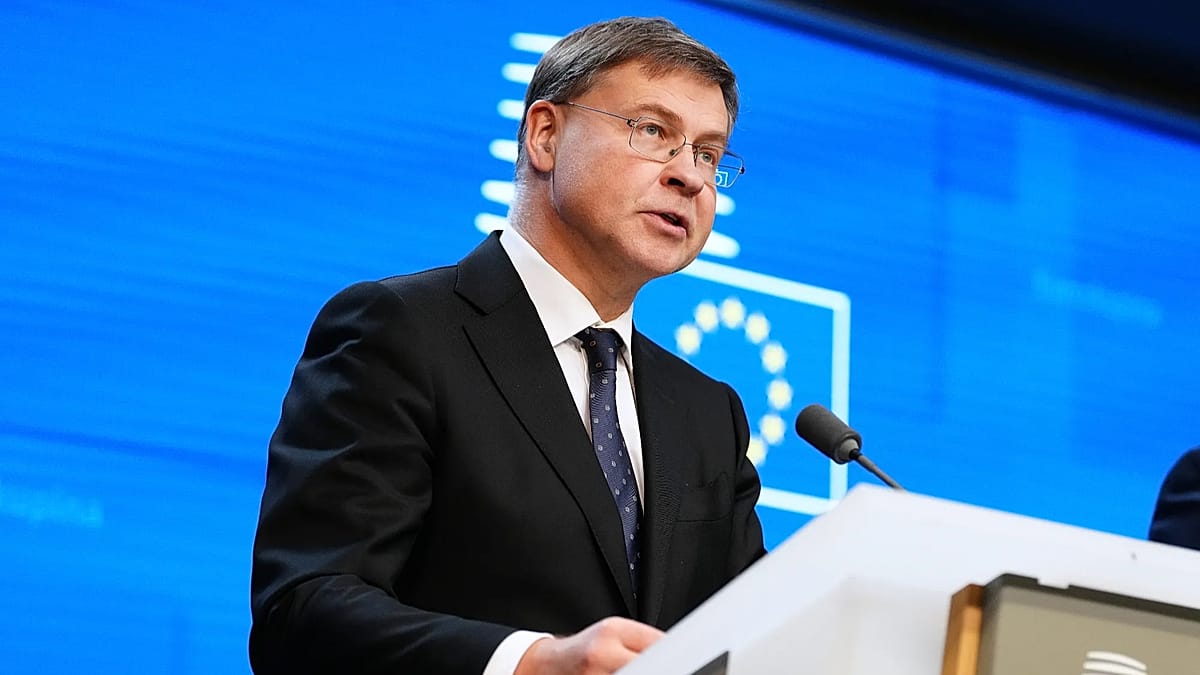
"In 2026, Europe's economy is holding up better than expected. But we cannot take this for granted, nor can we be content with resilience alone," said Valdis Dombrovskis, the EU's economy commissioner, at a press conference in Brussels on Tuesday. Inflation stay higher for longerEurozone inflation hit 4% in October, a three-year high, according to a flash estimate from Eurostat, the EU's statistics office, which publishes its final figure on Wednesday.
The Commission expects EU inflation to peak above 4% around the turn of the year and only return to 2. 3% in 2028. Petrol and diesel prices should gradually fall next year, but household gas and electricity bills are likely to keep rising in the coming months, as higher wholesale prices take time to reach consumers.
Food inflation is set to climb from just above 2% this year to around 3% in 2027, after extreme heat and drought hit harvests this summer and fertiliser costs jumped. "Higher energy prices mean higher costs for households and businesses," Dombrovskis told reporters in Brussels. Poorer households are hit hardest, as food and energy eat up more of their budgets.
The Commission acknowledged that its inflation forecast may already be too high. Oil and gas prices have fallen by around 20% since the forecast's 29 October cut-off, after the US midterm elections eased fears of renewed strikes on Iran, according to the report. If that lasts, inflation next year could be about a quarter of a percentage point lower, it estimates.
Governments under strain but jobs hold upThe EU's combined budget deficit is set to widen from 3. 1% of GDP last year to 3. 6% this year, driven by higher defence spending, rising interest costs and support for households and businesses hit by high energy bills.
Interest payments are set to swallow 2. 4% of economic output by 2028, the most in over a decade, while public debt climbs from 82. 6% of GDP last year to 85.
6% in 2028. Among the eurozone's four biggest economies, Spain is set to grow fastest this year at 2. 6%, ahead of Germany at 1.
3% and Italy at 1. 0%. France lags behind at 0.
4%, with its deficit at 5. 5% of GDP and unemployment forecast to rise to 9. 8% by 2028.
Dombrovskis warned that "we have reached a critical juncture for fiscal policy" and urged governments to adopt prudent budgets in line with EU fiscal rules, which the Commission will assess next week. The EU should add around 800,000 jobs this year, while the jobless rate hovers just above 6%, near its lowest level on record, although unemployment is creeping up among young people. After inflation, wages are set to grow by just 0.
6% this year and next, down from 1. 7% in 2025, while workers in eight countries, including Spain and Italy, are set to see their pay fall in real terms this year. Higher borrowing costs add to the pressure as the European Central Bank has made two rate hikes this year and markets expect more, weighing on house building and demand for loans.
Not cross-checked yet
Only Euronews reports this story so far. We show it as a single source until another newsroom confirms it.
- Euronews17 Nov, 11:54
| Publisher Euronews (established tier) | +76 |
| Checkable figures cited | +3 |
| Detailed summary | +2 |
| Total | 81 |
Method: reports are grouped by the words of their headline and summary; each newsroom counts once; figures are read from the reports as published. Nothing here is written by an AI.