“Even one of the most solid platforms in the world can be hacked”: how could billions of dollars of cryptocurrencies be stolen from Binance in just twenty minutes?
The exchange, which has 335 million users, suffered a hack of more than $6.3 billion in cryptocurrencies. How was such a theft possible and what does it reveal about the security of cryptocurrencies?
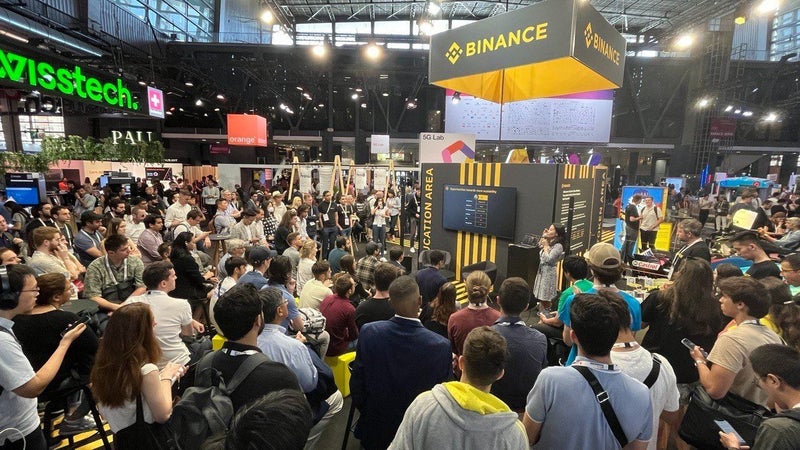
Even the cryptocurrency giants are not safe from hackers: Binance, the world's leading exchange platform in the sector, estimates the amount of assets affected by the hacking of which it was the victim at 6.3 billion dollars, or 5.6 billion euros. Most of the theft took place in around twenty minutes Thursday evening. World number one in digital currency trading volume, Binance claims 335 million users.
For comparison, the Crypto site. com counted 741 million cryptocurrency owners worldwide. The company, however, knows its share of scandals.
His former boss Changpeng Zhao was convicted in April 2024 in the United States for violating anti-money laundering legislation, before being pardoned last year by Donald Trump. Other procedures exist in the United States, where the platform was notably accused of having sold the equivalent of financial securities not declared to the American markets policeman. In France, Binance is suspected of having failed in its obligations to control its clients' funds.
Failing to have obtained approval under the European MiCA regulation, the crypto colossus announced this summer the partial suspension of its activities in the European Union. Cryptocurrencies are based on a technology called “blockchain”, or chain of blocks in French: a digital register which stores the history of transactions and whose design makes falsification particularly difficult. However, this does not protect the funds from theft: their transfers are authorized by means of private keys, long sequences of characters which must remain secret.
Digital wallets are used to manage these keys, and not to store the cryptocurrencies themselves, whose movements are recorded on the blockchain. A person who obtains these keys can therefore move funds without having to tamper with the register. “Even when you think you are on one of the most solid platforms in the world, it can be hacked,” notes Stéphane Ifrah, analyst at Coinhouse.
Exploiting a vulnerability To gain access to private keys or systems authorizing transfers, hackers can exploit a computer vulnerability, use malware or target people, through phishing or threats. Some keys are kept on hardware wallets not connected to the Internet. But these devices are not immune to attacks: user funds from the French specialist Ledger were thus stolen using malicious implants slipped into devices marketed by a reseller.
In the case of Binance, the investigation focused on "a laptop whose security was affected", belonging to an engineer, before several "additional breach points" were revealed, the platform indicated on X. The exact course of the attack remains to be established. Without official confirmation, analysis companies TRM Labs, Chainalysis and Elliptic point to hackers linked to North Korea, the TraderTraitor group known as "Lazarus Group".
Machine-translated from French
Not cross-checked yet
Only BFM Business reports this story so far. We show it as a single source until another newsroom confirms it.
- BFM Business30 Oct, 15:57
| Publisher BFM Business (established tier) | +76 |
| Checkable figures cited | +3 |
| Detailed summary | +2 |
| Total | 81 |
Method: reports are grouped by the words of their headline and summary; each newsroom counts once; figures are read from the reports as published. Nothing here is written by an AI.