They paid up to 100 dollars more to have a window on the plane… but found themselves facing a wall: the Delta company will have to explain itself in court
Delta and United Airlines are accused of knowingly charging extra for window seats that are not window seats. The plaintiffs who launched a class action are seeking millions of dollars.
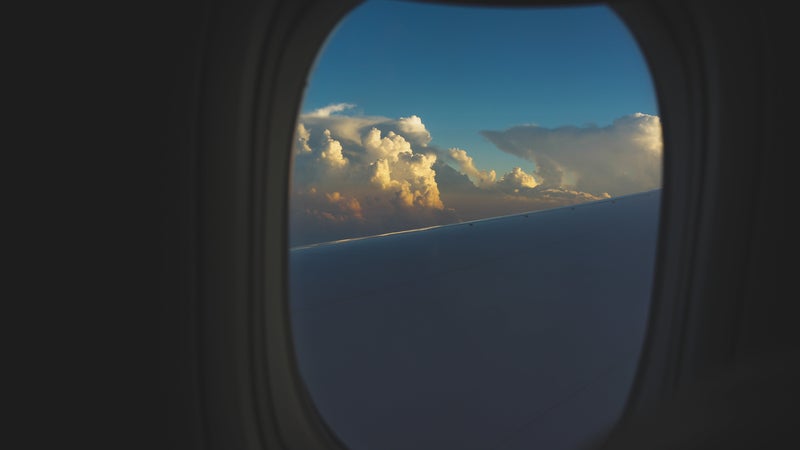
The case of real-fake window seats will be well judged. A federal judge has denied Delta Air Lines' request to dismiss a lawsuit brought by passengers who claimed they paid extra for window seats but found themselves seated next to blind walls. Federal District Judge Ramon Reyes in Brooklyn ruled Wednesday that there was a reasonable dispute over whether Delta's contract of carriage, which states that the company "does not offer tickets or contracts guaranteeing particular seats to its customers," required Delta to provide window seats to passengers who paid for them.
The judge did not rule on the merits of the case. In July, another federal judge in San Francisco rejected United Airlines' request to dismiss a similar lawsuit. The two lawsuits seek millions of dollars in damages, for more than a million passengers per airline.
Delta declined to comment Thursday, saying it does not comment on pending litigation. Casey Olbrantz, the attorney for the four plaintiffs against Delta, called the ruling "an important precedent establishing that, despite federal deregulation, passengers can still hold airlines accountable when they don't get what they paid for." An option that costs $50 to $100 According to the plaintiffs, passengers generally buy window seats to alleviate their fear of flying and motion sickness, occupy their children, benefit from more light or enjoy the view.
They claimed that the absence of windows next to their seats had not been mentioned when booking. They believe that the two operators knowingly impose additional costs for these window seats which are not. And the amount of the option is not trivial: 70 dollars at Delta and 50 to 100 dollars at United.
As reported by the New York Times, each carrier is accused of having sold more than a million seats like this. “We seek to hold United and Delta responsible for having charged their customers extra for products they did not provide and for having misrepresented the nature of the products they provided,” explains to the American daily, Carter Greenbaum, lawyer in the firm in charge of these complaints. Delta, for its part, considers that the very nature of flight operations, in particular the periodic need to replace planes with others with a different seating arrangement, exempted it from guaranteeing the allocation of seats.
These window seats but without a window are present in certain Boeing 737, Boeing 757 and Airbus A321. "At least" one of these blind seats is found in these devices generally due to the location of the air conditioning ducts or electrical components.
Machine-translated from French
Not cross-checked yet
Only BFM Business reports this story so far. We show it as a single source until another newsroom confirms it.
- BFM Business5 Nov, 17:38
| Publisher BFM Business (established tier) | +76 |
| Detailed summary | +2 |
| Total | 78 |
Method: reports are grouped by the words of their headline and summary; each newsroom counts once; figures are read from the reports as published. Nothing here is written by an AI.