Thousands of satellites in the sky, tens of thousands of ground‑mounted antennas rented and frequency acquisitions: how Elon Musk plans to turn Starlink into a fourth U.S. mobile operator
SpaceX’s chief is no longer relying solely on Starlink satellites to upend the U.S. telecom market. Bloomberg reports the company is negotiating with infrastructure owners to secure at least 80,000 cellular sites…
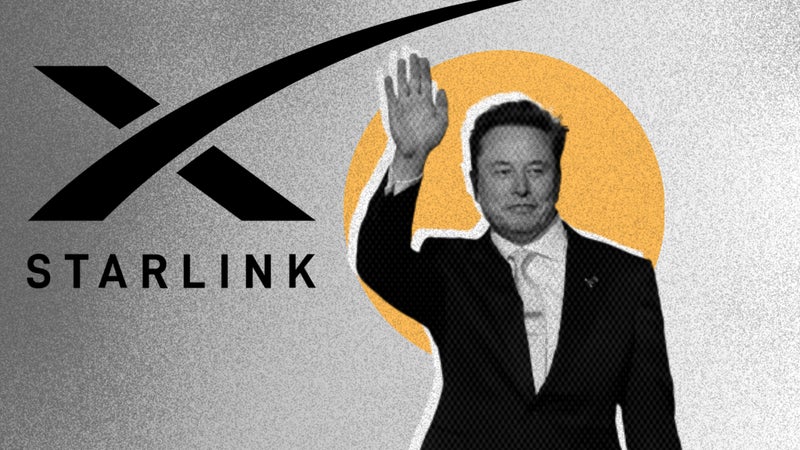
Elon Musk no longer just wants to connect Americans without a network thanks to Starlink. It now aims to compete directly with the historic giants of mobile telephony and become the fourth operator in the country. And to achieve this, the billionaire has moved up a gear.
According to information from Bloomberg, SpaceX is negotiating access to 80,000 cell tower sites across the United States, or nearly half of the operational cell sites in the country. Enough to enable the group to build the terrestrial network essential to its ambitions in mobile telephony.
Until now, Starlink was positioned above all as a solution for connecting white zones, those territories where traditional mobile networks are absent or insufficient. All thanks to some 10,000 operational satellites in orbit.
But moving from satellite to a real mobile network requires a change of scale. To prevail against AT&T, Verizon and T-Mobile, SpaceX must now combine its satellite constellation with terrestrial infrastructure and have suitable frequencies. Billions of dollars at stake The company is therefore in talks with several players in the sector, including Crown Castle, one of the main owners of telecommunications towers in the United States.
Asked on Wednesday October 21 about possible negotiations with SpaceX, but also with Amazon or other satellite telecommunications providers, the boss of Crown Castle, Chris Hillabrant, was not very forthcoming. “You can assume we are in discussions with all parties involved,” he said. American Tower, another heavyweight in the sector, declined to comment.
SpaceX and Vertical Bridge did not immediately respond to requests from Bloomberg. In the United States, operators such as AT&T, Verizon and T-Mobile already rent locations on telecommunications towers to install their equipment. A practice that prevents them from financing the construction and maintenance of these infrastructures alone, while allowing them to pool certain costs.
SpaceX had once considered using its home internet equipment to broadcast mobile signals near its customers' facilities. But this strategy has a significant limit. As the research firm MoffettNathanson points out, cited by Bloomberg, the equipment is installed where the subscribers live, not necessarily where the network needs reinforcement the most.
Hence the interest in renting existing sites, spread across the entire territory. Rather than starting from scratch, SpaceX could rely on already deployed infrastructures to accelerate the construction of its network. No longer just filling in the blank areas At the same time, the company announced at the beginning of October the acquisition of frequencies in the 800MHz band, a spectrum generally used by traditional mobile telephone operators to route communications via relay antennas.
Machine-translated from French
Not cross-checked yet
Only BFM Business reports this story so far. We show it as a single source until another newsroom confirms it.
- BFM Business26 Oct, 13:28
| Publisher BFM Business (established tier) | +76 |
| Detailed summary | +2 |
| Total | 78 |
Method: reports are grouped by the words of their headline and summary; each newsroom counts once; figures are read from the reports as published. Nothing here is written by an AI.