Argentina enters recession (-1.8%) but Javier Milei's government defends its austerity policy and rules out any change of economic course
After two consecutive quarters of decline in economic activity, Argentina has entered a technical recession, according to economists' estimates. The Minister of Economy, Luis Caputo, however, put this situation into…
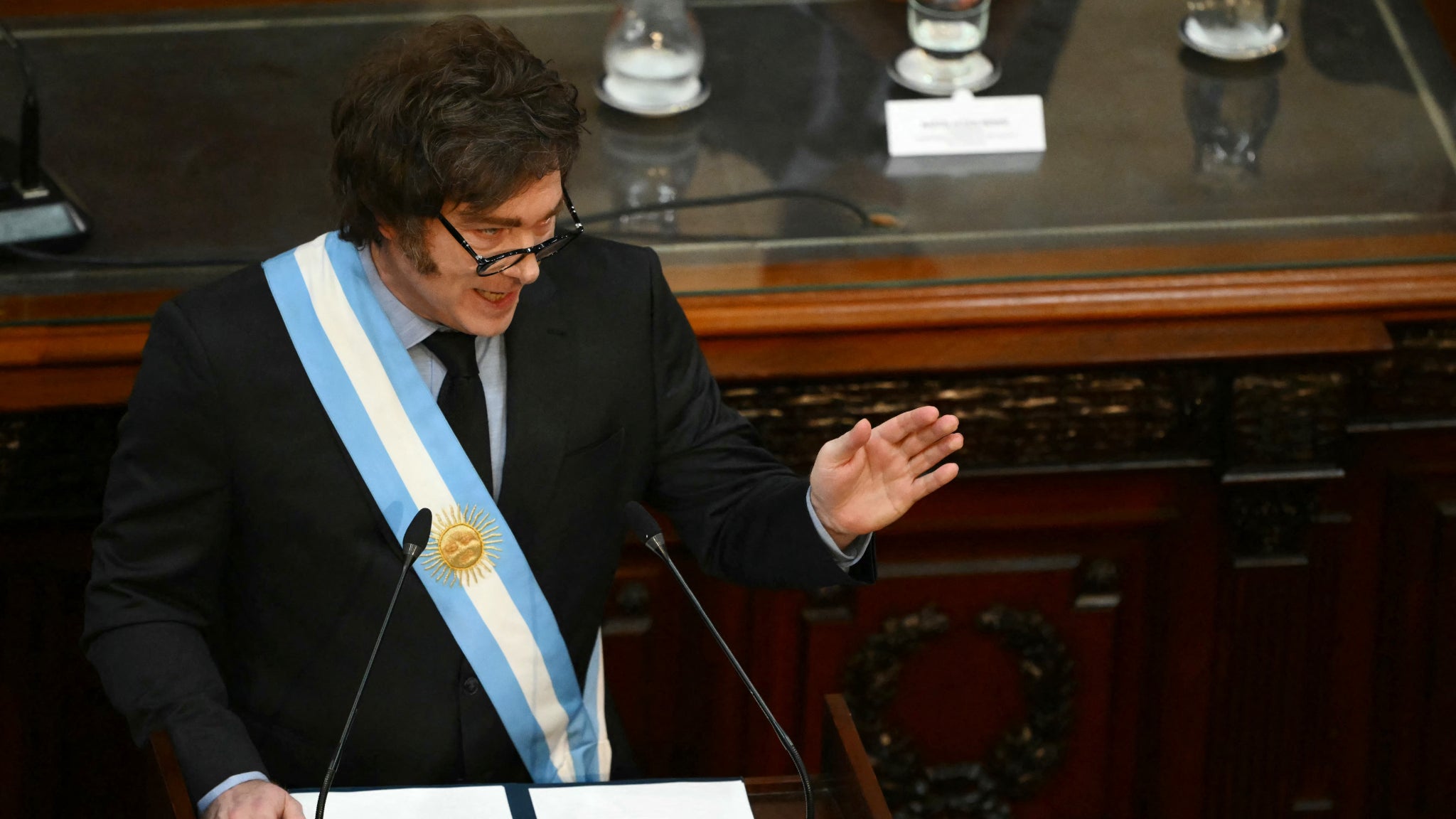
The Argentine government on Wednesday put into perspective the impact of the technical recession into which the country has entered according to economists, and ruled out any change in the austerity strategy of ultraliberal President Javier Milei. Activity in Latin America's third largest economy contracted by 1.8% in the third quarter compared to the previous quarter, after a decline of 0.6% in the second quarter, putting the country into technical recession, according to economists interviewed by AFP after the publication of official data on Tuesday. The technical recession corresponds to two consecutive quarters of decline in GDP.
“It’s an arbitrary definition,” retorted Economy Minister Luis Caputo on Wednesday in an interview with channel A24. The monthly estimate of economic activity (Emae) published Tuesday by the National Institute of Statistics (Indec), usually faithfully foreshadows the official GDP statistics, expected for December 16. Falling inflation at the cost of maintained austerity by Javier Milei “We are talking here about less growth than we would have liked.
But growth", affirmed the minister. According to the Emae indicator, activity increased by 1.1% in September compared to August, while remaining 1.2% below the level recorded during the same month of 2025. The budgetary austerity applied by Javier Milei since his arrival in power at the end of 2023 has had a spectacular effect on inflation, reduced from 161% to around 30% over twelve months in less than three years.
But it also resulted in severe cuts in public spending, the closure of state organizations, tens of thousands of layoffs and a sharp loss of purchasing power for employees and retirees. "We remain absolutely convinced that as long as we continue on this path, we will converge towards international-level inflation. There is no change within the program," Mr.
Caputo. Pressure on the peso despite the government's economic ambitions Country risk, a thermometer of market expectations regarding Argentina, has soared in recent days while the price of the dollar has climbed. Luis Caputo attributed the pressures on the peso to external factors and not to problems in the Argentine economy, while ruling out any repercussions on domestic prices that would compromise the control of inflation, which the government presents as one of its main successes.
For 2026, the executive expects inflation of 10% and growth of 5%. In October, the International Monetary Fund (IMF) revised its 2026 growth forecast downward for the country, bringing it down to 2.1%. In September, Javier Milei assured that he did not want to relax his austerity policy between now and the 2027 presidential election, during which he intends to run for a second term, judging that "the budgetary result cannot be negotiated".
Machine-translated from French
Not cross-checked yet
Only BFM Business reports this story so far. We show it as a single source until another newsroom confirms it.
- BFM Business25 Nov, 18:43
| Publisher BFM Business (established tier) | +76 |
| Detailed summary | +2 |
| Total | 78 |
Method: reports are grouped by the words of their headline and summary; each newsroom counts once; figures are read from the reports as published. Nothing here is written by an AI.