It increases the deficit by 900 million euros: against the advice of the government, the Senate postpones an increase in employer contributions for three months
During the examination of the Social Security financing bill in public session this Thursday, November 12, the senators adopted, against the advice of the government, a postponement until April 1, 2027, of planned…
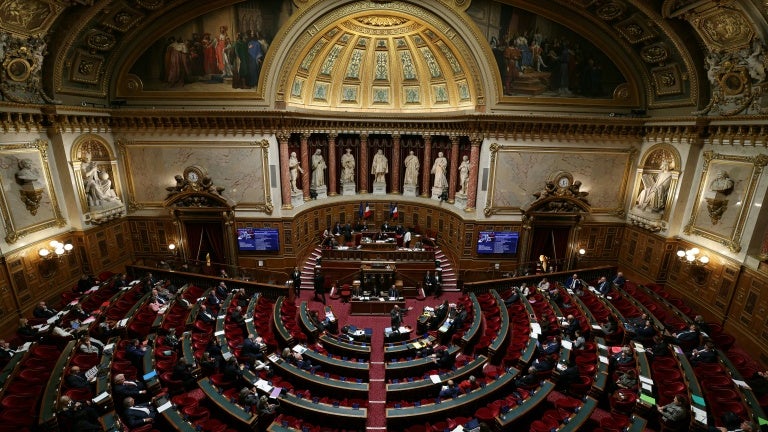
Senators offer businesses a slight reprieve. As part of the examination of the Social Security financing bill (PLFSS) for 2027, the parliamentarians of the upper house chose, against the advice of the government, to postpone until April 1, 2027, the implementation of savings in terms of employer contributions. In the initial version of the text, it was in fact planned to integrate value sharing bonuses and employee savings (participation, profit-sharing) into the basis for calculating reductions in charges for companies.
And this, from January 1st. As pointed out by the centrist general rapporteur Olivier Henno, it is indeed a question of "drawing the consequences of the decisions taken during the social conference" which was held on Monday November 9 in Matignon. After bringing together unions and employers, the Lecornu government announced new upcoming negotiations in order to reform the system of general relief.
These will last three months, until March 31, 2027. A shortfall of 900 million euros While the social partners are already in a hurry to consult to reassess the minimums of the professional sectors which will fall below the minimum wage from December 1, the latter will also be led to debate the merits of the reductions in employer contributions, often accused of creating "low wage traps". Olivier Henno also recalled that these reductions cost the Social Security funds 75 billion euros.
The problem is that by postponing the expansion of the basis for calculating reductions in employer contributions until spring, the senators reduced the expected return for the year 2027. The government hoped to generate no less than 3.7 billion euros in savings for Social Security over a full year, an amount which would ultimately be reduced by 900 million euros if the final copy of the Social Security budget retains the measure adopted by the upper house of Parliament. The senators counterattack the freeze This measure was unsurprisingly little appreciated by employers' organizations - who already deplore the freezing of the basis for calculating general reductions.
Since the revaluation of the minimum wage on June 1 to keep up with inflation, the government has decided by decree to calculate reductions in employer contributions based on the value of the minimum wage in force on January 1, 2026, which, de facto, increases the cost of labor for companies. Regarding this freeze, the senators counterattacked the measure passed by regulation. They also adopted this Thursday an amendment which consists of systematizing the calculation of general reductions for year N based on the level of the minimum wage observed on January 1 of the previous year.
Clearly, from 2028, reductions in employer contributions will be applied based on the amount of the minimum wage observed on January 1, 2027. By including this method of calculation in the law, the senators also protect companies from a potentially long-term application of the decree published in mid-2026, which could have blocked the calculation of general reductions in future years, for example 2028, 2029 or 2030, on the basis of the minimum wage in force on January 1, 2026. Unsurprisingly, the amendment was adopted against the advice of the government, the Minister of Labor Jean-Pierre Farandou having deemed it preferable to "keep control" of this system.
Machine-translated from French
Not cross-checked yet
Only BFM Business reports this story so far. We show it as a single source until another newsroom confirms it.
- BFM Business12 Nov, 15:28
| Publisher BFM Business (established tier) | +76 |
| Detailed summary | +2 |
| Total | 78 |
Method: reports are grouped by the words of their headline and summary; each newsroom counts once; figures are read from the reports as published. Nothing here is written by an AI.