The housing crisis is now global. It shows just how undemocratic our nations have become | Leilani Farha
When we can’t even afford to rent or buy somewhere to live, we have to ask: did we give the financial sector too much power? Leilani Farha is the former UN special rapporteur on adequate housing Continue reading...
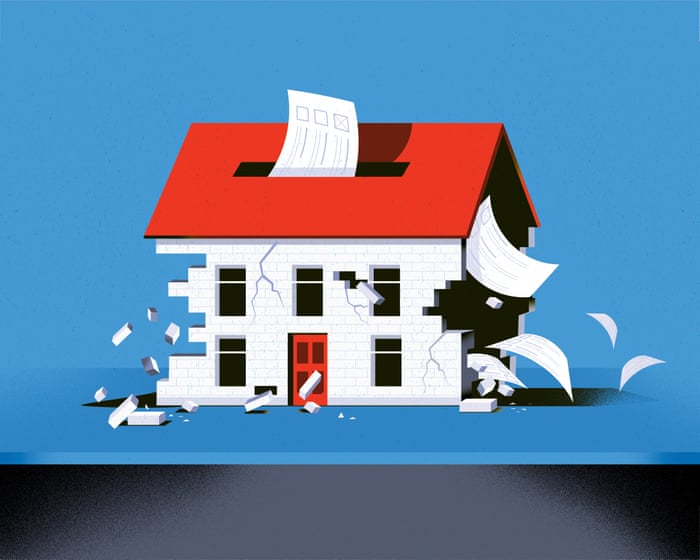
The housing crisis is now global. It shows just how undemocratic our nations have become Leilani Farha When we can’t even afford to rent or buy somewhere to live, we have to ask: did we give the financial sector too much power?
Leilani Farha is the former UN special rapporteur on adequate housing
I n the summer of 2021, I visited a homeless community in a park in Toronto, Canada, and spoke to one of the residents. He was living in a tent in the shadow of brand new skyscrapers, and had been homeless for about five years. At one point he swivelled around, pointed up at a crane on the skyline, and said: “Who are they building those for? Definitely not for me.”
He was right. And he captured something experienced by ordinary people around the world: the growing conviction that the housing system is no longer tethered to their needs. What he was pointing at is not just a housing crisis. It is a crisis of democracy.
Democracy promises that our living conditions are shaped by all of us, regardless of our station in life. Yet decisions about housing have been systematically removed from democratic control and handed to financial actors such as private equity firms, pension funds and real-estate investment trusts. Working hand in hand with governments and banks, these actors have decoupled the price of housing from what ordinary people earn. They’ve transformed our homes into a toy for wealthy investors. I call this alliance Housing Inc.
The tools available to the large financial actors driving and profiting from the housing crisis are not available to the rest of us. They hire armies of lobbyists to squash rent-control laws. They fund political campaigns. They rotate in and out of government positions. They are in the rooms and hallways where decisions are made.
Even governments trying to fight the growing influence of the financial sector in housing face intense pressure. In Copenhagen, after the private equity giant Blackstone bought up apartment blocks across the city, renovated them and, in some cases, doubled the rent for new tenants, the Danish parliament passed legislation barring new owners from raising rents on renovated apartments for five years. While this “ Blackstone law ”, as it was commonly called, was a brave measure, it was weaker than the government had wanted. Kaare Dybvad, then Denmark’s housing minister, had proposed a 10-year freeze. Faced with fury from landlords and pension funds, and needing rightwing party votes to pass it, he cut it to five.
The average tenant, the person experiencing homelessness, the young person locked out of the housing market – what do they have? They have a vote. That is all.
And the vote changes less than we are promised. As the economist Yanis Varoufakis has argued , elections no longer determine economic policy. Governments of the left and the right come and go, and regardless of who is in power, rents keep rising, because the economic model always stays the same: money flows to wherever the returns are highest, which means into unproductive assets such as real estate, and away from the public investment that would actually house people. We can change our governments. We cannot, it seems, change the economic policies they all adhere to.
Not cross-checked yet
Only The Guardian reports this story so far. We show it as a single source until another newsroom confirms it.
- The Guardian19 Oct, 07:00
| Publisher The Guardian (reference tier) | +82 |
| Detailed summary | +2 |
| Total | 84 |
Method: reports are grouped by the words of their headline and summary; each newsroom counts once; figures are read from the reports as published. Nothing here is written by an AI.