Housing crisis, purchasing power: Spain urged to strike three weeks before elections, first since 2012
Unions are calling Spaniards to halt work on Wednesday to demand measures in response to soaring rents and the erosion of purchasing power. The strike comes less than three weeks before the snap general election.
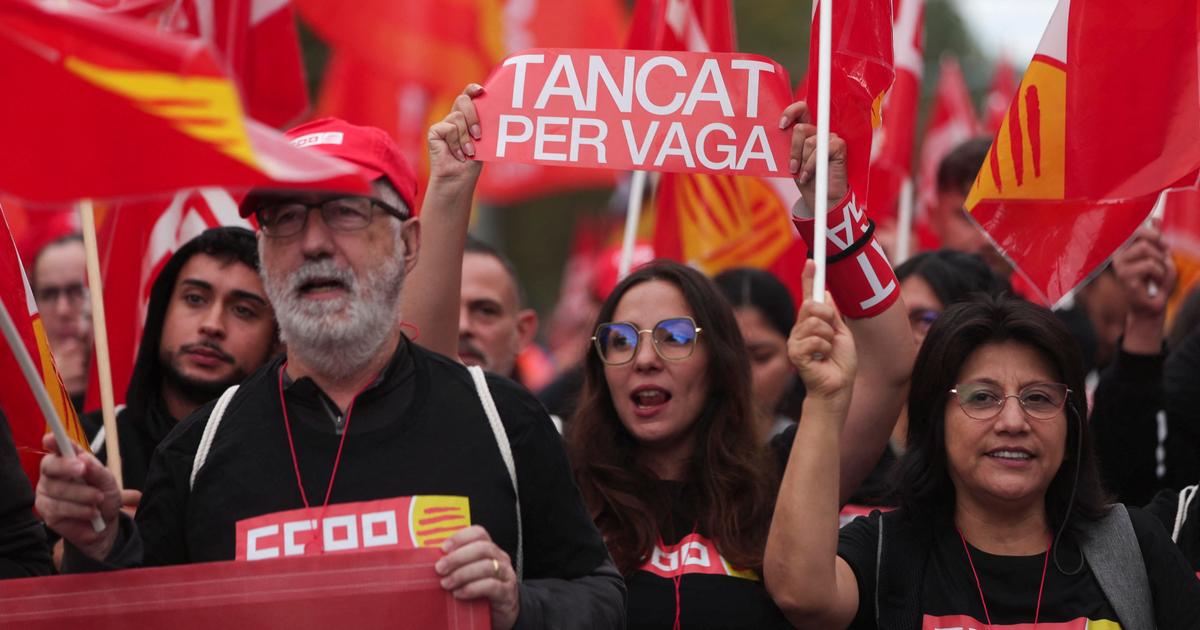
After France, social discontent spread to Spain. Spanish employees are called on Wednesday for the first time since 2012 to a general strike to defend access to housing and purchasing power, a movement which should serve as a barometer of social discontent less than three weeks before the anticipated legislative elections. Fourteen years after the last mobilization of this scale in the fourth economy of the euro zone, the rate of strikers will be scrutinized in industry and services, in particular in public transport, where a minimum service will however remain assured.
But observers will also scrutinize the scale of the planned demonstrations, particularly those organized in the evening in Madrid and Barcelona, an indicator of the social climate in the run-up to the November 29 vote, with an uncertain outcome. The country's main unions called for this strike as a continuation of the protest movement around the housing crisis, born after the eviction of Maricarmen Abascal, an 87-year-old from Madrid, from her apartment, who died a few days later. “It’s a people’s strike.
I believe that this is the first time in a very long time that a call for a strike has come directly from the streets,” Valeria Racu, spokesperson for the Tenants' Union, an organization at the heart of the mobilization, said on Sunday on public radio. “Against no one” Having failed to have parliament adopt a package of measures to try to stem the housing crisis, socialist Prime Minister Pedro Sánchez decided at the beginning of October to bring forward the elections initially scheduled for 2027 to November 29. The left-wing government nevertheless plans to have part of these measures adopted on Thursday, the day after the strike, by the body exercising the functions of the parliament dissolved due to the electoral campaign.
“This strike is not directed against anyone. It aims to obtain a common response from all administrations to a very real problem: access to housing,” said Pedro Sánchez on Sunday in the columns of La Vanguardia. Recalling the social advances obtained in Spain when “people said “enough”, organized themselves, took to the streets and went on strike”, the head of government called on Monday on X to “protect” these achievements.
The strike, rejected by employers, who qualify it as an “electoral” mobilization, is on the other hand also criticized by the right and the far right. “Don’t do it. You didn't do it during eight years of government.
Don’t do it now”, a few days before the elections, “otherwise your image will forever be associated with Pedro Sánchez”, launched last week during a meeting the leader of the Popular Party (PP, right), Alberto Núñez Feijóo. The leader of the PP, whose party is given the favorite in the legislative elections by the polls, also castigated the decision to maintain this call for a strike "69 deaths later", in reference to the train collision that occurred at the end of October in the center of the country, a tragedy which deeply marked the campaign. “Bringing a consensus” The “Marxist-inspired” unions should have “a minimum of shame” and cancel the mobilization.
Machine-translated from French
Why it is marked verified
2 independent newsrooms report this story. Le Figaro published it first, 2 h before the last one.
- Le Figaro11 Nov, 11:00
- Franceinfo11 Nov, 12:34
| Publisher Le Figaro (established tier) | +76 |
| Detailed summary | +2 |
| Carried by 2 newsrooms | +5 |
| Total | 83 |
Method: reports are grouped by the words of their headline and summary; each newsroom counts once; figures are read from the reports as published. Nothing here is written by an AI.