Insurance: a new “riot” regime in the works
“We find that this tax resembles a “breaker” tax. But insurance companies will not be able to intervene forever, putting taxes does not compensate for the real work upstream,” explains Adrien Couret, Managing Director…
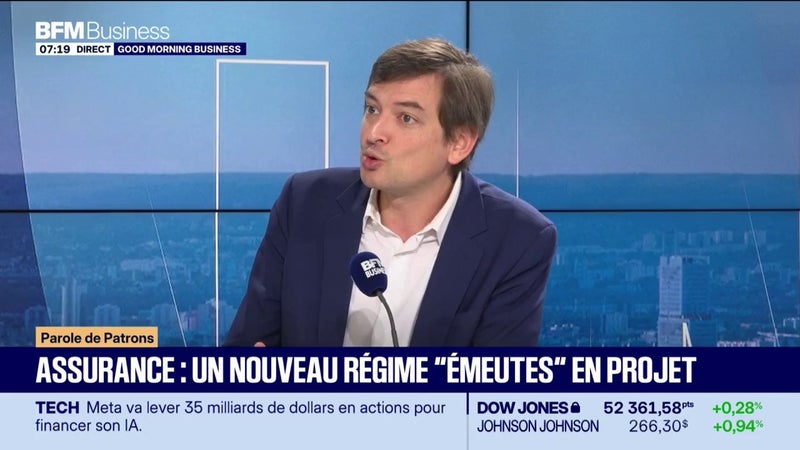
A new taxation framework that the French government labels the "riot" regime has entered the agenda for policymakers, sparking early debate on its potential effects across the insurance sector. The scheme, which has been likened by experts to a breaker tax, would impose an additional levy on insurance companies for the portion of their profit that is not directly derived from core underwriting activities. The idea is that insurers bring substantial financial strength into the economy while also carrying a responsibility to contribute more closely to public finances, thereby aligning tax burdens with the benefits they generate.
The concept behind the breaker tax is not entirely new. Under a breaker tax, firms that derive most of their income from non-operating gains are subject to a higher marginal rate. In practice, this means that an insurer’s underwriting income – the paid premiums after settlement of claims – would be taxed at a lower rate than gains from investments or other ancillary business lines. The French proposal seeks to replicate this differential taxation, but with a focus on ensuring that insurers cannot indefinitely use tax incentives to offset the work they do upstream – as Managing Director Adrien Couret notes, "But insurance companies will not be able to intervene forever; putting taxes does not compensate for the real work upstream."
Existing industry players have expressed concerns that the new regime could blunt the profitability of insurance operations, especially those that rely heavily on investment income. A higher after‑tax yield on non‑underwriting profits may lead firms to re‑balance portfolios toward lower-risk securities or to reduce underwriting volumes to keep profit levels within more favourable brackets. These strategic shifts could ripple through the market, potentially elevating premiums or tightening coverage for risk‑averse sectors.
From an economic standpoint, the "riot" regime represents part of a broader French initiative to modernise the taxation of multinational insurers and to tighten alignment with EU fiscal guidelines. By imposing a higher tax on certain profit streams, authorities hope to dissuade income shifting and to standardise the contribution of insurers to the national budget. The policy is viewed by some as a move to encourage a more proactive risk‑management culture within the sector, rather than a mere fiscal extraction."
The market is already watching how the tax thresholds will be coded and whether ex‑clusion rules for large claims reserves or actuarial gains will be included. The next few weeks will be critical as the Ministry of Finance requests detailed model cases, and as the SEF review body begins public consultation. Industry bodies—even those organized under the Fédération Française du Marché de l’Assurance—will most likely present counterarguments, citing potential dampening effects on investment returns and ultimately on new product innovation.
Machine-translated from French
Not cross-checked yet
Only BFM Business reports this story so far. We show it as a single source until another newsroom confirms it.
- BFM Business27 Oct, 07:47
| Publisher BFM Business (established tier) | +76 |
| Detailed summary | +2 |
| Total | 78 |
Method: reports are grouped by the words of their headline and summary; each newsroom counts once; figures are read from the reports as published. Nothing here is written by an AI.