Netflix boss says creativity and regulation 'are not happy bedfellows' in Europe
Netflix’s EMEA revenue grew 11% year on year in Q3 2026, but sustaining that growth will depend on preserving creative freedom across Europe.
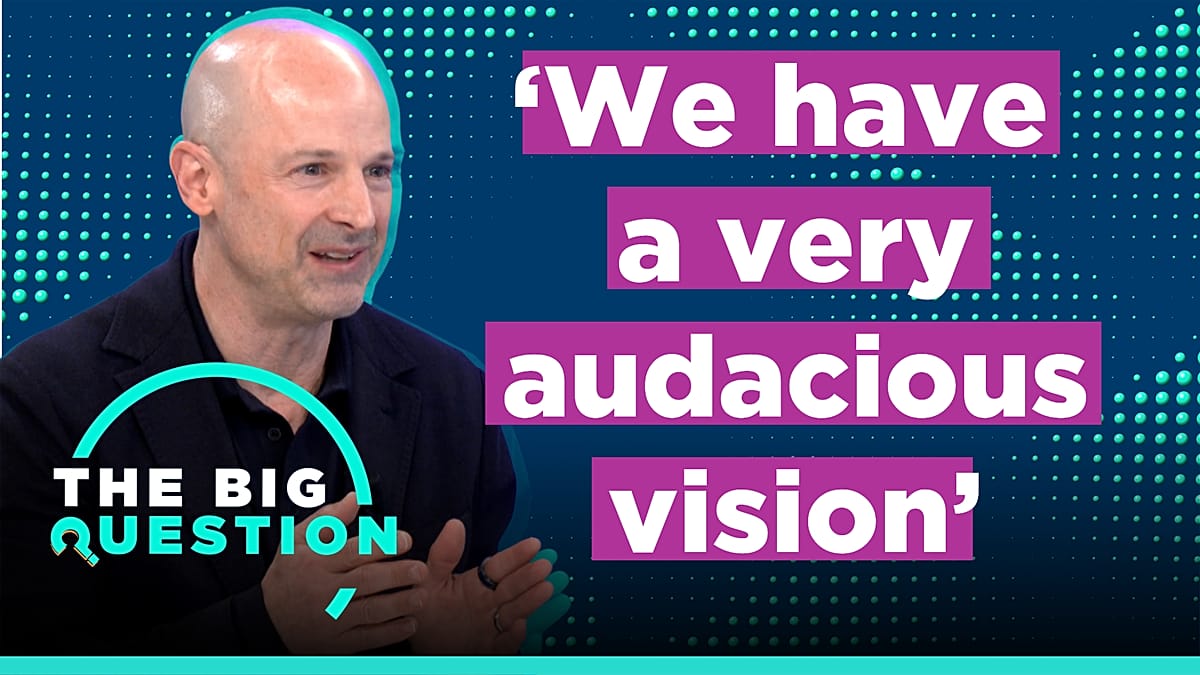
Around 12 years ago, Netflix had no original productions in Europe, and audiences were largely watching content made in, by and for the US. But it soon became clear that European content couldn't be produced from Los Angeles alone. In 2019, Larry Tanz, Head of Content for Europe, the Middle East and Africa, moved across the pond to Amsterdam to lead the company's European operations.
Today, Netflix has 10 regional teams shaping the content audiences watch across Europe. Over the past decade, Netflix has invested more than €13bn in Europe and, last year, committed to investing a further €1bn in Spain alone by 2028. Larry joins Hannah Brown in the studio for the first episode of the new series of The Big Question to discuss the secrets behind producing internationally successful content.
‘If you don't make it for someone, you'll end up making it for no one’Larry has amassed a team of experts across the continent who have an in-depth understanding of their local audiences and creative talent. “Also they're plugged into what's happening in society, if you develop a film script right now, that film is not going to come out for maybe two years so you can't just try to play on trends of the moment,” Larry told The Big Question. What might surprise you is that Netflix doesn't approach commissioning projects with the aim of creating a gigantic international hit.
Instead, it focuses on producing authentic content that appeals to a specific audience. “Let’s say you try to make a film in Spain and you cast it with people from everywhere and you try to make it for everybody - you end up making it for nobody and nobody watches it,” Larry explained. He attributes the success of Squid Game, Netflix’s biggest international hit, to its distinctly Korean style, arguing that its commitment to being unapologetically Korean was precisely what resonated with audiences worldwide.
He emphasised that every Netflix show that has achieved global success has first found an audience in its home market. Netflix is also one of the few global platforms that dubs and subtitles content in more than 40 languages, making international productions more accessible to audiences worldwide. And Larry's experience leading Netflix's European operations suggests that this approach is paying off.
A decade ago, non-English-language content accounted for less than 10% of total viewing. Today, that figure has grown to more than a third. ‘Creativity and regulation are not happy bedfellows’While many of us grew up watching public broadcasters with a clear mandate for their content – the BBC in the UK, for example, aims to inform, educate and entertain – it might be tempting to think that Netflix operates without any such limitations or restrictions.
Not cross-checked yet
Only Euronews reports this story so far. We show it as a single source until another newsroom confirms it.
- Euronews9 Nov, 06:35
| Publisher Euronews (established tier) | +76 |
| Checkable figures cited | +3 |
| Detailed summary | +2 |
| Total | 81 |
Method: reports are grouped by the words of their headline and summary; each newsroom counts once; figures are read from the reports as published. Nothing here is written by an AI.