It is the most dynamic European economy in 2026: thanks to its champion Novo Nordisk, Denmark's growth should exceed 4% this year (but consumers and businesses benefit little)
Thanks to the good performance of exports from its champion Novo Nordisk, which specializes in anti-obesity drugs, Denmark is expected to post indecent growth of more than 4% this year.
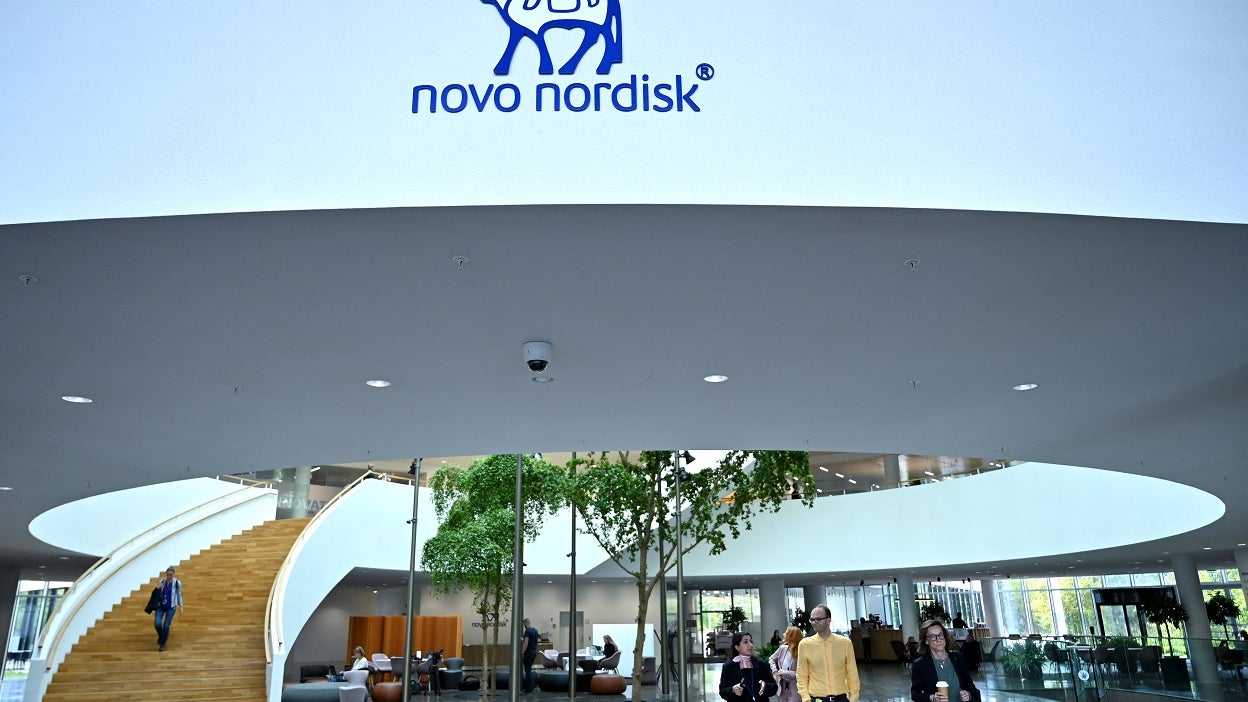
Figures that would make France pale and its economy at a standstill. With a sixth consecutive quarter of growth (+0.8% between July and September) and an expected GDP increase of at least 4% over the whole year, Denmark should achieve the best performance of the European Union countries in 2026. In any case, this is what the European Commission predicts, which this week more than doubled its growth forecast for Denmark, now counting on 4.5% in 2026, compared to 1.9% in May.
Jyske Bank, one of the main Danish banks, even projects an increase in activity of 5% this year, underlines Bloomberg. For its part, the Danish National Bank is a little more cautious with its estimate still raised to 4%, compared to 1.8% previously forecast. While the forecasts for 2027 and 2028 have also been raised (2.3% and 2% expected growth).
Growth driven by Novo Nordisk Once again, it is the pharmaceutical industry and in particular the Danish champion Novo Nordisk which boosted the country's growth this year. This sector alone has contributed 2 percentage points to the increase in GDP since the start of the year. “GDP experienced strong growth in the first half of 2026, driven by strong pharmaceutical exports, while economic activity in the rest of the country grew at a more moderate pace,” the European Commission confirmed this week.
The National Bank of Denmark (Danmarks Nationalbank) also highlighted the “extraordinary” growth of the Danish pharmaceutical industry in the first half of 2026. “This growth is mainly due to Novo's sales and production in the American market at the start of the year. This reflects the agreement concluded by Novo with the American administration which, since the beginning of the year, has notably made it possible to access a wider customer base thanks to public health insurance schemes”.
In February, the laboratory announced an agreement with the Trump administration to drastically reduce the prices of its flagship drugs in the United States, by 50% for Wegovy and 35% for Ozempic. As a result, the increase in Danish exports and the drop in prices of exported products observed are "mainly" due to this agreement between Novo Nordisk and the American government, argued the Bank of Denmark. Strong growth that “consumers and businesses do not feel” In recent years, Novo Nordisk has become a key player in the anti-obesity drug market thanks to its treatments based on GLP-1 analogues Ozempic and Wegovy.
Last year, the group's sales increased by another 6% to reach 309 billion Danish crowns (41.4 billion euros), which represents almost 10% of the national GDP. And the 2026 results look equally strong. At the beginning of November, the pharmaceutical flagship announced raising its objectives due to performance above expectations in the third quarter of 2026, pointing in particular to the good commercial dynamics of Wegovy.
This extraordinary weight of Novo Nordisk in the Danish economy today translates into a grotesque situation in which the results of a single group can dictate the growth of an entire country. The problem is that if “the pharmaceutical industry contributes significantly to economic growth” and gives “the impression of a thriving economy, most businesses and consumers do not feel it,” observes Søren Kristensen, chief economist at AL Sydbank, to Bloomberg. This is evidenced by the Danish consumer confidence index which has been in negative territory for more than five years.
Same observation from the National Bank: "The Danish economy has so far resisted global turbulence. We expect strong GDP growth this year" without there being "increased pressure on wages or prices", indicated the governor of the institution Christian Kettel. An anomaly which can be directly explained by the pharmaceutical sector, with the National Bank of Denmark recalling that "a large part of the growth comes from production abroad, which only partially mobilizes Danish labor and capital".
Machine-translated from French
Not cross-checked yet
Only BFM Business reports this story so far. We show it as a single source until another newsroom confirms it.
- BFM Business20 Nov, 12:17
| Publisher BFM Business (established tier) | +76 |
| Checkable figures cited | +3 |
| Detailed summary | +2 |
| Total | 81 |
Method: reports are grouped by the words of their headline and summary; each newsroom counts once; figures are read from the reports as published. Nothing here is written by an AI.