Before news broke of his affair with a suspected Chinese spy, Nvidia’s Huang told Fortune his company “could be of great service” to China
The Nvidia CEO spoke to Fortune about his views of US-China policy weeks before reports emerged that U.S. officials believe a woman he had an affair with was working as a Chinese spy.
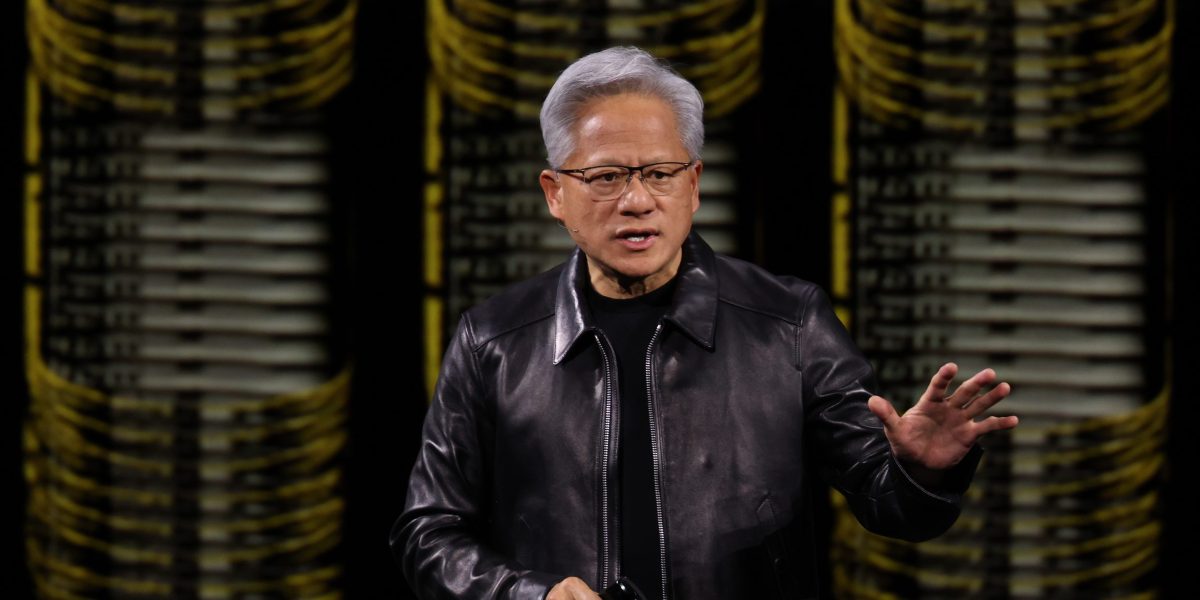
Jensen Huang’s dealings with China and views on U.S. export controls on advanced AI chips are under fresh scrutiny after the Nvidia CEO confessed to an affair with a woman U.S. intelligence agencies reportedly believe to be working as a spy for China. The U.S. has spent years restricting the sale of advanced Nvidia chips to China on national security grounds.
In an interview Fortune conducted before the allegations surfaced, Huang said that he thought the chipmaker “could be of great service” to China. He also said that Nvidia had a “large and growing” opportunity in China.
Huang spoke to Fortune in mid-October, before The New York Times first reported later that month that U.S. officials had concluded the woman, Alice Huang—who has no relation to the Nvidia CEO—was a Chinese intelligence asset. It isn’t clear how long the relationship lasted, but photos shared online show the two together in Taipei as early as June 2024.
Asked in October whether he expected sales in China to pick up, Huang said there would be a “natural tension” between Washington and Beijing that “lasts a long time,” adding that Nvidia would continue to give shareholders no guidance on its China sales. The company has left China out of its revenue forecasts since August 2025, citing regulatory uncertainty in both countries. The U.S. has not allowed Nvidia to sell its most advanced AI chips to China, but has granted the company export licenses for older models of its graphics processing units (GPUs), the specialized chips that run AI and computer graphics applications. It has allowed Nvidia to market specialized versions of its GPUs in China that have been designed specifically for that market and which are engineered to be less capable at training frontier AI models. Beijing, for its part, has officially tried to bar the country’s major tech companies from buying Nvidia’s chips as part of an effort to spur demand for domestic alternatives.
Nonetheless, Huang told Fortune he saw promise in the Chinese market. “I think the opportunity in China is large and growing, just like the AI market across the world is large and growing,” Huang said. “We could be of great service to the local market. We can compete and win as much of the AI market as possible for the United States, while also providing compute resources, which is really important to their economy.”
China has been a long-running headache for Nvidia. Back in 2022, the Biden administration imposed export controls that barred Nvidia from selling its most advanced AI chips to China, aiming to slow Beijing’s progress in AI and its potential military applications. Nvidia designed scaled-down chips for the Chinese market, but successive rule changes cut many of those off too.
Not cross-checked yet
Only Fortune reports this story so far. We show it as a single source until another newsroom confirms it.
- Fortune9 Nov, 21:03
| Publisher Fortune (established tier) | +76 |
| Detailed summary | +2 |
| Total | 78 |
Method: reports are grouped by the words of their headline and summary; each newsroom counts once; figures are read from the reports as published. Nothing here is written by an AI.