Budget 2026: John Healey offers £100 payments to households to help navigate ‘global economic storms’
Payment to 20m homes part of package to help cut energy bills and ease cost-of-living crisis, paid for by bank windfall tax UK growth forecast for 2027 slashed despite Healey’s budget measures Budget 2026: key points…
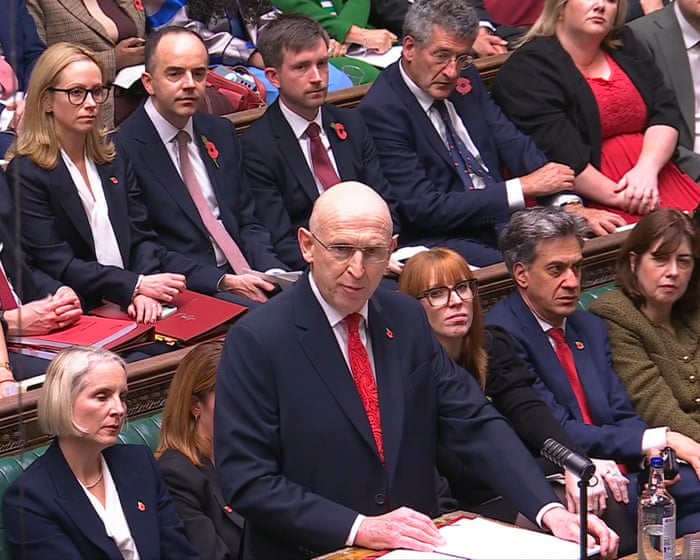
Budget 2026: John Healey offers £100 payments to households to help navigate ‘global economic storms’ Payment to 20m homes part of package to help cut energy bills and ease cost-of-living crisis, paid for by bank windfall tax
John Healey promised to steer Britain through “global economic storms,” as he announced a package of measures to cut consumers’ energy bills, funded by a smaller-than-expected windfall tax on banks.
In his first budget, the chancellor said 20m households in council tax bands A to D would receive a £100 payment – a measure he said would cost £2.6bn.
He extended the VAT cut on electricity bills until next July; and as widely expected, cancelled fuel duty rises pencilled in by Rachel Reeves.
Healey said this would back businesses, as well as consumers. “For millions of people, the cost of living and the cost of doing business are the same. The home is the office. The van is the family car,” he said.
Healey blamed the ongoing war in the Middle East for the deterioration in the economic outlook since Reeves’s spring statement, but insisted he would keep Labour’s deficit-reduction plans on track.
“Analysts like to speak of economic headwinds, but what we face today are global economic storms,” he said, describing his statement as “a budget built on fiscal discipline, which matches immediate action today with clear direction for the future”.
He said higher inflation as a result of the Iran war was expected to cost the government £14bn more in interest costs and the Office for Budget Responsibility had downgraded its growth forecast to 1% for next year, from the 1.6% it expected in the spring.
Nevertheless, Healey promised to meet Labour’s first fiscal rule, on balancing current spending with tax receipts by 2029-30; but with diminished headroom of £15bn – against the £24bn that Reeves set aside in March.
However, he said the cushion would be rebuilt to £22bn, by 2030-31. “That is what a buffer is for. Use it when you need it, rebuild it when you can.”
As a result of continued high oil prices caused by the Middle East conflict, the energy price cap, which determines household bills, is expected to rise sharply in January.
As well as the short-term support measures to cushion consumers against soaring prices, Healey signalled a radical reform to the way energy bills are charged in the longer term – calling it “a new cost control framework, to drive down all aspects of energy bills.”
He said the energy package would be funded by a windfall tax on Britain’s banks – as well as an unexpected 2 percentage-point income tax rise for landlords and savers.
Not cross-checked yet
Only The Guardian reports this story so far. We show it as a single source until another newsroom confirms it.
- The Guardian28 Oct, 14:17
| Publisher The Guardian (reference tier) | +82 |
| Checkable figures cited | +3 |
| Detailed summary | +2 |
| Total | 87 |
Method: reports are grouped by the words of their headline and summary; each newsroom counts once; figures are read from the reports as published. Nothing here is written by an AI.