The war in the Middle East will leave a "lasting mark" on the global energy market, which will not return to its pre-crisis situation, warns the International Energy Agency
The crisis in the Strait of Hormuz, caused by the war in the Middle East, is having a lasting impact on global energy balances, according to the International Energy Agency (IEA). In its annual report published…
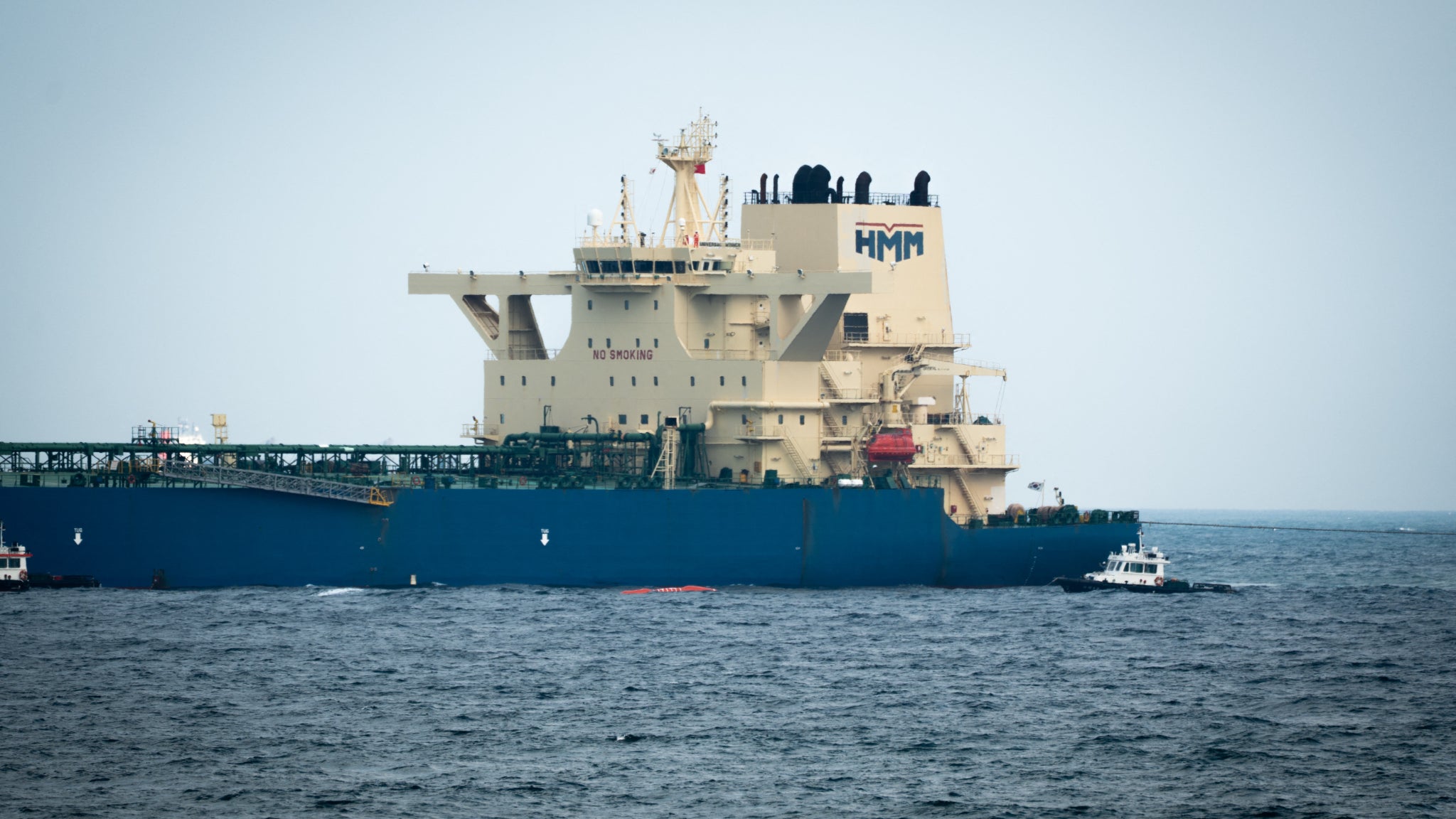
The conflict in the Middle East will leave a "lasting mark" on the world of energy which will not return to the situation before the crisis, warns the International Energy Agency (IEA) on Thursday in its reference report. “The Strait of Hormuz crisis has created the greatest threat to energy security in history, far eclipsing the scale of the oil shocks of the 1970s,” writes IEA Executive Director Fatih Birol in the introduction to its annual report. In response to this “immense shock”, States are “emphasizing diversification and resilience in order to protect themselves against future shocks.
"Energy security and accessibility now occupy a central place in the political agenda," he adds. Before the war in the Middle East, triggered by Israeli-American strikes on Iran on February 28, a fifth of the world's oil and liquefied natural gas transited through the Strait of Hormuz. In this highly anticipated report, published while the COP31 UN climate conference is being held in Antalya (Turkey), the IEA updates its three scenarios on the future of the global energy sector.
The first is based on the policies currently implemented by countries and offers a cautious vision of the pace of the energy transition. The second integrates the measures already announced by States, while the third considers those which would be necessary to achieve carbon neutrality by 2050. Energy balances disrupted in the long term A sign of the profound impact of the current energy crisis, the IEA adds an "additional response case" (ARC), studying the hypothesis where governments would implement new measures if the conflict in the Middle East continues.
He adds a scenario of "weak transit through Hormuz", wondering if the energy world could function without passing through this strait. “While the energy sector and the global economy have demonstrated considerable resilience, the longer the crisis lasts, the more profound its effects will be. And I see no credible path for the energy world to return to the way things were,” warns the IEA executive director.
The diversification of supply sources, a marked preference for available national resources and support for accelerated electrification are common responses to this crisis, underlines the agency. In its mid-scenario, the IEA forecasts that global oil demand will peak "around 2030" before a "slow decline" while gas demand would grow until around 2035. "Renewable energy will see the largest increase in demand among all fuels," the agency adds in this scenario.
They would represent half of electricity production by 2035, compared to 33% currently, with photovoltaics in first place. Reinforced electrification If the crisis in the Middle East were to prolong, the agency details the implications of a world where energy exchanges would be permanently seized up. In this case, oil demand by 2035 would be less than in the median scenario, gas demand would increase at a slower rate and electrification efforts “could strengthen”.
A certainty according to the IEA: “coal demand benefited from a short-term boost linked to the crisis, but by 2030, it is declining in all our scenarios”. The institution, created in 1974 to help rich countries cope with the oil shock, has produced scenarios since the 2020s describing a decline in fossil fuels and modeled the path to follow to achieve carbon neutrality, a condition for stemming warming. However, there remains "a significant gap between the trajectories based" on the cautious and median scenarios, whose results in terms of temperature vary between 2.5°C and 2.9°C of warming, and a trajectory consistent with the objective of 1.5°C, underlines the IEA.
Only the “carbon neutrality” scenario, synonymous with strong adoption of low-carbon energies, would make it possible, in the longer term, to return below this threshold. “Renewable energies are experiencing strong growth, but the IEA’s findings show how governments are still far from doing what is necessary,” responded the Power Shift Africa think tank.
Machine-translated from French
Not cross-checked yet
Only BFM Business reports this story so far. We show it as a single source until another newsroom confirms it.
- BFM Business19 Nov, 07:10
| Publisher BFM Business (established tier) | +76 |
| Detailed summary | +2 |
| Total | 78 |
Method: reports are grouped by the words of their headline and summary; each newsroom counts once; figures are read from the reports as published. Nothing here is written by an AI.