“The only truly common agricultural project in Europe”: organic farmers warn against the end of compulsory support in the CAP
During an unprecedented joint press conference, the National Federation of Organic Agriculture (FNAB) and its German equivalent, the BÖLW, appealed to the European Parliament, which is currently studying the CAP project.
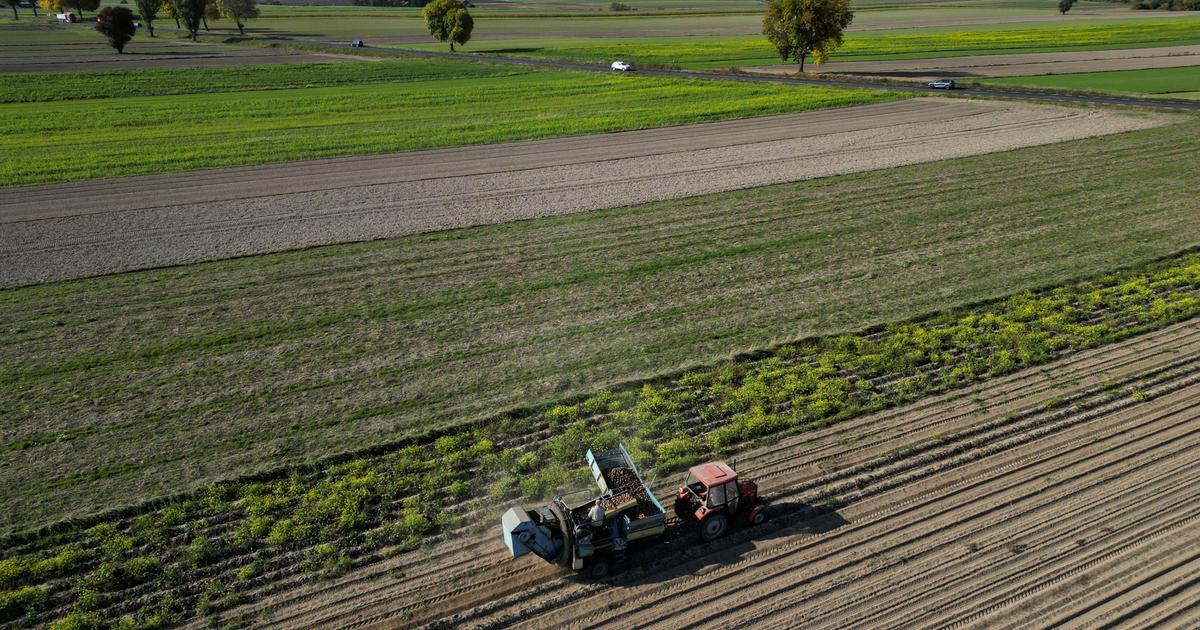
Representatives of organic farmers from France and Germany warned on Monday against the choice of European states to remove the obligation to support organic farming in the post-2027 common agricultural policy (CAP). During an unprecedented joint press conference, the National Federation of Organic Agriculture (FNAB) and its German equivalent, the BÖLW, appealed to the European Parliament, which is currently studying the CAP project. The governments of the Twenty-seven, who agreed at the end of October on the framework of the future CAP (2028-34), rejected the European Commission's proposal, which provided aid for the conversion and maintenance of organic farming.
Unlike the current CAP, States will no longer be required to offer conversion assistance, which becomes optional. For the two organizations, European agriculture must “continue to benefit from incentives for resource-saving and crisis-resilient practices”, so that “organic value chains are not supplanted by imports”. “The future CAP must allocate to Member States a fixed budget for environmental payments of an amount at least equivalent to the current one,” they call.
In the draft budget for the future CAP, in overall decline, agri-environmental measures would see their funding divided by five compared to the current CAP, they note. The organic sector supports 600,000 jobs in France and Germany (half of the European market between them).
In the EU, there are 438,000 farms. A target of 25% organic agricultural areas by 2030 It needs to be supported because conversions are costly in the first years: when France removed aid for maintaining organic farms in 2018, a drop in conversion entries followed, underlines the FNAB.
Today, consumption, slowed down with the purchasing power crisis, is picking up again but conversions have stagnated since 2022 in France. “Organic farming is the only truly common agricultural project in Europe, rigorously controlled”, with regulated specifications, “offering a real alternative to farmers and consumers”, recall the federations, which ask Parliament to include compulsory support for organic. The European Parliament is currently studying the project for a future CAP in its Agriculture Committee, before arriving in plenary in early 2027.
Then Parliament, Council of 27 and Commission will have to agree in a “trilogue” on the final draft CAP. The EU has 11% of organic agricultural land, when the Green Deal had set a target of 25% by 2030.
Machine-translated from French
Not cross-checked yet
Only Le Figaro reports this story so far. We show it as a single source until another newsroom confirms it.
- Le Figaro16 Nov, 20:56
| Publisher Le Figaro (established tier) | +76 |
| Detailed summary | +2 |
| Total | 78 |
Method: reports are grouped by the words of their headline and summary; each newsroom counts once; figures are read from the reports as published. Nothing here is written by an AI.