Trade war, AI, nuclear… Major world leaders meet in Asia this weekend against a backdrop of rivalry between Beijing and Washington
World leaders are meeting in Asia for the ASEAN, La Francophonie and Apec summits, where AI management, trade tensions and possible diplomatic discussions between Xi Jinping, Donald Trump and Vladimir Putin will be…
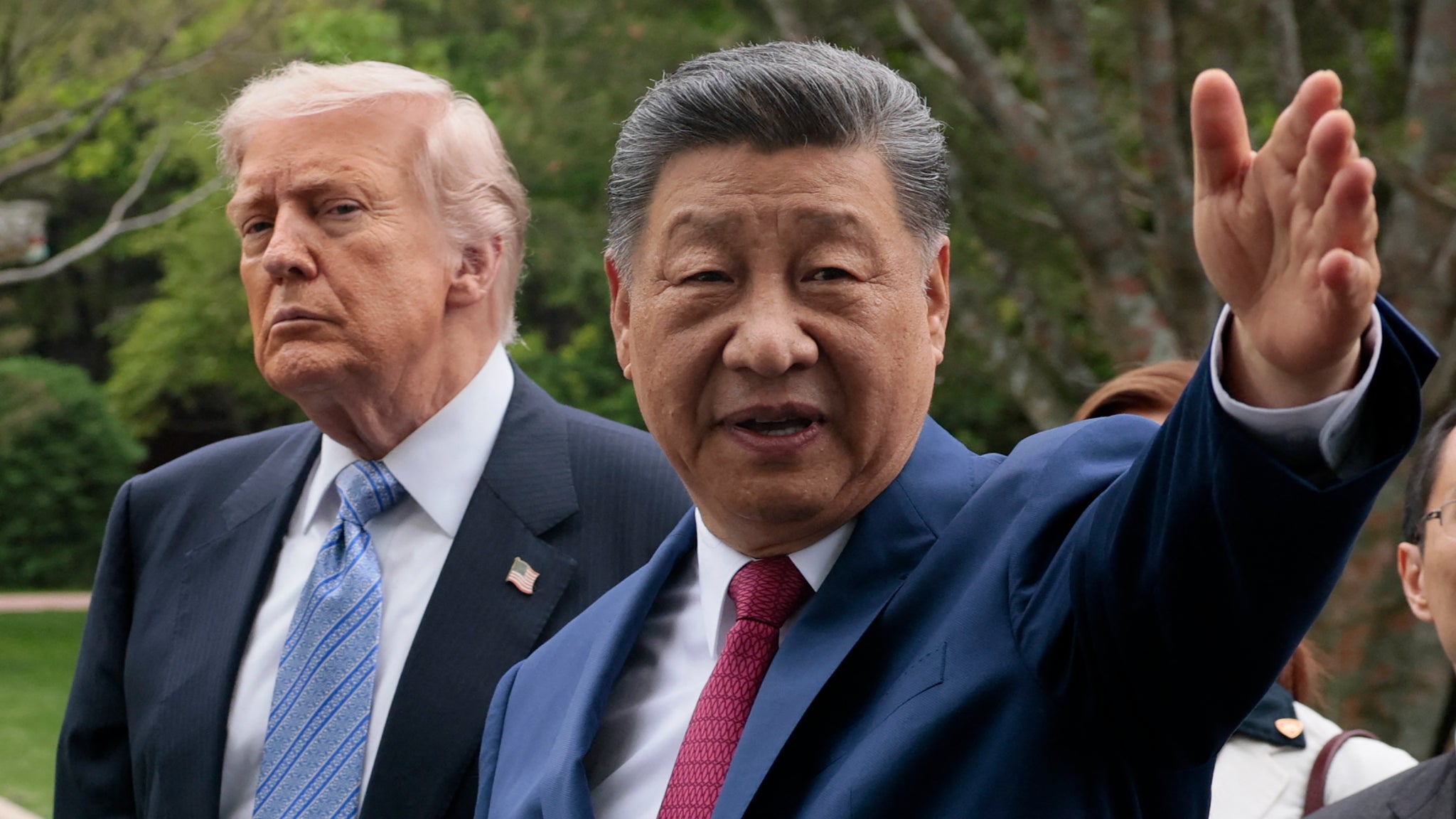
The world's top leaders, starting with Donald Trump, are heading to Asia for a series of meetings dealing with artificial intelligence, trade and perhaps even nuclear disarmament. On Sunday, the Association of Southeast Asian Nations (Asean) opens its last leaders' summit of the year in Manila. At the same time, a Francophonie summit will begin in Phnom Penh, Cambodia, in the presence of French President Emmanuel Macron.
The spotlight will then turn north for the annual Asia-Pacific Economic Cooperation (Apec) conference in Shenzhen, southeast China. Russian President Vladimir Putin is expected at Apec, Indian Prime Minister Narendra Modi will attend the Asean summit, while Canadian Prime Minister Mark Carney and US President Donald Trump will attend both events. For the latter, these summits could be an opportunity to return to the forefront after the debacle of the mid-term elections.
In difficulty domestically, the unpredictable billionaire could be all the more tempted to invest internationally. Guardrails on AI Artificial intelligence (AI) will feature prominently at Apec, following the decision in September by Xi Jinping and Donald Trump to establish a “communication channel” in the event of an incident linked to these tools. Despite the bitter technological rivalry between the two countries, calls for cooperation are increasing, driven by concerns about biological weapons and infrastructure hacking.
In September, Mr. Xi said that Washington and Beijing had a responsibility to “ensure that the development of AI always remains under human control.” The Apec discussions could rely on the two leaders' agreement on the "communication channel", envisages Stephen Wu, founder of Carthage Capital.
“Both parties need a result, and a direct line is the least expensive thing in diplomacy: free to announce, free to ignore,” he summarizes. The espionage affair surrounding Nvidia boss Jensen Huang, initially expected to accompany Mr. Trump to Apec, could cast a shadow over these discussions.
Mr. Huang admitted to an extramarital affair with a woman whom American intelligence suspects of working for Beijing. No respite on customs duties Trade will be at the heart of the Asean and Apec meetings, but it promises to be difficult to evolve regional free trade frameworks, due to frictions between China and the United States and the war on customs duties launched by Donald Trump.
A pause in the US-China trade war has been extended until January 10, but tensions persist over Chinese rare earth exports. Furthermore, current customs measures "are the responsibility of the president and the executive rather than Congress (...), canceling them would require a law to which the president could veto", warns Harry Murphy Cruise, economist at Oxford Economics, in a note.
In this matter, Donald Trump keeps his hand and could be tempted to use it. Possible Xi, Trump, Putin meeting Mystery still hangs over a possible meeting between Chinese President Xi Jinping, the American Donald Trump and Russian leader Vladimir Putin on the sidelines of Apec. Mr.
Putin is pushing for talks on Ukraine, but Mr. Trump has suggested the focus will be on denuclearization and ending the war in Iran. Analysts interviewed by AFP temper expectations.
“The symbol (...) will represent a lot of the content,” Ryan Hass of the Brookings Institution told AFP. Leaders will probably only “agree on broad principles without committing to concrete actions,” he anticipates.
There is "a high probability that the discussions will conclude without a breakthrough", adds Wang Wen, dean of the Chongyang Institute for Financial Studies at Renmin University. In addition, a meeting between Donald Trump and Kim Jong Un appears to be in jeopardy, with Pyongyang having rejected repeated approaches. Asean in troubled waters In Manila, the Philippine presidency of Asean should end without securing the signature with Beijing of a code of conduct for the South China Sea.
The two countries have been clashing for years in this sea, which Beijing claims almost entirely despite an international decision proving it wrong. Clashes have marred the area this year. For Dr Siew Mun Tang, the code has lost its usefulness.
“If (a code) had been signed 10 or 15 years ago, it would have made sense,” he says, but today “the situation on the ground has changed,” he notes, recalling the militarization of islands by China and Vietnam.
Machine-translated from French
Not cross-checked yet
Only BFM Business reports this story so far. We show it as a single source until another newsroom confirms it.
- BFM Business12 Nov, 07:06
| Publisher BFM Business (established tier) | +76 |
| Detailed summary | +2 |
| Total | 78 |
Method: reports are grouped by the words of their headline and summary; each newsroom counts once; figures are read from the reports as published. Nothing here is written by an AI.