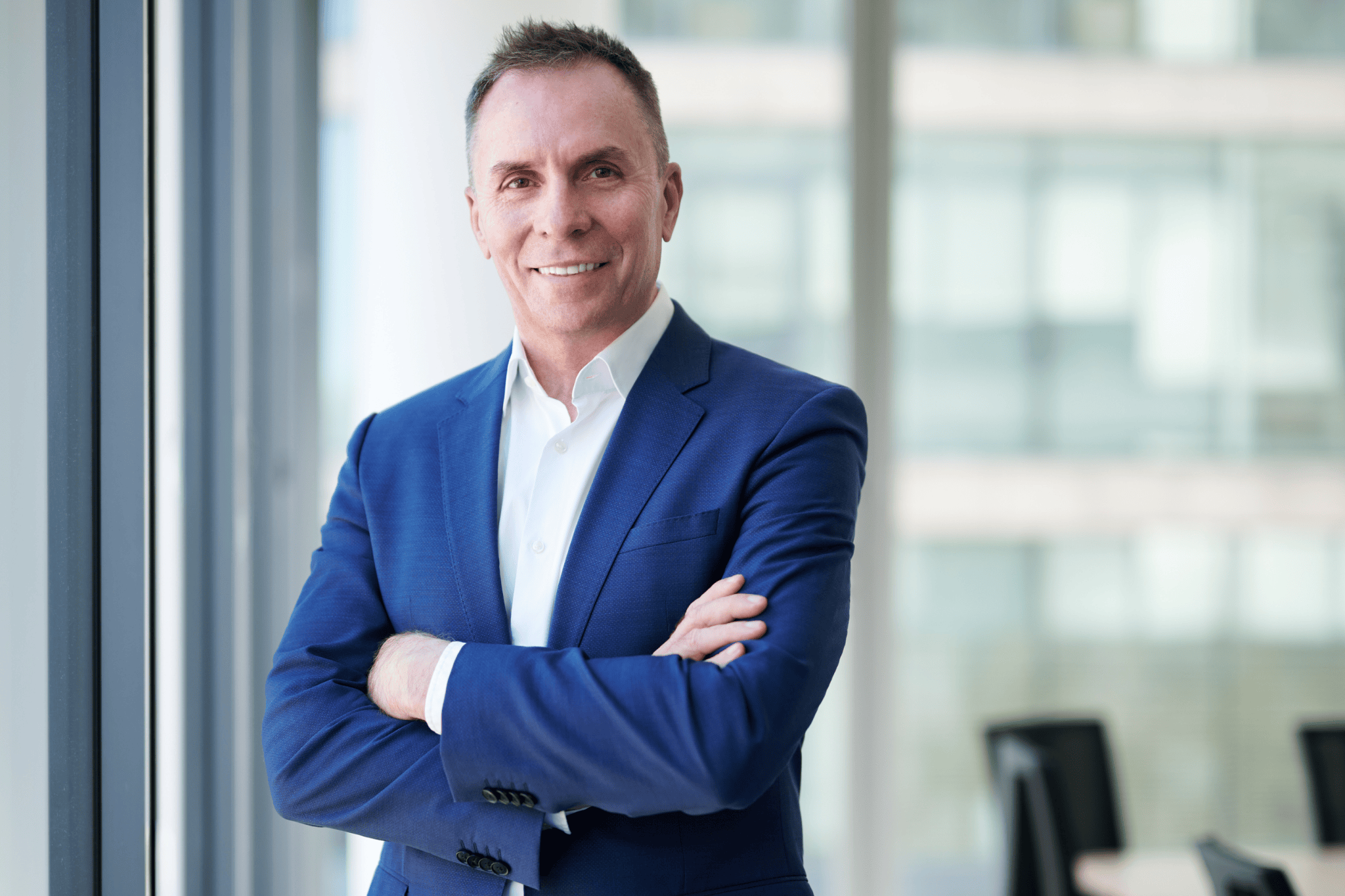
Meet Wizz Air’s CEO - his father was jailed under Soviet rule. Now, he’s on $4.4 million a year and would ‘rather keep building than sit on a beach’ · Notitia
Growing up in Soviet-controlled Hungary, Wizz Air founder József Váradi was born into a family still paying for his father’s role in the 1956 revolution — jailed, then frozen out of steady work for years, while his mother took factory shifts to keep them afloat. Six decades later, he’s running an airline that takes off somewhere in the world roughly once a minute.
“My father’s experience gave me a healthy skepticism about taking things for granted. It showed me how quickly circumstances can change and how important it is to remain adaptable. That mindset has helped me throughout my life and career,” Váradi told Fortune, adding that he “didn’t grow up dreaming of running an airline.” At first, he focused on getting a good education. And that he did.
Váradi won a scholarship to one of Hungary’s top universities, moved to Budapest at 18, and graduated as an economist from Corvinus University in 1989. He then worked short stints at a chemical plant and a paint factory before joining Procter & Gamble, where he spent a decade climbing the ranks in commercial roles and eventually became sales director for global customers across Europe.
In 2001, he joined Malév Hungarian Airlines as a manager—only for the airline’s board to refuse to extend its CEO’s contract five months later and hand Váradi the job instead. It didn’t last: a change in government forced him out in 2003.
“Instead of focusing on what was lost, I focused on what could be created,” Váradi added. “At the time it was disappointing, but looking back, it was also the catalyst for building Wizz Air. Sometimes what appears to be a setback becomes the beginning of something much bigger and better.”
Just months later, he founded Wizz Air, betting that Hungary’s looming entry into the EU—and the freedom of movement that came with it—would send demand for cheap flights soaring.
And he was right. Wizz Air is now the most popular short-haul carrier in Central and Eastern Europe, flying 265 aircraft to nearly 200 airports in 50 countries and carrying more than 550 million passengers to date. And it’s still growing: This year, the airline expanded into Spain, one of Europe’s biggest aviation markets.
Meanwhile, Váradi, who took home a £3.3 million ($4.4 million) salary last year, has flown to nearly every continent on the planet in the last year alone, for both business and pleasure. The 60-year-old CEO spends more than 800 hours a year in the air—or rather, 33 days spent on a plane. That’s more than the number of days he takes off work in a year.
But don’t expect him to slow down any time soon. Despite having well earned the right to put his feet up, he’s up most mornings for a 30-minute treadmill run before 9 a.m., lives 15 minutes from the office, and has lunch in the company canteen most days, with zero plans to retire. “I’d rather keep building than sit on a beach,” Váradi says.
Method: reports are grouped by the words of their headline and summary; each newsroom counts once; figures are read from the reports as published. Nothing here is written by an AI.
Fortune ’s series, The Good Life , shows how up-and-coming leaders spend their time and money outside of work.
The C-suite is a high-pressure job with long hours, board responsibilities, and intense scrutiny. But what is it like to be a top executive when you’re off the clock? Here’s what she told us.
What’s the best financial decision you’ve ever made—and how much did it make or save you?
Investing in education. Every major opportunity in my life can be traced back to learning something new, whether formally or informally. Markets change, industries change, technology changes, but knowledge compounds. It’s probably the only investment I’ve made that has never had a bad year. The financial return has been many times over whatever it cost.
My belief in education is also why I established the Varadi Scholarship at UCL. I have benefited enormously from learning opportunities throughout my life, so it felt important to help create similar opportunities for others.
Probably investing in winemaking. (Juliet Victor Winery) I enjoy wine, but I’ve learned that making it and making money from it are two very different things. Fortunately, I approached it with low-cost principles, so the damage was limited, but it certainly wasn’t my best investment
Not much. An ID card, my driving license, and a couple of cards. I don’t carry cash anymore, and I’ve never been particularly attracted to credit cards, loyalty schemes or collecting points. If something becomes complicated to manage, it’s usually already costing me more in time than it’s worth.
What’s the one area of your life where you’re surprisingly tight with money, even now? Probably tipping.
It’s not that I don’t appreciate good service, but I grew up in a culture where gratuity wasn’t as automatic as it is in some countries today. My instincts remain fairly conservative when it comes to spending money simply because everyone else does.
Hotel rates. I travel a lot, and every now and then I look at a bill and wonder how a room can cost that much for a single night.
Very little. When I do, it’s usually through a broker. My focus has always been on building businesses rather than managing a personal investment portfolio. My advice to beginners is to understand what you’re investing in and think long term. People often spend more time researching a holiday than researching where they put their savings.
What personal finance advice would you give your 20-year-old self?
Spend less time trying to look successful and more time becoming successful. Save before you spend, avoid unnecessary debt and invest in learning. Most things people buy to impress others are quickly forgotten. Skills and knowledge tend to stay with you much longer.
What are your living arrangements like: Swanky apartment in the city or suburban sprawling?
I live in a condominium in the city, about 15 minutes from the office. I’ve always valued proximity. Time is the one resource you can never get back, so minimizing commuting time has always felt like a sensible investment.
How have you managed the juggle between work and family—and what has it cost you, financially and personally?
I have four children (three are already adults), and my wife and family have always been a conscious priority. I’ve never believed children should be raised by someone else while parents are busy building careers.
Of course, when you’re running an airline, there are sacrifices. I’ve missed events, spent countless nights away from home, and had periods when work demanded more attention than I would have liked. But we’ve always tried to make the time we had count. It has probably cost me some professional conveniences over the years, but I wouldn’t trade those family moments for anything.
What does your morning routine actually look like—be honest?
It’s fairly predictable. I wake up around 7:30 a.m. and start the day with a thirty-minute run on the treadmill. Running helps me clear my head and organize my thoughts before the workday begins. After that, I get ready, drive to the office, and I’m usually there by 9 a.m.
I don’t spend much energy deciding what to do each morning. Routines are useful because they leave more mental capacity for bigger decisions later in the day. While it is not easy to maintain a routine with the amount of travel hours I have, I am quite disciplined.
Very little. I’m not really a coffee drinker. I occasionally have a cappuccino in a social setting, but caffeine isn’t what gets me going in the morning.
I prefer a hot lunch and usually eat in the company canteen when in the office. I’m not somebody who spends a lot of time searching for the latest food trend. Good food, reasonably priced, efficiently served.
Honestly, that’s more my wife’s department than mine. She has much stronger views on grocery shopping than I do.
We usually eat out once or twice a week as a family, often at high-quality restaurants. My go-to is probably lobster or a good steak. As for cooking, I’m not much of a chef. If I’m home after work, I generally eat whatever I find in the fridge.
After leaving the office around 4-5 p.m., I spend time with my youngest daughter, catch up on news and current affairs, and try to slow the pace after a busy day. I usually go to bed around 11 p.m. Running an international airline means you’re constantly dealing with developments around the world, so staying informed has become part of my routine.
I enjoy running, golf and skiing. What I like about sport is that it gives immediate feedback. The result depends largely on the effort you put in. Leadership can be complex and ambiguous; sport is refreshingly honest.
My advice to other leaders would be not to wait until you’re exhausted before doing something for yourself. Recovery should be part of the plan, not an emergency measure.
I don’t really believe in work-life balance. I believe in balance in life. Work is part of life, not something separate from it.
People often speak about balance as if there is a universal formula. There isn’t. What’s balanced for one person may feel completely wrong for another. The key is being comfortable with the trade-offs you’re making. I work a lot, and I always have, but I don’t count the hours. I do, however, ensure to make time for the things that matter to me. If you enjoy what you do and remain conscious about your priorities, balance tends to find its own level.
How do you celebrate a big win? Do you still treat yourself when you hit a career milestone?