The A69 motorway is becoming one of the most expensive in France: but who decides the price of tolls in France and why can't the State lower them when it owns the motorways?
Critics of the price of the A69, at more than 20 euros for a round trip, have rekindled the question of the cost of this infrastructure. Between state taxes, network maintenance, its operation and the reimbursement of…
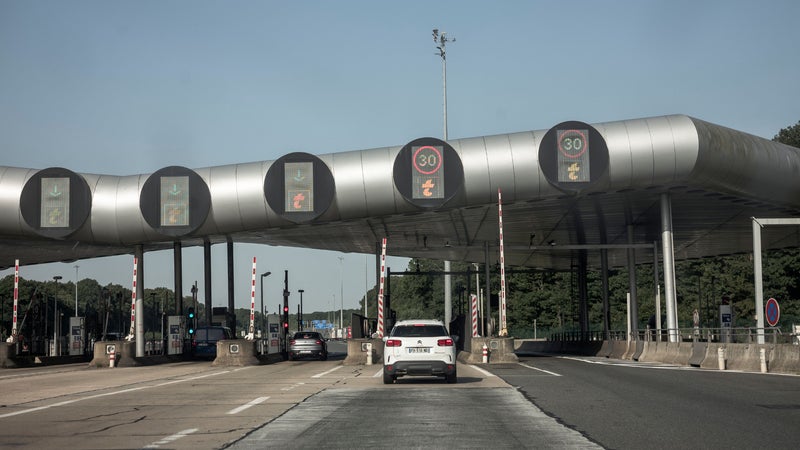
Even his supporters are stunned. The A69 motorway between Toulouse and Castres opened this Friday, November 6 in the morning after four years of standoff. And its fare of 20.40 euros round trip embarrasses even the elected officials who carried out this contested project.
“Like the Tarnais, I feel betrayed!” lamented the president (PS) of the department, Christophe Ramond, who has been pro-A69 from the start. Originally, elected officials hoped for a price 33% lower, but an opinion from the Council of State called into question the subsidies from local authorities and the State to lower the price.
This situation places the A69 among the most expensive motorways in France. This is not the first time that the price of highways has been debated. The concessionaires are regularly accused, notably in a report by UDI senator Vincent Delahaye, of "disproportionate enrichment", at the expense of the community.
The government also proposed in the 2027 budget to increase taxation on the profits of motorway and airport concession companies. Only 22% of the toll price is used for work on the motorways Contrary to popular belief, motorway companies cannot freely set their rates. In France, it is the State, owner of the motorways, which decides the pricing rules, which are included in the concession contracts concluded with the companies responsible for building, maintaining and operating the motorways.
Everything largely depends on the moment the concession is awarded. For a new highway like the A69, the State organizes a call for tenders to which candidate companies respond. These propose an economic model which integrates the construction cost, maintenance and operating expenses, expected traffic, financing conditions and the expected return on invested capital.
The toll rate is one of the elements of this financial balance. A highway that is expensive to build but relatively lightly used will generally have to charge higher prices to allow the concessionaire to recoup its investment. Conversely, a busy road can spread its costs over a much larger number of motorists.
This is particularly what explains the high price of the A69. The Atosca concessionaire must finance a significant infrastructure based on expected traffic much lower than that of the main French motorways. The price was therefore defined within the framework of the concession, based on these economic parameters.
But this system has a particularity: the prices are determined based on forecasts made several decades in advance. If ridership exceeds expectations or costs are ultimately lower than initial estimates, the highway's profitability may be higher than anticipated. According to the latest figures from the Association of French Highway Companies (ASFA), an organization which brings together and defends the interests of all concessionaires, more than 42% of the ticket price is captured in taxes and various charges.
Machine-translated from French
Not cross-checked yet
Only BFM Business reports this story so far. We show it as a single source until another newsroom confirms it.
- BFM Business6 Nov, 12:03
| Publisher BFM Business (established tier) | +76 |
| Detailed summary | +2 |
| Total | 78 |
Method: reports are grouped by the words of their headline and summary; each newsroom counts once; figures are read from the reports as published. Nothing here is written by an AI.