82% of European electric cars soon to be taxed at 10%, here is the tax at 1.47 billion euros
From January 1, 2027, electric cars traded between the European Union and the United Kingdom will pay 10% customs duties if their battery is not European enough. European manufacturers are demanding a new deadline from…
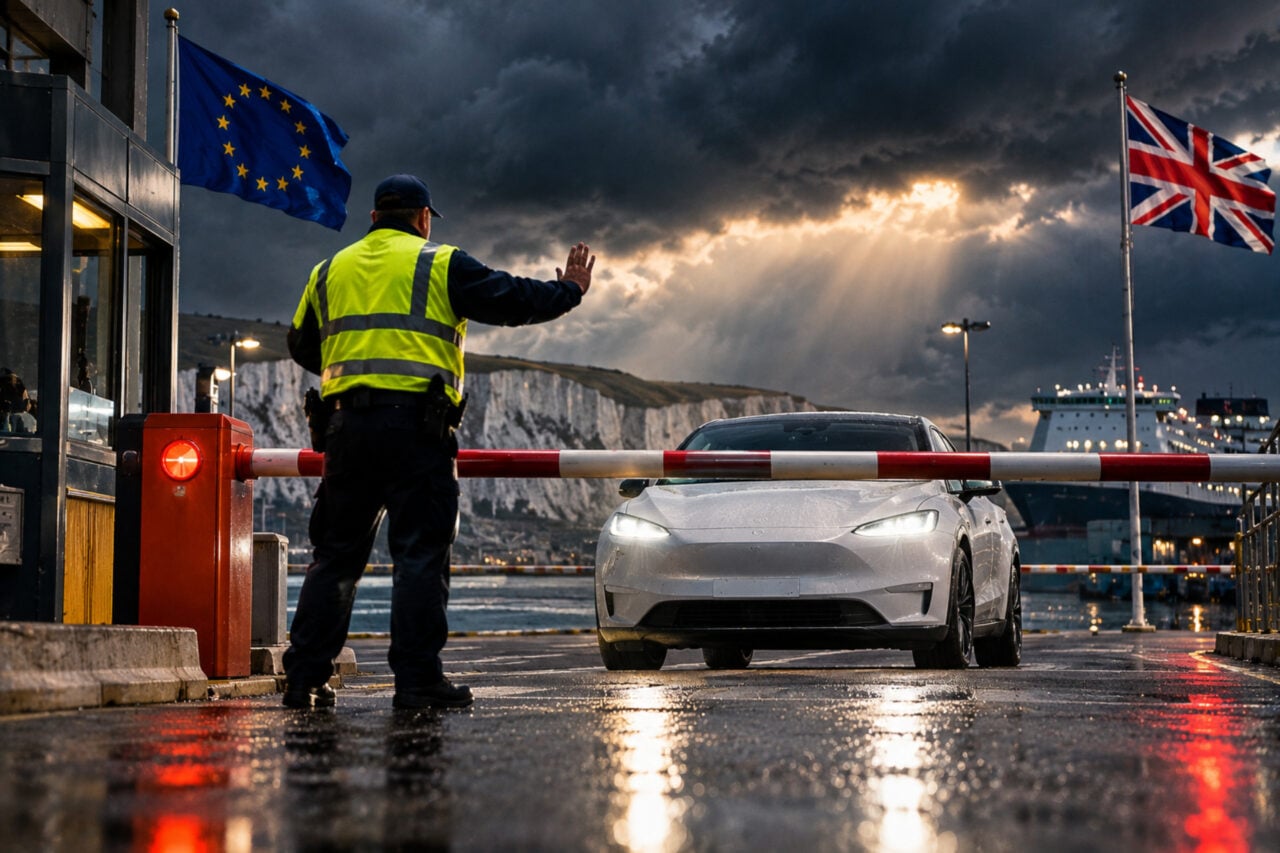
From January 1, 2027, electric cars traded between the European Union and the United Kingdom will pay 10% customs duties if their battery is not European enough. European manufacturers are demanding a new deadline from Brussels.
On December 24, 2020, the European Union and the United Kingdom concluded their trade and cooperation agreement, which entered into force on May 1, 2021. To avoid 10% customs duties, an electric car had to contain 40% of European value, including the United Kingdom, until the end of 2023, then 45% in 2024. In 2027, the threshold rises to 55% of the value of the vehicle and 70% of that of the battery pack, according to a note published on February 7, 2024 by the European Parliament's research service.
The first level was never applied. On December 6, 2023, the European Commission proposed keeping the starting rules for three more years, with up to 3 billion euros for battery factories in Europe, via its Innovation Fund. The EU Council gave its agreement on December 21, 2023, the EU-UK Partnership Council validated it the same day, and the text then specified that “no modification will be possible before 2032”.
On September 16, 2026, the European Automobile Manufacturers' Association (ACEA) wrote to Ursula von der Leyen, President of the European Commission, and António Costa, President of the European Council. The letter is signed by Ola Källenius, president of ACEA and boss of Mercedes-Benz, and by its general director Sigrid de Vries. According to ACEA, the European Union is expected to export around 520,000 electric cars and utility vehicles to the United Kingdom in 2027, worth 17.9 billion euros. 82% of them, or around 426,000 vehicles, would not comply with the new rules, which would represent 1.47 billion euros in customs duties in 2027 alone. For plug-in hybrids, manufacturers estimate that only 2% of models would comply.
ACEA calls for keeping the current rules for batteries until the end of 2029, then requiring European cells from 2030 and European cathode materials (lithium, nickel, cobalt, manganese) from 2032. “The question is not if they will be able to comply, but when,” writes the association. In June, the ACEA and its British equivalent, the SMMT, had already jointly called for a new delay. “Battery supply chains are still not ready to meet these strict requirements,” explained Mike Hawes, managing director of the SMMT. Jonathan O'Riordan of ACEA estimated that only 20% of electric car batteries would be produced in Europe by the end of 2026.
The tax applies both ways, to electric cars manufactured in Europe and sold in the United Kingdom, as well as to British models sold in the European Union. In June 2026, sources at BMW explained that production of the electric Mini in the Oxford factory could no longer be profitable. On September 28, Electrive reported, according to the Financial Times, that Brussels could condition the access of British companies to the “Made in Europe” rules of its future Industrial Accelerator Act on an alignment of the United Kingdom with European trade policy, particularly in relation to China. Since October 2024, the European Union has taxed Chinese electric cars between 7.8% and 35.3% on top of the usual 10%, while the United Kingdom has not done so. In the UK, Chinese-made cars account for around 16% of new car .
Machine-translated from French
Not cross-checked yet
Only Journal du Geek reports this story so far. We show it as a single source until another newsroom confirms it.
- Journal du Geek9 Nov, 16:27
| Publisher Journal du Geek (general tier) | +72 |
| Checkable figures cited | +3 |
| Detailed summary | +2 |
| Total | 77 |
Method: reports are grouped by the words of their headline and summary; each newsroom counts once; figures are read from the reports as published. Nothing here is written by an AI.