The increase in the minimum wage will push 64 new professional sectors into illegality: this is how the government will hit companies in the wallet so that they increase their salaries
As a direct consequence of the increase in the minimum wage announced for December 1, 64 new professional sectors will fall into non-compliance with conventional minimums lower than the minimum wage. A decree should…
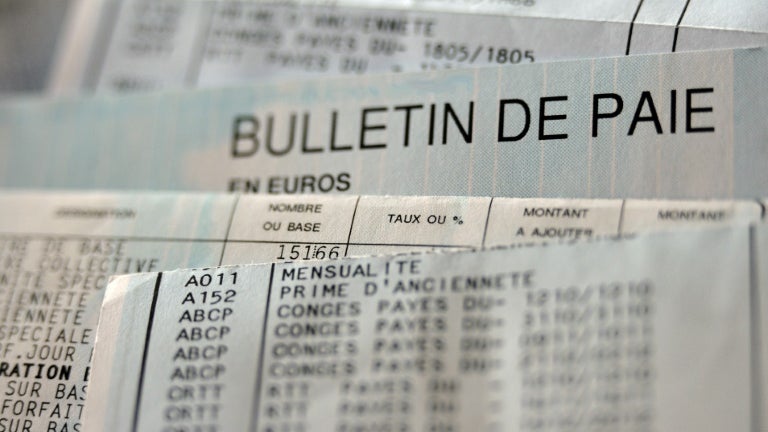
This is an expected effect of the increase in the minimum wage. While the Minister of Labor Jean-Pierre Farandou announced this Monday, November 9, a 1.6% increase in the minimum wage from December 1, the list of professional branches with lower minimums is growing. His office said 64 new branches will become non-compliant.
By adding them to the 69 which are currently not in the nails, this makes a total of 133. To encourage the professional branches to rectify the situation, the government should publish this Tuesday in the Official Journal a long-awaited decree, in application of a provision passed in the last Social Security financing law (LFSS) for 2026. Roughly speaking, it is a question of increasing employer contributions within the branches whose conventional minimums remain lower than the minimum wage.
Concretely "we measure compliance over a calendar year, branches which are non-compliant for more than one year would have the reductions calculated on the basis of the conventional minimum sub-Smic, as a result of which the company is strongly penalized", specifies Jean-Pierre Farandou's office. In practice, this means that the companies concerned would lose part of the exemptions from employer contributions which they benefit from on low salaries. Today, these reductions are calculated based on the minimum wage, even when the minimum wage provided for by the sector's collective agreement is lower.
Tomorrow, they would be calculated from this weaker conventional minimum. Result: for the same salary paid, the company would benefit from a smaller reduction in contributions and would therefore have to pay more employer contributions. Reform of general reductions Through this decree, the challenge is to strongly encourage professional branches to renegotiate their salary scales "as quickly as possible" and that the file does not drag on after each revaluation of the minimum salary - especially since the evolution of inflation already suggests a new increase in the coming months.
To avoid being rebutted by the Constitutional Council, the government has however clarified that companies which have decided on their own to raise the level of their scales would not be affected even if they belong to a professional branch whose minimums are non-compliant. However, the government does not intend to stop there. As Prime Minister Sébastien Lecornu announced this morning, on the sidelines of the social conference on purchasing power, work will begin on the system of exemptions from contributions with the social partners.
Machine-translated from French
Not cross-checked yet
Only BFM Business reports this story so far. We show it as a single source until another newsroom confirms it.
- BFM Business9 Nov, 18:05
| Publisher BFM Business (established tier) | +76 |
| Detailed summary | +2 |
| Total | 78 |
Method: reports are grouped by the words of their headline and summary; each newsroom counts once; figures are read from the reports as published. Nothing here is written by an AI.