Some measures to curb UK energy bills and cut red tape for businesses: Prime Minister Andy Burnham unveils his first budget
The new UK administration under Andy Burnham presented its inaugural budget this week. However, high inflation and soaring borrowing costs leave the government with limited flexibility to manoeuvre.
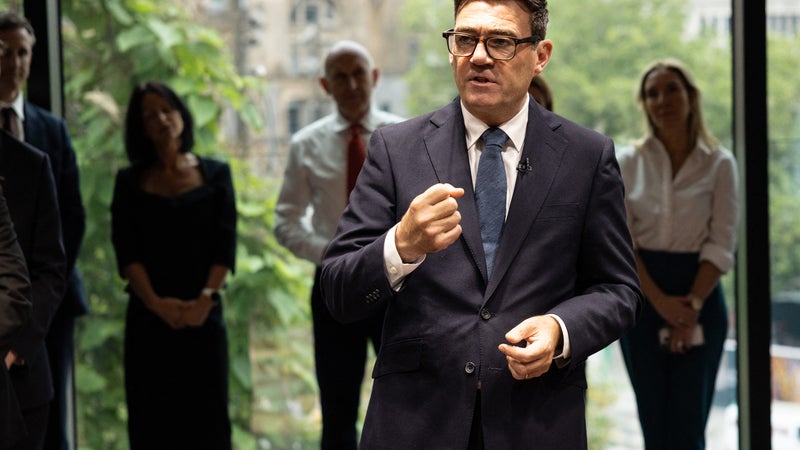
The new government of British Prime Minister Andy Burnham presents its first budget this Wednesday, which will test its ability to support purchasing power and increase defense spending with limited financial room for maneuver. The task promises to be difficult for Finance Minister John Healey: inflation, at 3.5% in September, and soaring borrowing costs, fueled largely by the war between the United States and Iran, are weighing on public finances as well as businesses and households. “It’s a budget which aims to give a little breathing room to people, to businesses too, and which helps to bring a little hope for the future,” promised Monday on the ITV channel Andy Burnham, who will end his first hundred days in power on Tuesday.
He added that the budget would set out "the trajectory to honour" Britain's commitments to NATO, as part of a "funded" defense plan. The British government is, however, caught between financing its promises and respecting Labour's fiscal and budgetary commitments, which notably plan to eventually cover current expenditure through revenues, without resorting to borrowing. “Reassure the markets” According to forecasters from Oxford Economics, budgetary latitude would have been halved compared to the 23.6 billion pounds projected in March by the Office for Budget Responsibility (OBR), the body responsible for monitoring public finances.
“With a public debt of around 94% of GDP, the room for maneuver is limited,” underlines James Wood, professor of political economy at the University of Cambridge. This first budget should therefore favor modest and inexpensive boosts. “While public opinion remains relatively supportive and no elections are imminent, short-term attention should focus on reassuring markets and supporting businesses, (...
) with more generous measures reserved for a period closer to the election", estimates the analyst. In its 2024 electoral program, Labor had committed not to increase income tax, social security contributions and VAT to finance its promises. John Healey also ruled out raising capital gains tax, according to British media.
Among the financing options, the press mentions an increase in taxation on the profits of banks, which have done well in a difficult economic environment. The energy sector is already subject to an exceptional tax on its profits. Glow on the horizon The press also mentions possible changes to inheritance taxes, in particular an increase in taxation for children inheriting their parents' business.
On the spending side, the government would prepare new aid to relieve households in the face of soaring energy bills, which would be added to the reduction in VAT on electricity which came into force in October. An extension of the fuel tax freeze is notably mentioned, as well as targeted aid for the poorest households or even the elimination of fixed costs on gas bills. The green light given last week by the executive to the exploitation of the controversial Jackdaw gas project, in the North Sea, "will not result in lower bills", admitted the Ministry of Energy.
Machine-translated from French
Not cross-checked yet
Only BFM Business reports this story so far. We show it as a single source until another newsroom confirms it.
- BFM Business26 Oct, 13:25
| Publisher BFM Business (established tier) | +76 |
| Detailed summary | +2 |
| Total | 78 |
Method: reports are grouped by the words of their headline and summary; each newsroom counts once; figures are read from the reports as published. Nothing here is written by an AI.