Budget: Deputies vote in favour of a new digital data tax expected to raise €10 billion
In a sparsely populated parliamentary chamber, lawmakers approved the creation of a new fiscal measure requiring “data producers” to pay €0.055 per gigabyte of data sent to consumers.
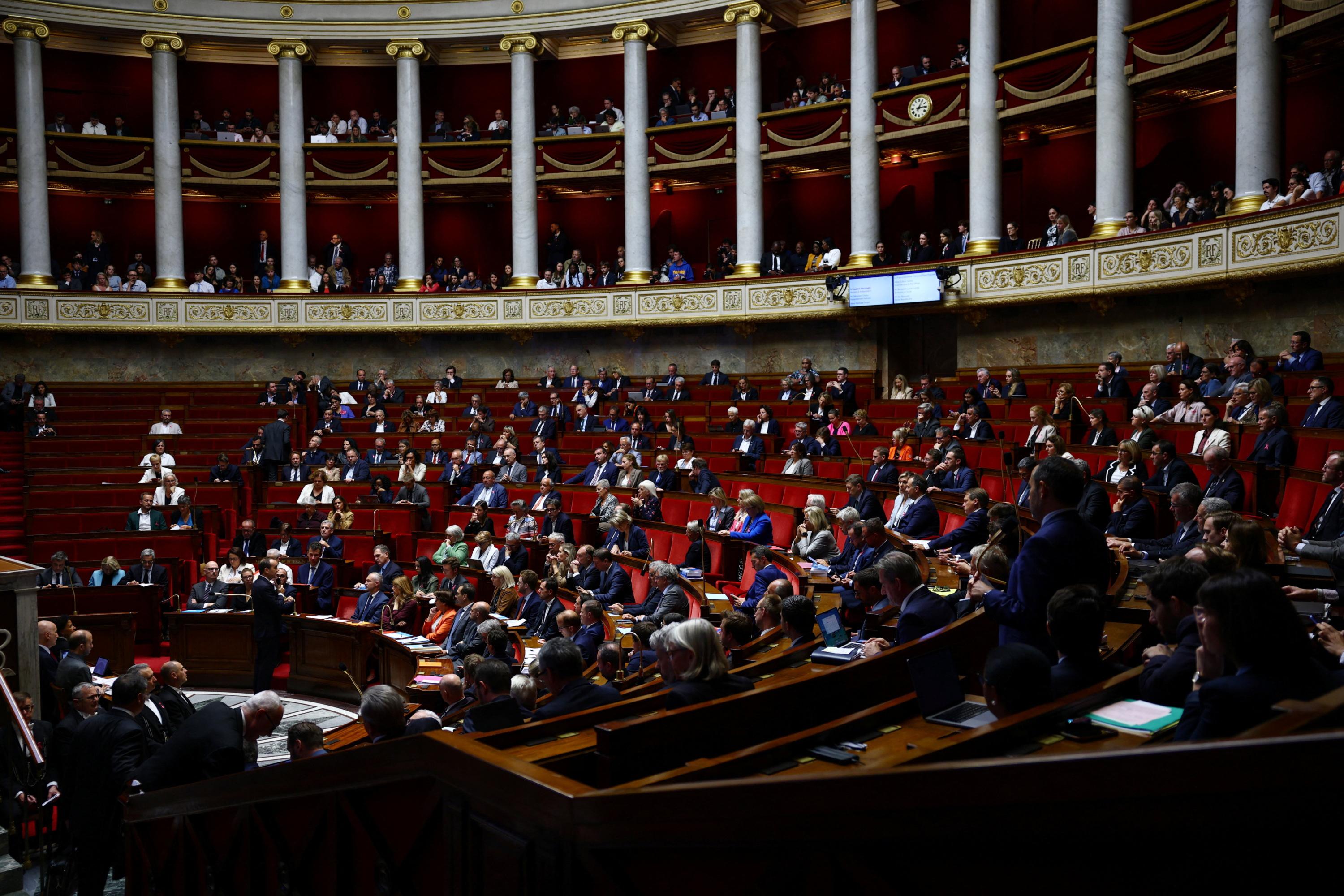
How far could the French state’s fiscal desires extend? Even in the invisible flow of digital data, according to an amendment adopted this Friday, October 30 by the deputies. Against the advice of the government, and by a narrow margin of 11 votes to 10, the elected officials of the Bourbon Palace approved a proposal from the socialist deputy for Bouches-du-Rhône Laurent Lhardit aimed at “taxing producers of digital data”, such as Netflix, Meta or Google.
At the heart of the system, the quantity of data distributed by them to their users, measured in bytes. Thus, my issuers would have to pay 5.5 cents for each gigabyte (i.e. one billion bytes) delivered to individuals. The volume would be transmitted to the government by internet service providers, such as SFR, Bouygues Télécom, Free or Orange.
In the presentation of the amendment, the tax is presented as “based on a non-relocatable base”, thus making it difficult to circumvent. The socialists put forward a tax yield of 10 billion euros, with data traffic to subscribers being estimated by Arcep at 200 billion gigabytes per year. Supporters of the amendment also claim that this mechanism would push senders to innovate to reduce the volumes of data transmitted.
Data centers would then consume less, which would reduce their ecological footprint. » READ ALSO - “AI has become an existential threat”: data centers, a surprise issue in the American midterms A compromised future If the transmitters of data are innumerable, each site, application or platform producing it, the bulk of the tax should rest on a small number of players. According to Arcep figures put forward by the deputies, five entities concentrate 50% of total data traffic in France: Netflix, Google, Meta, Amazon and Akamai (specialized in the distribution and storage of online content).
Enough to “[rebalance] the contribution of the different actors of the economy to the national tax effort”, support the socialist deputies, facing “a deterritorialized economy” whose tax base is a self-declared profit. The amendment was first rejected in the Finance Committee. Its general rapporteur, Philippe Juvin, saw there “the risk [that GAFAM] will pass on the weight of this tax to advertisers”.
The Minister of Public Accounts, David Amiel, shares this opinion: “half of the tax – or still 5 billion euros according to your proposal – would not weigh on large digital companies but on smaller content providers, particularly French providers.” The scenario is reminiscent of that of the digital services tax passed in 2019, which hit the turnover of digital giants by 3%. The latter then partly passed on this new system to their service providers.
Machine-translated from French
Not cross-checked yet
Only Le Figaro reports this story so far. We show it as a single source until another newsroom confirms it.
- Le Figaro30 Oct, 22:42
| Publisher Le Figaro (established tier) | +76 |
| Detailed summary | +2 |
| Total | 78 |
Method: reports are grouped by the words of their headline and summary; each newsroom counts once; figures are read from the reports as published. Nothing here is written by an AI.