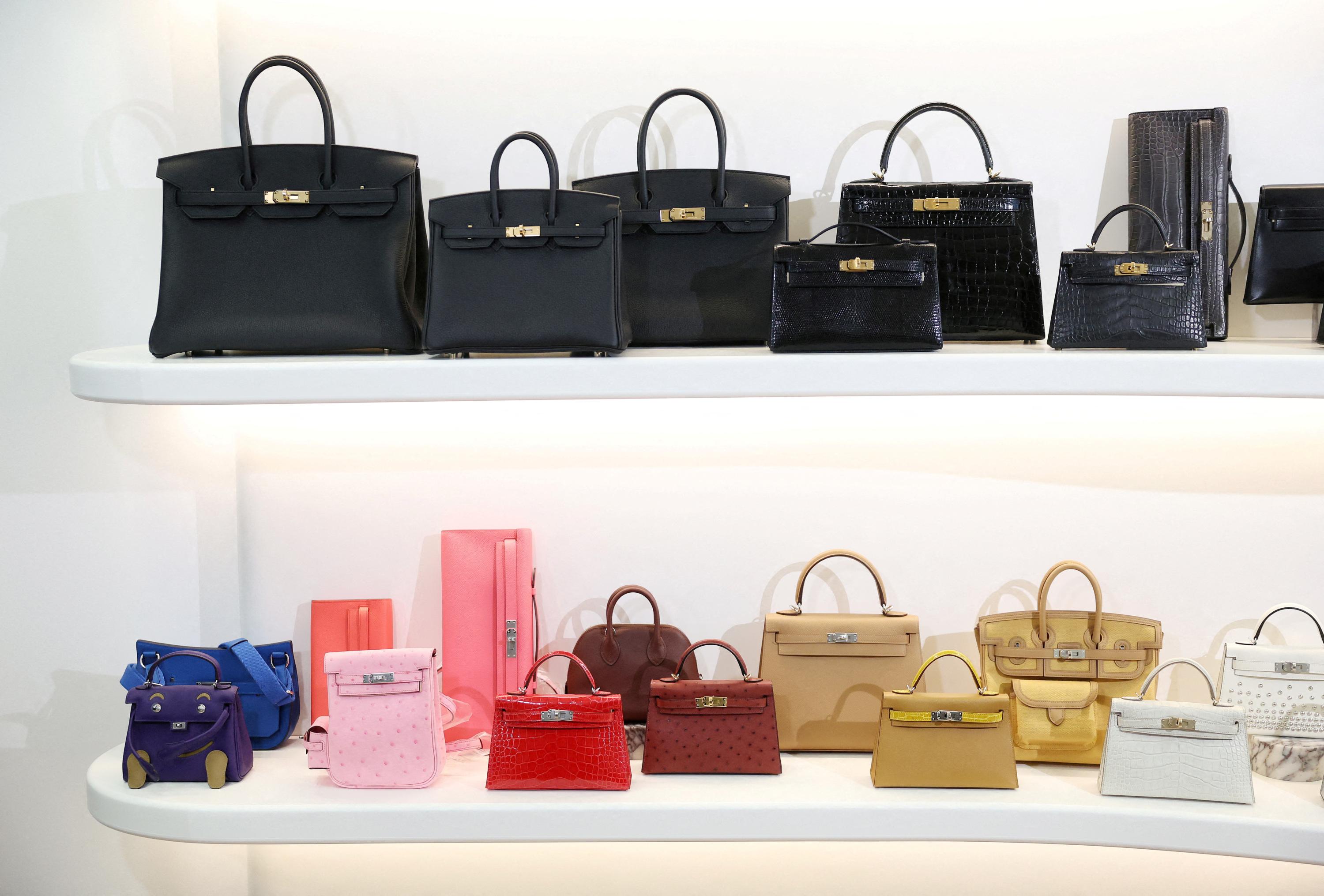
Beyond a 40% drop in its stock market value, Hermès must confront the recent glut of Birkin bags on the secondary market
The growth of the Hermès group is slowing, penalized by weak Chinese demand. At the same time, the abundance of its emblematic bags on the secondary market questions the sustainability of a model based on rarity.
The luxury giant is showing serious signs of weakness following the publication of its third quarter 2026 results. The turnover of 4.10 billion euros represents organic growth of 4.3%, a level 1% lower than consensus. If the Leather Goods-Saddlery division is still holding up with an increase slightly better than expected (+10%), sales of ready-to-wear, perfumes and watches are suffering a slowdown.
Hermès is experiencing its weakest quarterly growth in six years and its stock has lost 40% of its market value this year. A difficult time for the luxury group, which is also seeing increased availability of its iconic Birkin bags on the secondary market. The Birkin is losing its exclusivity on the resale market According to a Reuters investigation, the Birkin supply on the second-hand market is increasing and resale premiums are decreasing.
Six of the nine retailers surveyed noted a drop in prices over one year and five also reported less sustained demand. According to a Bernstein note published in September, the resale price of the Birkin 25 represented on average around 1.7 times its in-store price in the third quarter, compared to 2.6 times at the peak of 2022. The investment bank RBC Capital Markets points to a risk for the growth of Hermès: “the offer of Kelly and Birkin bags on the second-hand market structurally weighs on the volume growth potential of the Leather Goods division”.
UBS estimates illustrate this risk. The number of these models offered for resale worldwide is now six to seven times higher than its pre-pandemic level according to the Swiss bank. This glut could weaken the scarcity on which Hermès’ business model is based.
An economic model called into question To hope to be offered a Birkin in store, customers generally spend between $10,000 and $20,000 in advance on other products from the brand, particularly ready-to-wear and scarves, according to certain retailers interviewed by Reuters. The prospect of subsequently reselling the bag with a gain could make these prior purchases more attractive. Conversely, the drop in resale premiums on the secondary market could curb this spending.
Hermès is above all faced with a drop in Chinese demand and mentions a “difficult context”, according to its press release dated October 22. The impact of the war in the Middle East on tourism and tax-free sales also penalized the luxury brand. In its note reacting to the results published today, the investment bank UBS estimated that “this publication risks raising questions about the 2027 outlook and asking the question of the impact of the change in size of Hermès on the very nature of its economic model.
Machine-translated from French
Not cross-checked yet
Only Le Figaro reports this story so far. We show it as a single source until another newsroom confirms it.
- Le Figaro27 Oct, 16:49
| Publisher Le Figaro (established tier) | +76 |
| Detailed summary | +2 |
| Total | 78 |
Method: reports are grouped by the words of their headline and summary; each newsroom counts once; figures are read from the reports as published. Nothing here is written by an AI.