Bank of England’s inflation response ‘risks higher interest rates for longer’
Thinktank Niesr says timid rate rise last week likely to make inflation more persistent feature of UK economy The Bank of England is risking higher interest rates for longer after a hesitant response to rising…
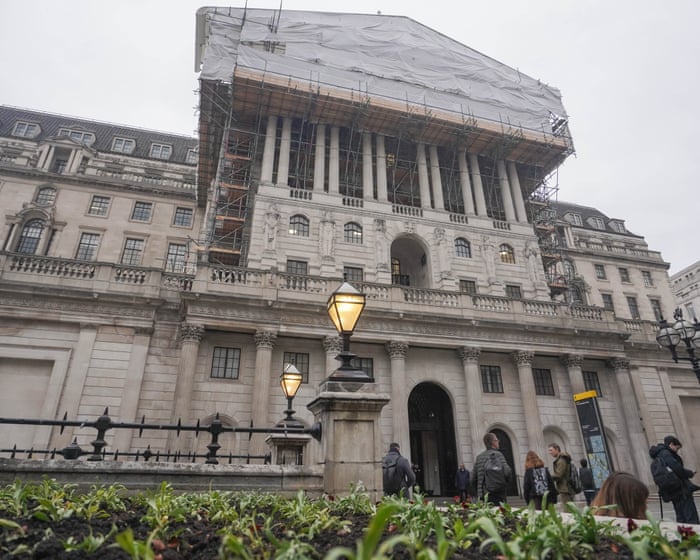
Bank of England’s inflation response ‘risks higher interest rates for longer’ Thinktank Niesr says timid rate rise last week likely to make inflation more persistent feature of UK economy
The Bank of England is risking higher interest rates for longer after a hesitant response to rising inflation , according to leading thinktank.
In a searing critique of the central bank’s tactics, the National Institute of Economic and Social Research (Niesr) said a timid increase in interest rates last week was likely to mean inflation staying above the Bank’s 2% target until at least 2030.
The thinktank said inflation was likely to become a more persistent feature of the UK economy unless the Bank took tougher action .
The Bank’s monetary policy committee increased the cost of borrowing from 3.75% to 4% last week and hinted at another increase to combat inflationary pressure unleashed by the Iran war.
The director of the Niesr, David Aikman, urged the Bank of England to be more aggressive in tackling inflation, saying all the ingredients were in place for workers to demand inflation-linked salary rises.
“Inflation is set to rise above 4% in the new year, just as most pay awards for 2027 are being agreed, so the risk that it becomes embedded is rising.
“One further quarter-point rise is unlikely to be enough, and the longer the MPC waits, the more it will eventually need to do.”
UK inflation stands at 3.5%, well above the Bank’s 2% target, driven higher by the soaring cost of fuel. Oil and gas prices have risen sharply since the end of February, when the US and Israel launched their war on Iran.
Brent crude oil has persistently traded at more than $100 a barrel in recent weeks – compared with about $70 before the war – but on Tuesday it traded below $90 at one point, the lowest since 31 August, after Donald Trump downplayed the need for military action against Iran “at this point”.
Investors, however, reined in their enthusiasm after US inflation climbed by 0.4 percentage points from September to October , revealing that high oil and gas prices were continuing to drive up costs. The S&P 500 index of leading US companies was down 0.9% by early afternoon on Wall Street.
Not cross-checked yet
Only The Guardian reports this story so far. We show it as a single source until another newsroom confirms it.
- The Guardian11 Nov, 01:01
| Publisher The Guardian (reference tier) | +82 |
| Detailed summary | +2 |
| Total | 84 |
Method: reports are grouped by the words of their headline and summary; each newsroom counts once; figures are read from the reports as published. Nothing here is written by an AI.