The Spanish economy is a dream for all of Europe and yet the Spaniards can't take it anymore: how can we explain this social anger which can sweep away the socialist government?
With growth twice that of the euro zone, falling unemployment and sharply declining public debt, Spain has become an economic model in Europe. But behind these performances lies a housing crisis, a generational divide…
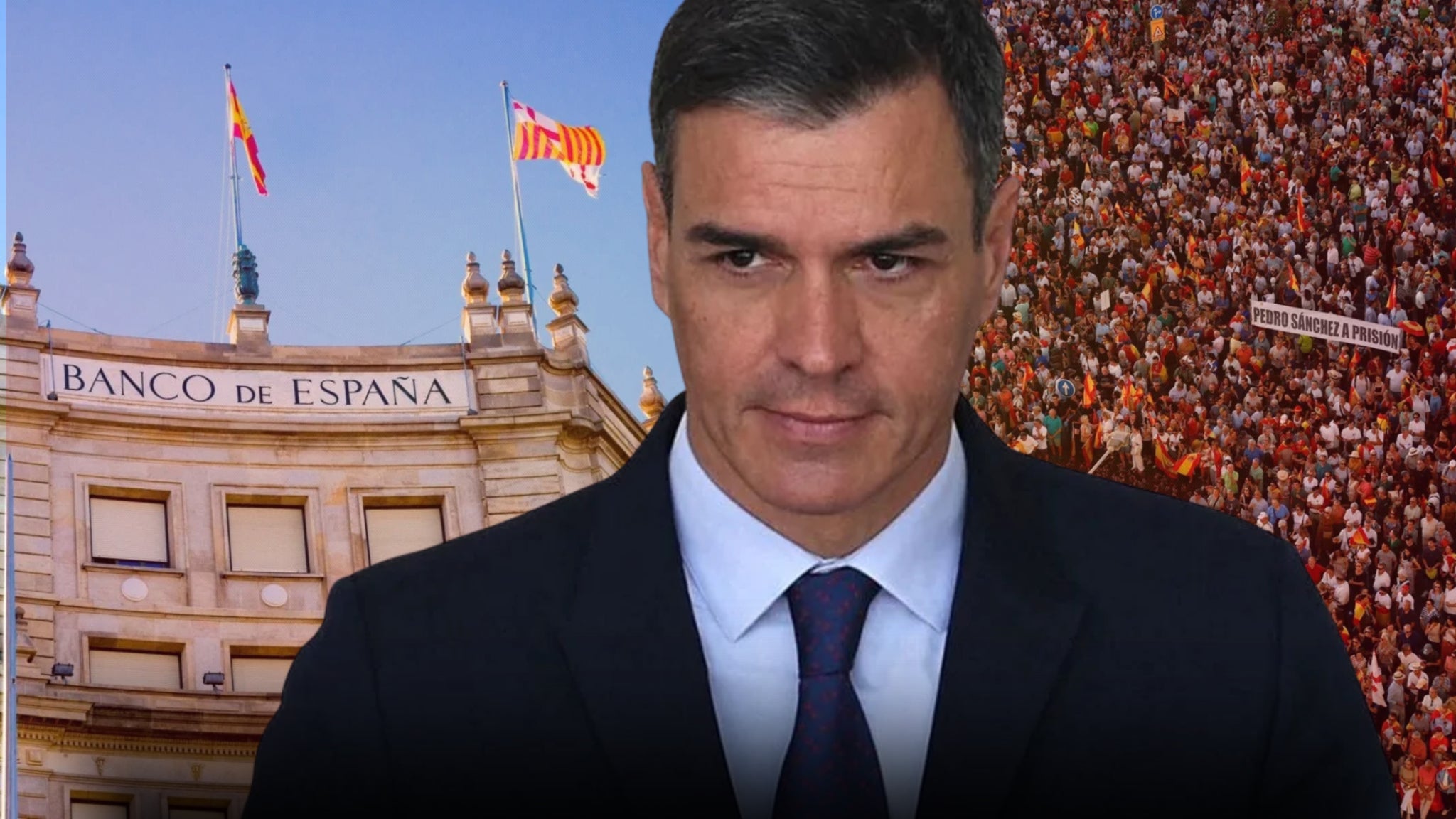
There are two ways to look at Spain and its economy. First, that of the INE, the Spanish equivalent of our INSEE. And this view is more than flattering: growth twice as high as that of the euro zone, unemployment which is falling, a public deficit which is being reduced and a debt which has been melting for five years like snow under an Andalusian sun, brought back below 100% of GDP whereas it exceeded 120% in the aftermath of the pandemic.
In the third quarter, Spanish GDP further increased by 2.7% year-on-year and the country has 465,500 more people employed than a year ago. For the whole of 2026, the European Commission expects growth of 2.6%, an unemployment rate reduced to 9.9%, a public deficit contained at 2.6% of GDP and a debt at 99.2%.
An economic record that many European leaders would envy of Prime Minister Pedro Sánchez. And then there is the way the Spaniards view their own country. And this one is much less flattering.
That of young people who can no longer find housing, of employees who do not see their standard of living improving and of a population who take to the streets to express their anger. It is this other Spain, the one that the major macroeconomic indicators struggle to grasp, which could make Pedro Sánchez pay for eight years of power at the polls this Sunday, November 29. How can we explain such a divorce between the economic success of a country and the state of mind of its population?
A few days before the election, testimonies tell of a fractured Spain, where part of the youth believes that they can no longer claim the standard of living of their parents. Iker Lucena, a 20-year-old law student in Madrid, grew up believing that working hard, studying and learning languages would allow him to lead a comfortable life. “You wouldn't necessarily become a millionaire, but you could at least have your own house, start a family,” he tells the Financial Times.
But "today, these prospects seem to have disappeared." "Our parents were finally able to obtain a mortgage, even without extensive studies. They were able to lead a peaceful and normal life.
But for us, it's unthinkable," continues the young man, who will vote on Sunday for Vox, the far-right party. Two out of three young adults still live with their parents Housing has become the main point of crystallization of Spanish anger. Real estate prices have increased approximately twice as fast as the salaries of young workers.
Two thirds of young adults under 34 still live with their parents. The average age of leaving the family home has now reached 30, one of the highest in Europe. Housing construction never truly recovered from the bursting of the 2008 housing bubble.
However, since Pedro Sánchez came to power in 2018, the immigrant population has increased by 3.8 million people, bringing the country's total population to almost 50 million inhabitants. Added to this demographic pressure is Spain's tourist success, which removes part of the real estate stock from the residential market. If the government has considerably increased the minimum wage (it went from 730 euros gross in 2018 to 1.
220 euros in 2026, an increase of 66% in eight years), the median salary has increased much less quickly. According to the Spanish think tank Fedea cited by Bloomberg, nearly two million additional households fall below the poverty line once their rent is paid. Salomé Iglesias, a 21-year-old international relations student interviewed by Bloomberg, works odd jobs without being able to leave her parents' home in central Madrid.
She no longer believes in the promises of political leaders and will not vote on Sunday. “They were supposed to defend us, but they neglected us. They only defended their own interests and those of the wealthy.
"Retirees who receive 357 euros more than an employee on the minimum wage. To the traditional divide between the "two Spains", that of the left and that of the right, there is now added another line of division: that of age. Since Pedro Sánchez came to power, the average pension of Spanish retirees has increased by almost 500 euros per month to reach 1,578 euros, or 357 euros more than the monthly minimum wage.
According to the OECD, a Spanish employee who has completed a full career at the average salary benefits from a gross replacement rate of 80.4%, compared to 56.6% in France and 44.7% in the United Kingdom. Added to this is a considerable real estate portfolio. According to the European Central Bank, 47% of Spanish households own at least one property in addition to their main residence, compared to 25.5% on average in the euro zone.
An abundance of heritage which contrasts with the difficulties young people have in accessing their first home. “We are witnessing the emergence of a phenomenon of generational resentment,” observes Ignacio Varela, columnist for the newspaper El Confidencial, to the Financial Times. This divide does not mean that the generations live back to back.
Economists underline the importance of family solidarity in Spain, with grandparents sometimes financing their grandchildren's studies, providing care for them or providing their second homes. Growth is no longer enough Spain's economic recovery is nevertheless very real. The Dutch bank ING is once again speaking this month of a “real Spanish renaissance”.
“Spain has accomplished an impressive journey, observe Marieke Blom and Pablo Muylle, the authors of the note. This former enfant terrible fully deserves its new status as a country in full renaissance.” Part of this growth is based on the increase in population, fueled by immigration.
According to calculations by the European Central Bank, the increase in the number of foreign workers alone explains 75% of the growth in Spanish GDP between 2019 and 2026. And if immigrants remain significantly less well off than Spaniards, they have seen their after-tax income, adjusted for inflation and household size, increase by 28% between 2018 and 2025, compared to 19% for Spaniards. An increase which can be explained in particular by the spectacular increases in the minimum wage (+66% in eight years in current euros), with foreign workers more often occupying jobs paid at the minimum wage.
We then speak of extensive growth, that is to say that it is based on the increase in population. The increase in overall GDP therefore does not automatically translate into an equivalent improvement in the standard of living of each inhabitant. Moreover, in 20 years, the real income of Spanish households per capita has only increased by around 11%, or half as much as the European average.
If the country has made up part of its delay since 2018, the surge in housing prices is preventing many Spaniards from fully feeling this improvement. Ultimately the paradox is perhaps not one. A dynamic economy seen from afar is not incompatible with social malaise.
And after eight years in power, Pedro Sánchez could lose the elections even though he has a macroeconomic record that many European leaders would envy.
Machine-translated from French
Not cross-checked yet
Only BFM Business reports this story so far. We show it as a single source until another newsroom confirms it.
- BFM Business28 Nov, 06:30
| Publisher BFM Business (established tier) | +76 |
| Detailed summary | +2 |
| Total | 78 |
Method: reports are grouped by the words of their headline and summary; each newsroom counts once; figures are read from the reports as published. Nothing here is written by an AI.