They supply H&M, Zara or Uniqlo for a salary of 94 euros per month: in Bangladesh, textile industry workers continue their strike, more than 600 factories are at a standstill
More than 600 textile factories were blocked on Monday in Bangladesh, where workers demonstrated to obtain a doubling of their wages, among the lowest in the world. Inflation reached 8% in September, in a context of…
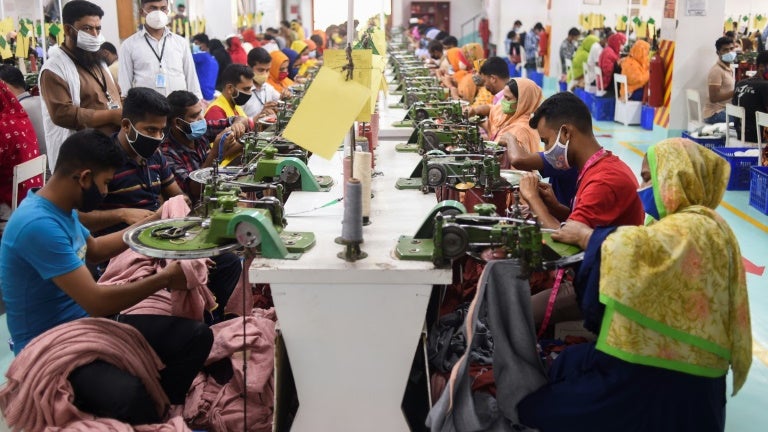
Hundreds of textile industry workers returned to the streets of the Bangladeshi capital Dhaka for the fourth consecutive day on Tuesday. They demanded an increase in their salaries, despite calls from unions to end the movement. Since Saturday, many employees have stopped working to obtain a doubling of their remuneration - estimated at 13.
000 takas or 94 euros per month on average - against a backdrop of high inflation of more than 8% in September and the global energy crisis. "Bangladesh is among the countries in the world with the lowest wages in the garment sector," Babul Akhter, general secretary of the Garment and Industrial Workers' Federation, told Reuters. “If factory owners cannot pay their workers properly, they should negotiate better prices with international buyers.
They cannot build a business on the backs of underpaid workers," he continued. The textile sector constitutes the backbone of the economy of Bangladesh, the world's second largest clothing exporter: it employs 4 million workers and generates most of the country's foreign exchange earnings. Bangladesh is a key supplier for brands such as H&M, Zara, Walmart, Uniqlo and Primark.
On Sunday, the government set up a committee responsible for renegotiating their salaries. Several hundred factories, however, remain blocked. According to industry representatives, workers from at least 670 companies - the sector has about 4 of them.
000 - walked off the job on Monday. A remaining living amount of 21 euros In the seven years she has been manufacturing clothes for major foreign brands, Amena has never experienced such difficult ends of the month. At 27, the worker barely earns enough to pay her rent and feed her parents.
The young woman says she earns around 12,500 takas (90 euros) per month. She details paying 4.
500 takas in rent per month and pay another 5,000 to support his parents who live in Dinajpur district, northwest of Dhaka. Only 3 left.
000 (21 euros) for the rest. “I don’t have any money saved,” the worker insists to AFP. “My bones hurt, I have to take medicine.
So I don't have the means to pay for fish or meat regularly." "It's a bit like forced labor, even if no one forces us to do it. But we have to work, and textile factories are our only solution.”
The authorities promise "an iron fist" Clashes with the police continued on Monday. In the district of Mirpur, incidents pitted them against the police, according to AFP. Videos posted on social media show a group of men armed with sticks beating a lone police officer.
Machine-translated from French
Not cross-checked yet
Only BFM Business reports this story so far. We show it as a single source until another newsroom confirms it.
- BFM Business3 Nov, 16:44
| Publisher BFM Business (established tier) | +76 |
| Checkable figures cited | +3 |
| Detailed summary | +2 |
| Total | 81 |
Method: reports are grouped by the words of their headline and summary; each newsroom counts once; figures are read from the reports as published. Nothing here is written by an AI.