Inspired by Chinese practices for faster, cheaper production, Renault’s new engineering for developing the Rafale’s successor is set to be inaugurated
The manufacturer will inaugurate this month its new engineering organization with the aim of drastically simplifying its processes in developing the successor to the Rafale.
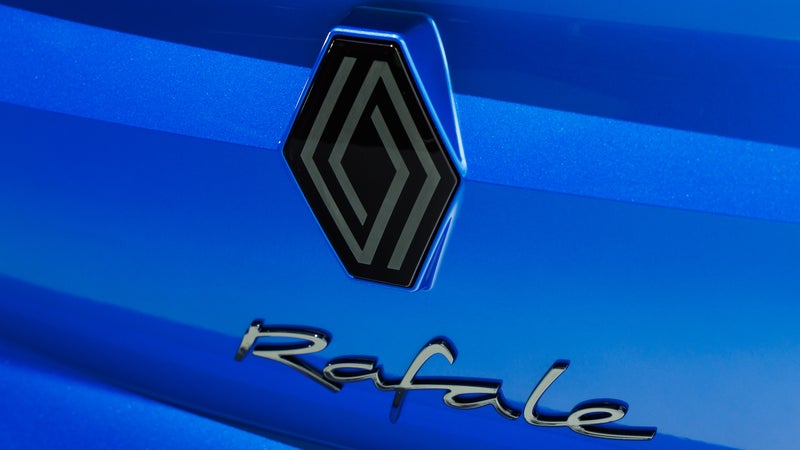
The development of the successor to the Rafale, the Renault Group SUV coupe, will be able to begin a concrete phase with the inauguration this month in France of the car manufacturer's new engineering organization, inspired by Chinese operating methods in order to design cars faster and for less money. After having developed its electric Twingo largely in China, the diamond group launched this year a vast project to transpose several Chinese recipes and transform its engineering throughout the world, with the result of a drastic simplification of processes, up to 20% reductions in workforce by the end of 2027 and a substantial training plan for the electrification and software professions. “Everything is not 100% in place yet, but enough for us to get started,” Renault Chief Technology Officer (CTO) Philippe Brunet told Reuters in an interview.
“All projects that enter development from November onwards will start in this configuration.” This notably plans to divide a car project into fewer than 30 modules, or a third less than today, in order to reduce the number of people involved and gain decision-making speed. “Previously there were 45 modules, it was the fruit of an organization which belongs to the past,” continued Philippe Brunet.
"I think 30 is very good. If we consider that the Chinese are among the most efficient, that's pretty much what we saw there." "We won't make a car that does loops" In addition to the 100% electric successor to the Rafale, scheduled for the end of 2028 after two years of development, the same duration as for the Twingo, the new organization will also apply to two other electric programs whose development has been entrusted to the French part: the new Scenic and an “important evolution” of the best-seller R5, added the CTO of Renault.
The manufacturer will nevertheless also continue to work with its Chinese entity ACDC on vehicle projects, on embedded intelligence, and to select at least one Chinese company for each basket of suppliers of each module. The smallest of the historic car manufacturers, Renault is doing well against larger competitors like Volkswagen or Stellantis, but like them, is faced with the need to invest in electrification, design and software while reducing its costs and deadlines in the face of ultra-competitive Chinese competitors. In an increasingly technological automobile market, Renault must also exist in the face of electric giants who compete in inventiveness, such as Tesla with its flying roadster or BYD with its crab-like SUV.
“We will not make a car that does loops. We are trying to make technological innovations that are useful, which are not just images,” replied Philippe Brunet to a question about the spectacular demonstrations of these competitors. “A Renault 5 is a car that has a technological image among customers, it sells.
Machine-translated from French
Not cross-checked yet
Only BFM Business reports this story so far. We show it as a single source until another newsroom confirms it.
- BFM Business2 Nov, 11:53
| Publisher BFM Business (established tier) | +76 |
| Detailed summary | +2 |
| Total | 78 |
Method: reports are grouped by the words of their headline and summary; each newsroom counts once; figures are read from the reports as published. Nothing here is written by an AI.